





I have a distinct memory of a time several years ago when my husband and I were gathered with friends. We all served together in the same ministry, and we were having a leaders’ meeting after church. Every woman in the room was holding a baby—every woman except for me. It felt like the most conspicuous occurrence of “one of these things is not like the others.”
It wasn’t the first time I found myself in that scenario, nor would it be the last. My husband and I have been married for sixteen years, and to this day, infertility remains part of our story. We have often been the only ones in the room not wrangling children. I have quietly sat through many conversations among mothers that naturally drifted into topics that were wholly foreign to me. On more than one occasion, I learned that several of my friends saw each other over the weekend because one of the kids had a birthday party that we weren’t invited to attend.
By no means am I here to condemn parents for being parents. I describe these situations only to make the point that I know what it is like to feel like the odd one out, to feel lonely in a crowded room, or to think to myself, “I don’t fit in here.”
When You Wish You Were Normal
Our culture celebrates uniqueness and individuality, but perhaps our deeper desire is to be considered “normal.” We’re told that it’s a good thing to stand out, but what we really want is to fit in. Personally speaking, being the only one who doesn’t have kids leads to insecurity more than anything else. The unique nature of my infertility tends to breed self-consciousness, not confidence.
When something about you is out of the ordinary, it’s easy to compare yourself to others and fixate on what isolates you from everyone else. It requires almost zero effort to identify the ways you’re excluded or misunderstood by others. And when we allow our minds to get swept up by these kinds of thoughts, we are setting ourselves up not only for compounded pain but for sin.
Satan loves division, especially among believers. When the embers of a pity party are flickering in our hearts, he will try to fan them into the flames of full-blown hostility. When we feel excluded or unappreciated, he will feed us lies that tempt us to disapprove of, discredit, and even oppose our brothers and sisters in Christ. When we notice some external point of separation, he entices us to make it the controlling factor in our interactions with and thoughts about others. The father of lies says, “You’re right; you don’t fit in here.”
In these moments, how do we push back against the enemy?
1. Remember Your Fundamental Identity
First, it’s important to remember that the gospel gives us a new identity.
The Apostle Paul wrote that “There is no Jew or Greek, slave or free, male and female; since you are all one in Christ Jesus” (Galatians 3:28). Paul is not saying that heritage, status, biology, or any other identity marker is erased when a person becomes a Christian. What he is emphasizing is that those distinctions don’t affect our eligibility for salvation, and after we are saved, they are no longer the most important thing about us. All Christians are clothed with Christ (Galatians 3:27), and this identity powerfully unites us to one another, regardless of superficial differences.
It’s sweet to have friends who are similar to us, and there’s nothing inherently wrong when a church organizes ministries around particular demographics. However, if we look around in a group of believers and think to ourselves, There’s no one like me here, or There’s no ministry for me here, we’re forgetting our fundamental identity.
Among believers, the infertile couple can form deep friendships with parents; the high-school dropouts with college graduates; and the young adults with retirees, because they are all clothed in Christ. In the way that matters most, we are the same.
2. Look for What You Have in Common
Second, we have to accept that our trials and temptations are not as unique as we’d like to believe.
In 1 Corinthians 10:13, we read that “No temptation has come upon you except what is common to humanity.” If we set aside the nuances of our particular adversity, we will find that in essence, our experience is not really that different from everyone else’s.
As my husband and I have walked through infertility, we have often felt awkward and out of place, even (perhaps especially) in the church. It would be easy to claim that others couldn’t possibly understand what we’re going through for any number of reasons: They had no trouble getting pregnant, or they were able to conceive eventually, or they aren’t yet married and so can’t know what this specific trial is like.
And yet, as we considered the truth of 1 Corinthians 10:13, we began to realize that there must be ways in which other people also feel they don’t fit in. We started making observations and having conversations, and what the Lord showed us was eye-opening.
Consider the person who grew up in a different country and feels totally lost when everyone is discussing a TV show she didn’t grow up watching; the friend who didn’t have a Christian upbringing and worries that she is too far behind in her knowledge of Scripture; the only student in youth group who attends public school; the woman who is the first of her friends to become a widow; or the single dad who has to explain over and over why his children’s mom isn’t in the picture.
Any one of these individuals could have the thought, “I don’t fit in here.” And yet all of them have something in common: the longing to be understood. That commonality immediately connects them.
3. Turn to Jesus for Comfort
Perhaps the greatest encouragement of all comes from the reality that our Savior understands us.
Hebrews 2:18 says, “For since he himself has suffered when he was tempted, he is able to help those who are tempted.” Jesus didn’t suffer infertility, or marital conflict, or chronic illness, or raising a child with special needs, or any number of other specific scenarios. And yet He is not disqualified from helping us in any situation.
Jesus is God, which means He knows exactly what is going on with us at every single moment. But He was also a man, and so He experienced the pressure that comes with living in a broken world. No matter what form our affliction takes, Jesus can step in and help us because He was like us in every way (Hebrews 2:17).
What a comfort this is! When we feel alone and misunderstood, we can turn to Jesus, who will never leave us (Hebrews 13:5) and who perfectly understands us. He stands ready to help us when we feel out of place.
Unlock a 10% off coupon!
The Help That Jesus Provides
Of course, this begs the question: What exactly will Jesus help us do?
When our suffering tempts us to act out of selfish ambition, Jesus will help us consider others as more important than ourselves (Philippians 2:3). When our instinct is to be harsh toward someone who inadvertently hurts us, Jesus will help us live in harmony with them (Romans 12:16). When we don’t feel like talking to someone with whom we seem to have nothing in common, Jesus will help us to welcome them as a spiritual sibling (Romans 15:7). And when we notice that someone else is suffering, Jesus will help us to comfort them as He has comforted us (2 Corinthians 1:4).
Because of the gospel, my infertility does not make my standing before God or in the church different from any other Christian. The Holy Spirit empowers me to meaningfully connect with fellow believers whose lives, on the surface, are drastically different from mine. I still struggle with feeling out of place, but I can rest assured that my Savior understands me, even if no one else does. That glorious truth energizes me to move toward and care for others instead of being so focused on myself.
Our unity in Christ is stronger than any categorical label that could possibly exist. Let’s be careful not to let our differences slowly become dividing walls of hostility (Ephesians 2:14). Instead, let’s rejoice in the reality that we are all being built together in the Spirit for the remarkable purpose of being God’s very dwelling place (Ephesians 2:22)
Author Bio
Cassi Esh grew up in the church and came to saving faith in Jesus at a young age. Her love of writing and enjoyment of public speaking led her to get her B.A. in Communication Studies. She and her husband live in Arizona and have been married since 2010. In her free time she enjoys reading, doing puzzles, baking cookies, and having good conversations over a cup of coffee or chai.
Related Resources:
| Worthy | Identity Bible Study | Beloved | Grace in Every Season | |||

Loading price… |

Loading price… |
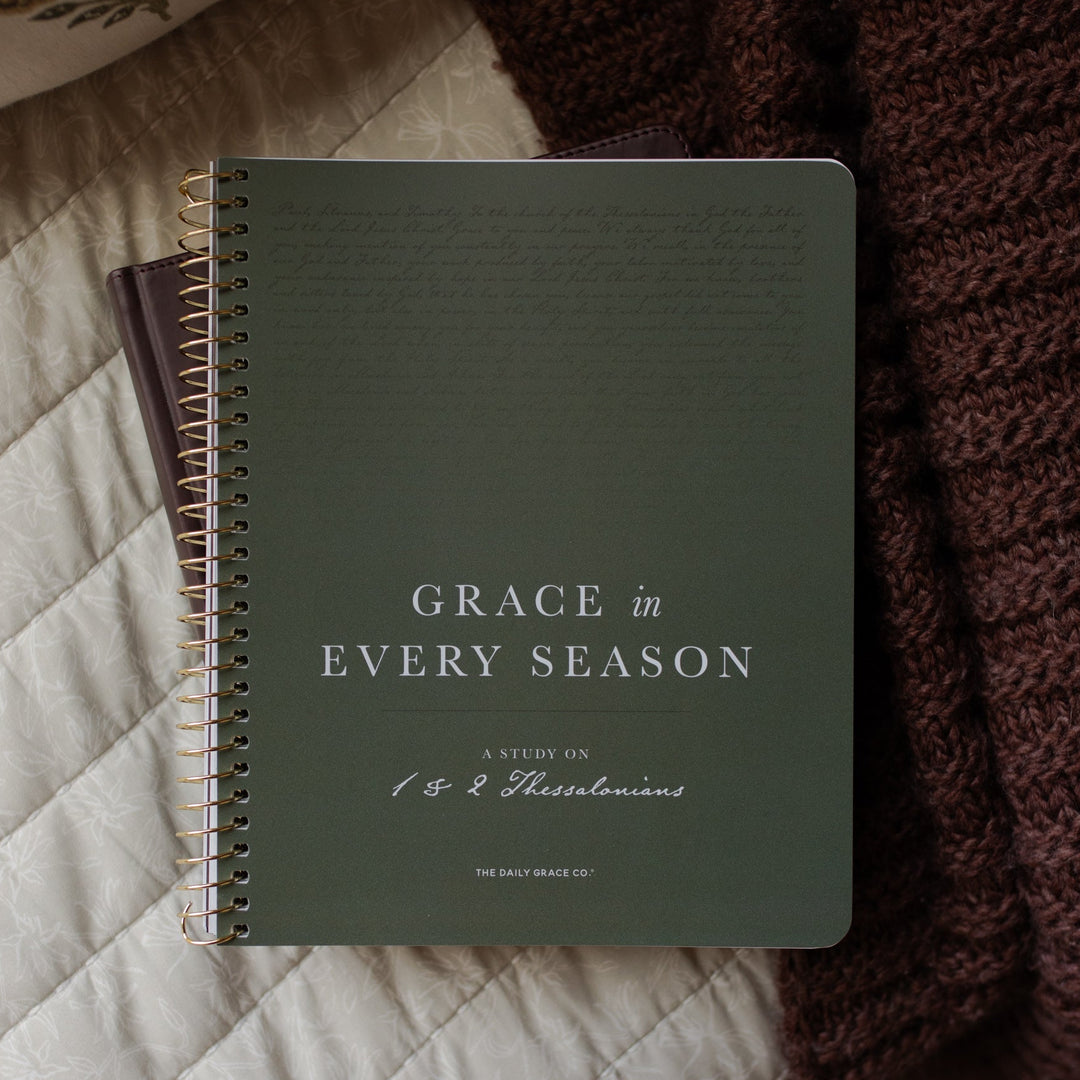
Loading price… |
|||
| Add to Cart | Add to Cart | Add to Cart |