




Whether you grew up in the church or not, for most Christians there comes a moment—or sometimes many moments—when you need to truly own your faith. You grow older, or you learn more about the world or Christianity, and suddenly you begin to question if you actually believe all the things your church has been teaching is true.
For my husband, this happened when he was in college. He grew up in a private Christian school that taught that the world was created in six days. In college, he was taught evolution science for the first time, and it really challenged him. That led him to wrestle with doubts about the Bible and his faith more generally.
But at that time, he was plugged into a strong and close-knit local church. He attended a weekly small group and had many friends there. Though at first he didn’t talk to any of his church friends about his doubts and struggles, they were close enough with him to notice when he began to withdraw from community or not show up on Sundays or for small group. Through their encouragement, he kept going and found solace in the consistency and the genuine love and concern he received from his church family.
One Sunday after the sermon, he went to the front of the church to receive communion as he did every week, and the deacon at the front said the same words he said every week. Only this time, as my husband approached the table, the deacon added my husband’s name. He said “the body of Christ, broken for you, Noah. And the blood of Christ poured out for you.” This moment was a turning point. He met Jesus there and realized He had been there all along just waiting for him to realize it.
God worked through Noah’s church community, through his personal wrestling with Scripture, and through his regular participation in rituals like the Lord’s Supper to keep him anchored in his faith. And in the end, through all of those things, Jesus’s presence in his life was so apparent that he couldn’t ignore it and definitely couldn’t walk away from it. He will tell you that his faith today is stronger because of this season of doubt and wrestling—and that intentionally participating in the local church was vital for keeping him anchored in his faith.
Unfortunately, there are many stories of young people going through similar crises of faith that do not end in stronger and more robust relationships with God. Although we can never know for certain why some people depart from their faith and others stay rooted, intentionally anchoring your faith through the many avenues of grace that Christ has offered us—such as Scripture, community, and prayer—is a great way to cultivate your relationship with Him so that when the storms of doubts, questions, or challenges arise, you are able to remain steadfast in Him rather than be tossed about by the wind and waves.
The Constant Availability of God’s Grace
God’s grace is not something we receive once at our initial salvation and never need again. God’s grace is our faith's constant sustenance for our entire believing lives. Through it, we are saved; we are being saved; and we will be saved. As such, we rely on it daily to aid in our journey toward Christlikeness—the ultimate goal of the Christian life.
While it is easy to talk about our need for God’s continual grace in the abstract, it is more difficult to know what it means to rely on God’s grace in practice. On the one hand, if it is truly grace—God’s unmerited favor—then it ought to be a gift. And if it's a gift, you shouldn’t have to do anything with it, right? Well, not exactly. Just like every gift you receive, it will only benefit you if you choose to use it. In other words, while God’s grace is always available to us independent of our performance or behavior, God has given us practical ways to regularly experience it in our lives and, therefore, actually benefit from it. There are many practices and disciplines you can intentionally implement in your life now that will help to anchor you in the grace of God. Here are three in particular that I have found to be the most crucial.
#1: Getting Plugged into a Local Church
When we are saved, we become a part of God’s family. This means that in addition to receiving God as our adoptive Father, we also receive the whole Church of God as our adoptive siblings. The best way to receive the grace God gives us through the Church is to become involved in a local church community. Just like a family, the local church can support you, care for you, and challenge you to grow, as well as give you the opportunity to support others, care for them, and challenge them to grow.
Before my husband’s season of doubt, he had gotten plugged into a local church, and this made all the difference for him as he wrestled through that season. He had friends in his small group who could tell something was going on. He had pastors who he could talk through his questions with. And he had a place to regularly hear the good news of Jesus, surrounded by people who were testimonies to that good news. Therefore, even though he did not feel close to God or covered by His grace, he actually was close to Him and covered by His grace as he remained anchored in his local church.
#2: Time in God’s Word
As important as it is to plug into a local church to receive God’s gift of community, it is equally important that you cultivate your own personal spiritual life and practices. Spending time in Scripture regularly is one of the key ways of doing this. The Bible tells the story of God and His plan to redeem His people through Jesus. It is in this story that we encounter God, and through it, His Spirit speaks to us.
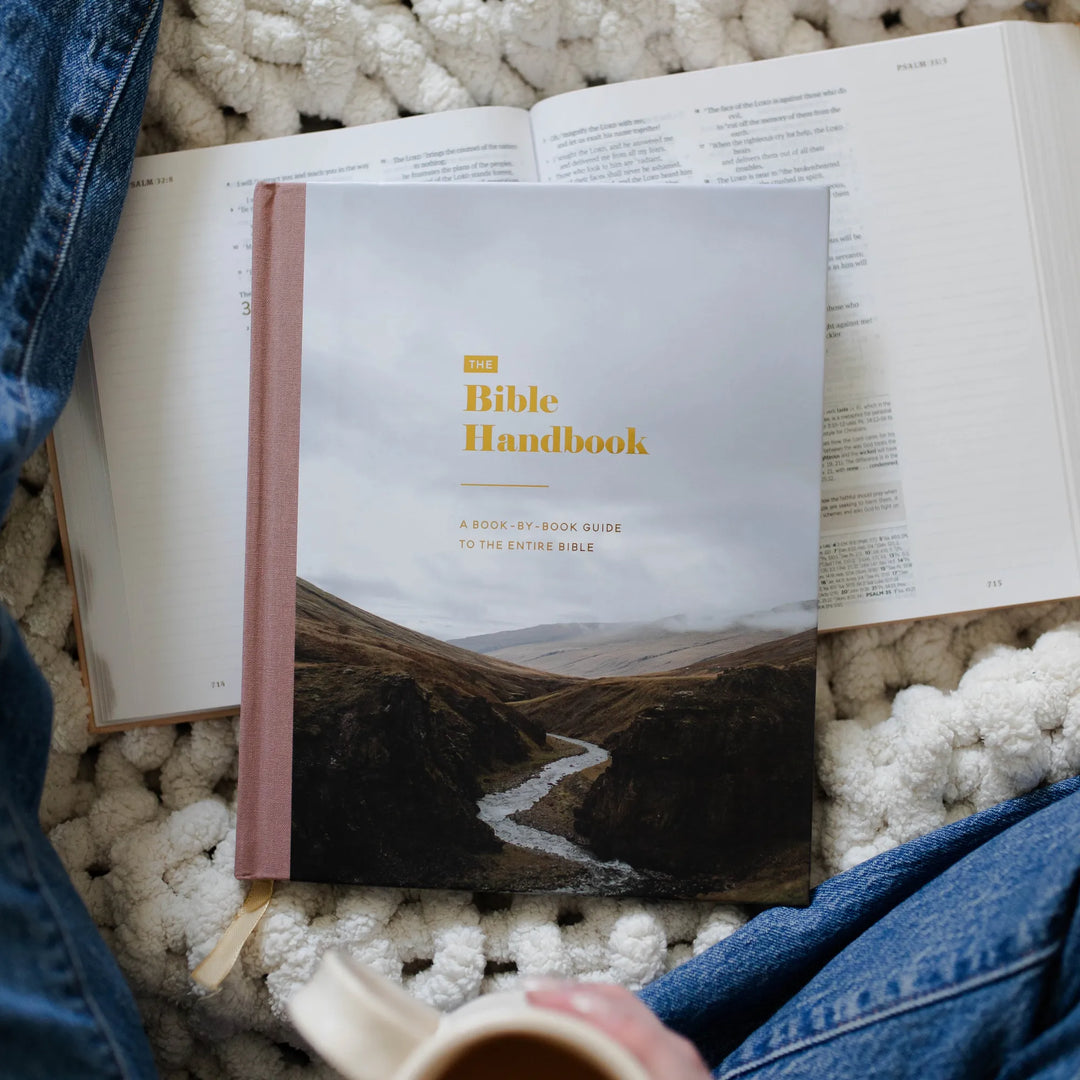
There are many different ways of spending time in Scripture. You can study it slowly and in depth so that you understand it in detail. You can read in large chunks to let it wash over you. Or you can read portions repeatedly so that you can meditate on it and let it soak in. If you aren’t sure where to start when it comes to reading the Bible or if you are wondering how you might go deeper in your personal Bible study, check out our Bible Study Handbook. In it, we walk through all sorts of methods and approaches to studying the Bible, with information and instruction for both beginners and seasoned Bible readers. Bible study might look different in different seasons of your life, but what matters is that you are opening God’s Word to allow Him to meet you there and reveal Himself to you.
Unlock a 10% off coupon!
#3: Regular Time in Prayer
In addition to time in Scripture, we cannot underestimate the importance of time in prayer. Before Christ, few humans were able to be near enough to God’s presence to speak to Him. But through Jesus’s death and resurrection, we have been given access to God’s throne room. Every time we bow our heads, close our eyes, look up to the sky, or turn our hearts toward God in prayer, we are speaking directly to the Creator and King of the universe. What a blessing!
This is a privilege that Christians should not neglect. God is listening to us. And more than that, He is eager to hear from us. We can speak to Him for long periods of time or in short spurts as we go about our day. We can tell Him our thanksgivings and our frustrations; we can go to Him when we’re joyful, angry, or tired. He never tires from hearing from His children.
To learn more about cultivating a regular prayer life anchored in your faith in God’s presence, you can look into our Bible study on prayer, Pray, or our handbook, The Prayer Handbook. Both of these resources will walk you through biblical principles related to prayer and guide you in ways you can actually practice prayer in your own life.
The Words of Eternal Life
Toward the end of my Masters program, I had my own faith crisis. I had just spent a lot of money and a lot of time on a degree that puffed me up with knowledge and left me wrestling with some big questions about life, suffering, and God. I had dedicated years to studying God’s Word and learning about theology, but I was hit with a terrifying thought: What if none of this is true? I tried to ignore that thought, but it nagged at me until I finally faced it head on. I wrestled with it and allowed myself to actually follow that question to see where it would lead.
I spent the ten years before this moment cultivating my faith. I invested in the local church, surrounding myself with brothers and sisters who supported me and pointed me toward Jesus. I studied the Bible personally and as part of my education. I fell in love with Scripture to the point that I lived and breathed it—to the point that all my conversations would cause me to recall a Bible verse or story. And I learned to pray. In my happiest, strongest, hardest, and weakest moments, I had memories of speaking to and with God.
When I was wrestling with my faith crisis and wondering whether it was all true and worth all that I had given to it, I remembered a particular interaction Jesus had with His disciple Peter in John 6. After Jesus shared some challenging and confusing teachings, a great number of people who were following Him left. They decided it wasn’t worth it; perhaps they questioned if what He had been saying was actually true. Jesus then looks at His twelve disciples and asks, “You don't want to go away too, do you?” (John 6:67). Peter responds, “Lord, to whom will we go? You have the words of eternal life” (John 6:68).
When I followed my crisis-inducing question to its end, I was left with this same haunting but life-giving realization: There is nothing better than Jesus—nothing better than the Christian faith. I knew what other religions and philosophies had to offer me. They were all based on human achievement and performance—something I was too cynical to find hope or assurance in. Only Jesus offers true grace. Only Jesus offers eternal life that is not dependent on me or my performance.
Like Peter, I had been following Jesus for quite some time. I had received His grace first hand, and even though I had doubts, my faith was stronger than those doubts because it was anchored in the grace and truth that He had been giving me since my salvation. I’d spent over a decade intentionally receiving God’s grace through the gifts He had given me.
Participating in the local church, studying Scripture, and praying regularly are not ends in themselves. But they are a helpful means of remaining anchored to the One who is the end goal of our whole faith—the One who has the words of eternal life.
Author Bio
Beth White is a Staff Writer for The Daily Grace Co. She is passionate about studying and teaching God’s Word. When she is not writing about the Bible, you can find her reading classics, drinking coffee with friends, or spending time with her family.
Additional Resources:
| The Bible Handbook | The Prayer Handbook: A Comprehensive Guide to the Practice of Prayer | Pray Bible Study | |||
Loading price… |

Loading price… |

Loading price… |
|||
| Add to Cart | Add to Cart | Add to Cart |