








The first nice day of Spring in Minnesota is like an unspoken holiday. Everyone—and I mean everyone—is outside. We collectively forgot the sun was capable of giving off warmth, so we’ve broken out the sandals on the first day of about 55 degrees, even if there are still patches of snow on the ground. This Spring, my husband and I sat outside with our neighbors, a drink in our hands, as the kids ran wild around the backyard. It was a slow Saturday afternoon, and it just felt peaceful. It was the weather for sure, but it was also the company.
You see, these neighbors have become our friends—nearly family for us over the last year. We all worship at the same church, and we have set out to intentionally live our lives together since the Lord happened to drop us on the street corner opposite their house. We are striving to follow the call that Jesus places on every Christian: the call to communal life.
The Community That Jesus Left
There are many ways we might describe this tenet of Christianity: community, fellowship, communal living, the body of Christ, or simply the Church. Whatever word we use, the simple definition and instruction is found in the Acts of the Apostles: “They devoted themselves to the apostles’ teaching, to the fellowship, to the breaking of bread, and to prayer” (Acts 2:42). And the fruits of this life seem to be immediate: “Everyone was filled with awe, and many wonders and signs were being performed through the apostles” (Acts 2:43).
The Holy Spirit was present and alive in the apostles’ community. Jesus left this earth and established a Church, first through the apostles and the women who followed Him, and then it grew from there. Christianity, as much or perhaps more than any other belief system, requires communal living. During the Acts of the Apostles and the centuries that followed, the Church was under intense persecution; the Church is under a different kind of persecution today. In many parts of Western culture, Christianity and its teachings are not welcome as they once were, and living counterculturally is never easy. We need the encouragement and accountability of our brothers and sisters to walk this life well—to follow Jesus, just like the apostles did. The apostles knew and walked with Jesus, and they needed community; surely we do, too.
The Bare Minimum
This is why we come together on Sundays. But if we look to the example of the early church in the Acts of the Apostles, together on Sundays is the bare minimum of our life together. If we keep reading in Acts, we read that those who followed “the Way,” those earliest Christians, held “everything in common” (Acts 4:32). Those who had wealth sold their possessions to make sure everyone in the community was provided for. They met everyday not only to pray but to eat meals together while they praised and thanked God, even amid intense persecution. Put simply, they did the whole of life together, the good and the bad.
If we look around, this probably isn’t the experience of church for most of us. We have probably experienced a taste of this kind of community, but living the whole of life together seems like a thing of the past. For a large and growing number of us in America, we live in our house behind our fence in our quiet subdivision, and while our children may ride their bikes together around the cul-de-sac, we are more likely to remember the name of the dog next door than the person.
In our American society, especially in the suburbs, community is not necessary for survival. But Jesus teaches us that community is always necessary for human flourishing: Jesus created a community that He lived in Himself for His three years of ministry here on earth. He had the apostles, whom He trained in the faith, but who were also His friends. He wanted them to know and love each other. He called all His followers to worship together and walk together. Jesus was in relationship with the people He came to save, because God Himself is relational. We were created in the image and likeness of God and are therefore created for relationship.
In addition to the witness of the apostles, shortly after their life and witness, Justin Martyr wrote of his experience of the early Church in his First Apology.1 As he defends the faith, he states that the Church community exists so that we can remind each other of the truths of the gospel. This was as important in his day as it is now. Justin Martyr lived during the 2nd-century persecution of Christians led by Emperor Marcus Aurelius. People did not live in a world or culture that was friendly to Christianity. They needed other believers to remind them of the good news of the gospel and why the risks they took and the way they lived their lives were worth it. We need the same thing. In our culture that is so loud and distracting, we need to be reminded that Jesus is our Savior and wants to be Lord of our hearts. Amid persecution, Justin Martyr says simply, “We always keep together.” Christians live together because they need to live together.
So, practically, what are we to do as Christians to live out this call to community? As much as I would love to say we should all buy houses on the same cul-de-sac and have weekly dinners, it might not be the most practical advice for us all. Here are three steps you can take, each increasing in commitment and grandeur, to live out the call to community and experience the human flourishing it offers.
Level 1: Worship on Sundays
Have and enter into a church community. This first step may be something you already do, but this might help frame it in a new way. And if it isn’t something you do, it is the first and most important place to start!
Churches exist for community, and worship is supposed to be communal. We can and should pray by ourselves. We can and should glorify the Lord in everything we do on other days of the week. But Sunday worship together with our church should have pride of place, as it did for the apostles.
To step up this practical step, another encouragement is to worship at a church that is geographically close to where you live. We are fickle humans sometimes, and while we want to choose a church based on the pastor’s preaching style or what kind of music they play, the reality of community is that sometimes there are little things that grind our gears—and that’s okay! When we can’t hand pick the people who surround us, these people can actually aid in our sanctification: “Iron sharpens iron, and one person sharpens another” (Proverbs 27:17). Iron sharpening iron is not a soft, gentle process, and neither is growing in holiness within community. It’s messy and sometimes painful, but we have to trust that most often God has planted us in the community that both needs us and will help shape us into who He created us to be.
Level 2: Hospitality in Your Home
Have people over for dinner! This was a key tenet of the community in the early church that carried over from our Jewish roots: Gathering together for meals was a sacred occasion. For us it is also now our worship, but we are not just talking about the breaking of the bread. We are talking about sitting down in the messiness of family life.
By praying together and eating, from making sure the babies aren’t throwing food to encouraging the six-year-old to just try one piece of broccoli, we invite someone into the lifeblood of our home and family. They get to see it and live it with us, and we share the joys and trials of our day and simply get to be together. No screens, not even any games or other kinds of entertainment. Just presence. A friend of mine once said, “It doesn’t have to be hard, complicated, or fancy. Even if you just order pizza! Invite people into your home.”
Level 3: Committed Community Time and Relationships
This is another reason why geography is going to be important: If you want to spend consistent, quality time with another person or family, it has to be as low friction as possible. Ask God to provide a family near you who God might be calling you to invest in more intentionally. It might be someone who is in a similar stage in life, other believers in your neighborhood, people who attend your church, or all three! Come up with a plan that works for you all.
I would recommend starting with a low-pressure weekly dinner, with time after for games or conversation. Eat together, share graces of the week, send kids outside until dessert while the adults linger over the table discussing what God is doing in your lives, families, and hearts—or something more surface level like the weather or the game on Sunday! Sharing the “mundane” aspects of life creates space for the deeper parts of life to uncover themselves over time.
According to a study from the University of Kansas, it takes over two hundred hours of interaction to become close friends with someone.2 If you do a two-hour dinner once a week, that’s almost two years! We have to be intentional and guard the time well if we want to build a community where we can be vulnerable, rely on each other, and encourage one another to love and good deeds (Hebrews 10:24).
Unlock a 10% off coupon!
Take A Step Toward Community
Which of these steps do you think your family is ready for? My family has been having these weekly dinners of this level 3 challenge for almost a year, and we are currently discerning what our next level of community is. Consider what it looks like for you to take a step in living as the early church lived: “holding everything in common,” that people will say of the Christians they encounter, they “always keep together.”
Notes:
1. Justin, Martyr. The First Apology of Justin Martyr, Addressed to the Emperor Antoninus Pius: Prefaced by Some Account of the Writings and Opinions of Justin Martyr. 155AD
2. Hall, Jeffrey A. “How Many Hours Does It Take to Make a Friend?” Journal of Social and Personal Relationships, vol. 36, no. 4, 15 Mar. 2018, pp. 1278–1296, journals.sagepub.com/doi/full/10.1177/0265407518761225, https://doi.org/10.1177/0265407518761225.
Author Bio:
Brianna Barbeln works with youth and families at her church outside the Twin Cities. She loves to share the gospel, especially with teenagers, and that she gets to share that mission with her husband and one-year-old daughter. She has aspirations to be a professional student and somehow keeps finding ways to stay in school. Prayer, community, and the life of the local church are the things that keep her going in faith.
Additional Resources:
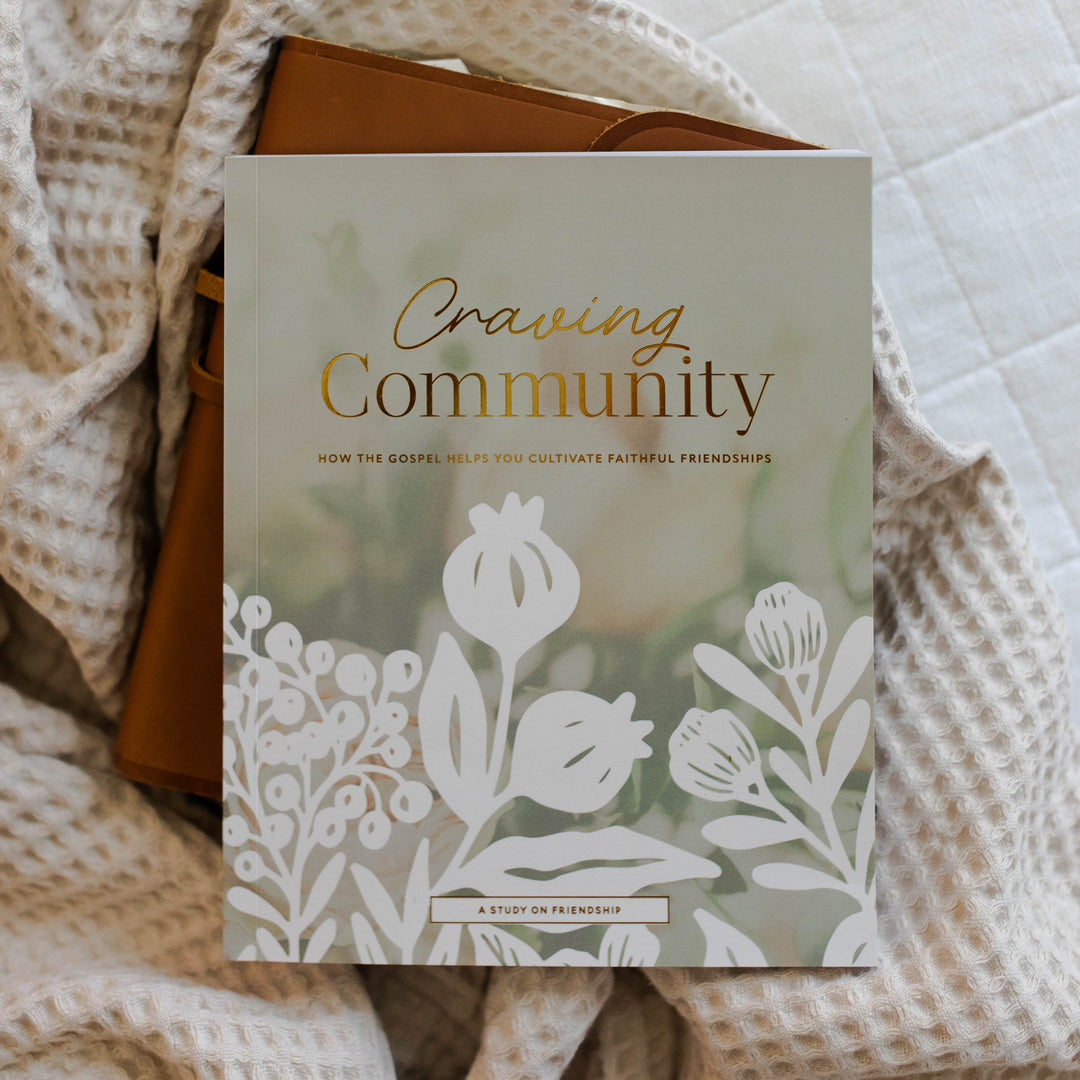
| Better Together | Discipleship Guide | Craving Community | A Bible Study on Friendship | Prayers for the Church | “Creating Community” Blog Article | ||||

|
Loading price… |

Loading price… |
 |
||||
| Sign Up | Add to Cart | Add to Cart | View Blog |