






Two summers ago, my father died.
His health had been in decline for several years, but his death was immediately preceded by five agonizing weeks in the hospital, trying to stabilize his failing heart. I spent a lot of time in hospital waiting rooms during those weeks.
And as I did, I found myself unsure what to think or how to pray.
Of course I don’t want him to die, so we should pray for him to get well . . .
But given how poor his quality of life has been these last few years, wouldn’t he be better off freed from his ravaged body and present with the Lord?
But . . . of course I don’t want him to die . . .
On reflection, I have come to realize that the tension and confusion I experienced during those weeks reflect a broader confusion in how we think about death in our contemporary culture: a confusion that has infiltrated even the Church.
We are fearful of death. We have invested millions into wellness and safety products designed to prolong life and avoid death—our contemporary equivalent of searching for the fountain of youth. And we don’t know how to respond when death touches us. We hide our grief and plaster over the grief of others with platitudes: “He’s in a better place, honey . . . death is just a part of life after all.”
We can find solace for this fear and confusion in the pages of Scripture. While we might find some temporary comfort in the individual words printed in greeting cards, we can find more robust wisdom by looking at how death figures into the whole story of Scripture: beginning, middle, and end. When we do, what we find is that Scripture acknowledges this tension and confusion that we experience. But that tension isn’t the end of the story; it is a tension that is steadily moving toward resolution. Death doesn’t get the final word.
The Origin of Death: Genesis and God's Original Design
The story begins in the garden of Eden with God’s good creation. Man and woman are the crown of that creation. They are set in the garden to dwell in the presence of God and with the commission to tend it. But they are given a warning: “you must not eat from the tree of the knowledge of good and evil, for on the day you eat from it, you will certainly die” (Genesis 2:17). Death was not the way it was meant to be.
But the death-free paradise of Eden doesn’t last. In the very next chapter, they eat that forbidden fruit, and they suffer the consequences—consequences that are more far reaching than they could ever have imagined. Death doesn’t come suddenly with a lightning rod; it is slow and lingering. They will experience pain, hardship, toil, disrupted relationships—and then they will die (Genesis 3:16–19). This curse of death isn’t limited to them; it touches everything and everyone, from one generation to the next. It affects all of us both spiritually and physically (Romans 5:12–14). What was never intended to be part of God’s good design has now become a defining feature of our lived reality. We are dust, and we inhabit a broken and tainted world.
Old Testament Hope: God’s Promise to Defeat Death
Thankfully, though, the story doesn’t end here. In the very same breath that God pronounces the curse of death, He also promises the coming redemption: “I will put hostility between you and the woman, and between your offspring and her offspring. He will strike your head, and you will strike his heel” (Genesis 3:15). This text speaks of the way that the power of evil, embodied in Genesis in the form of the serpent, will one day be defeated. And it is on that trajectory that the rest of the story of the Old Testament moves.
Death continues to be a pervasive part of the story of God’s people: wars and famines, sacrifices and exile. This is a reality acknowledged by David in Psalm 39: “LORD, make me aware of my end and the number of my days so that I will know how short-lived I am. . . . every human being is only a vapor” (Psalm 39:4, 11).
And yet in the midst of death, we also see God’s hand at work to rescue and redeem His people: He gathers them from Egypt and leads them to the Promised Land; He establishes His presence among them in the Temple; He restores them after their exile. And the prophets point toward a time when death will no longer be a present reality: “When he has swallowed up death once and for all, the Lord GOD will wipe away the tears from every face and remove his people’s disgrace from the whole earth, for the LORD has spoken” (Isaiah 25:8).
And yet: God’s people wait.
Jesus Defeated Death: Resurrection and Victory Over the Grave
And then: Jesus enters into the story.
From the moment of His miraculous birth, we see that Jesus has come for a special purpose. This continues as His ministry progresses: His miracles demonstrate His power over the curse of death—perhaps most powerfully when He raises Lazarus from the dead. “I am the resurrection and the life,” He declares before calling Lazarus forth from the tomb (John 11:25).
His life, His teaching, His miracles all build up to His own death by crucifixion, followed three days later by His miraculous resurrection. “God raised him up, ending the pains of death, because it was not possible for him to be held by death,” Peter preaches on the day of Pentecost (Acts 2:24).
Death could not hold Jesus. In Jesus, the power of death has been overturned. What was spoken of in Genesis 3:15 has come to pass.
The Christian Hope: Final Resurrection and the New Creation
Just as the original curse of death spread to all humanity, Jesus’s reversal of death is likewise a gift for all of us. Paul writes that Christ’s resurrection is the “firstfruits” of what is to come for all who belong to him: “For just as in Adam all die, so also in Christ all will be made alive. But each in his own order: Christ, the firstfruits; afterward, at his coming, those who belong to Christ. . . . The last enemy to be abolished is death” (1 Corinthians 15:22–23, 26). Christ’s resurrection is the guarantee of what is in store for us “at his coming”—when He returns and ushers in the New Creation. Once again, He will make His dwelling place among us. We “will be his peoples, and God himself will be with them and will be their God. He will wipe away every tear from their eyes. Death will be no more; grief, crying, and pain will be no more, because the previous things have passed away” (Revelation 21:3–4). Death itself will die, and everything that was broken by its curse will be made new.
This is a beautiful promise indeed—the hope that those who belong to Jesus have to look forward to. But it is not yet. Jesus has risen from the dead, and until He returns, we continue to live under the specter of death.
Grieving with Hope: How Christians Respond to Loss
The narrative arc of Scripture offers us clarity on how to live and respond well to the ongoing presence of death in the world.
First, it is good and right to grieve and lament this ongoing presence of death in our stories. Before Jesus raised Lazarus from the dead, He stopped and wept before the tomb (John 11:35). Jesus grieved the death of His dear friend. He lamented the presence of death in the world. We need not resign ourselves to it or plaster over our grief with cheerful optimism.
That said, death is not something to fear or avoid. We can face death as a conquered enemy.1 We know how the story ends and can take heart and hope as we await that day that death and all its effects will be overcome. It was this hope of resurrection that allowed the early Christian martyrs to face their deaths with courage and grace. This same hope is available to us as well.
In the face of death, we can—just as Jesus did at the tomb of Lazarus—hold the tension between sorrow and joy together. We can be honest with the Lord about our grief while clinging to the hope of all the goodness of life and resurrection that is coming for those who belong to Him.
If you liked this article, check out the related resources linked below!
Notes:
1. Jones, Practicing Christian Doctrine, Second Edition, 228.
Author Bio
Jen Snow is part of the pastoral team at Resurrection Anglican Church in Rock Hill, South Carolina. She is a graduate of Gordon-Conwell Theological Seminary (MA in Christian Thought, ’24) and a former missionary to Papua New Guinea and Cameroon. She is wife to Dan and a mother of three young adult children. In all of these roles, it is her deepest desire to proclaim the excellencies of Jesus. She takes great delight in the beauty of the changing season, curling up with a good book, and long conversations with friends over good food and drink. You can connect with Jen and read more of her writing over at Substack (substack.com/@jen1744052).
Unlock a 10% off coupon!
Related Resources:
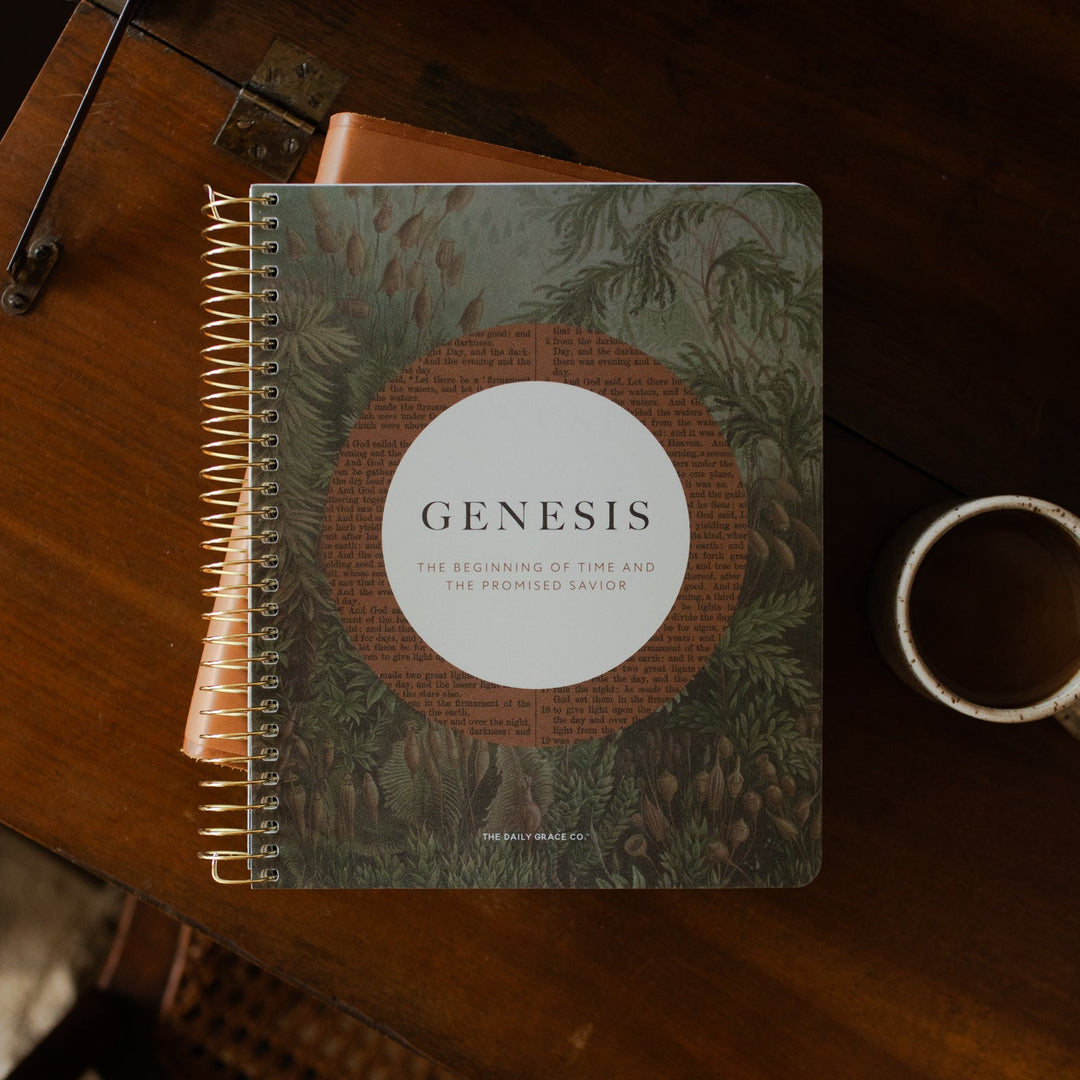
| Gospel Hope in Grief and Loss | Why Did Jesus Have to Die? | Genesis Bible Study | Revelation Bible Study | ||||
 Loading price… |
 Loading price… |
 Loading price… |
 Loading price… |
||||
| Add to Cart | Add to Cart | Add to Cart | Add to Cart |