





In August of AD 410, shockwaves ran across the ancient world. Rome, the “Eternal City” had been sacked. For centuries, people believed Rome was an immovable fixture in the world. When it fell in just three days, an entire generation was left paralyzed. If the strongest empire on earth could crumble overnight, what was left to stand on?
It was out of those ashes that Church Father Augustine of Hippo wrote The City of God, reminding shaken believers of a powerful truth: Earthly empires shift and fall, but the God who reigns over them never does. We may not watch empires collapse today, but we know what it feels like when life shifts beneath our feet. In an unstable world, we long for someone who never changes.
Here’s the good news: God is immutable, which means He does not change. He is not uncertain, unstable, or unpredictable. We can rely on Him completely.
Even When You Change, God Doesn’t
The Bible repeatedly reminds us that God does not change. Through the prophet Malachi, the Lord declares, “Because I, the LORD, have not changed, you descendants of Jacob have not been destroyed” (Malachi 3:6). James describes Him as “the Father of lights, who does not change like shifting shadows” (James 1:17). From beginning to end, Scripture presents God as perfectly constant in a world that is constantly changing.
Christians have long summarized this biblical truth with the doctrine of God’s immutability. Simply put, God’s immutability means that He remains forever the same in His being, attributes, purposes, and promises while faithfully acting in time according to His unchanging will. God does not change, for He is not dependent on anything outside Himself. Unlike us, He never grows, improves, or adapts, for He already possesses the fullness of perfection in Himself.
Notice the connection in Malachi 3:6. God’s unchanging nature is the reason His people are still standing. Israel had failed over and over again. They wandered from His commands, broke His covenant, and repeatedly deserved judgment. Yet their hope was never rooted in their ability to remain faithful. It rested entirely on the God who remained faithful to them.
That isn’t just Israel’s story. It’s ours as well. Because God does not change, His promises do not change. Empires rise and fall. Friendships fade. Bodies weaken. Circumstances shift. But through it all, God remains exactly who He has always been. He isn’t loving on Monday and impatient by Thursday. He isn’t merciful in one season and reluctant in the next. His attributes never compete or shift with His mood, because He doesn’t have moods to shift with.
This is what distinguishes the Creator from everything He has made. We change because we are finite. We learn because we lack knowledge. We mature because we are incomplete. But God is infinitely perfect and eternally complete. His unchanging nature does not make Him distant from us. Instead, it means He is always exactly who He has revealed Himself to be: perfectly faithful, holy, loving, and present in every season of our lives.

But Doesn’t God Change His Mind Sometimes?
If you know your Bible well, you may already be pushing back a little: Doesn’t the Word say God changed His mind? That is a fair and important question. The doctrine of God’s immutability must be examined, not by ignoring difficult passages but by faithfully wrestling with all that Scripture reveals about who God is.
Let’s consider the scene in Exodus 32. Moses is up on the mountain receiving the Law, and down in the camp, the people he’d just watched God rescue are now melting down their jewelry and building a golden calf. They bow to it and call it their god. It’s a devastating betrayal, and it happens almost the moment Moses leaves the camp. God plans to destroy them for their idolatry and begin anew with Moses (Exodus 32:10).
And then Moses does something remarkable. He doesn’t defend the people’s behavior. Instead, he appeals to who God is. He reminds God of His own promises to Abraham, Isaac, and Israel. He pleads based on God’s name, God’s reputation, and God’s covenant faithfulness. And Scripture tells us, “the Lord relented concerning the disaster he had said he would bring on his people” (Exodus 32:14).
If we stop reading right there, it can sound like Moses talked God out of something. But look closer at what Moses appeals to. Moses doesn’t give God new information or persuade Him to become merciful. He appeals to God’s covenant faithfulness, and because God’s character never changes, His mercy unfolds exactly as He had always purposed.
God wasn’t surprised by Israel’s rebellion, nor did Moses give Him information He lacked. Moses appealed to God’s covenant promises, which reflected His unchanging character, and God responded to Moses’s appeal in a manner consistent with that character. Just as God responded to the Israelites’ sin in a manner consistent with His wrath, He responded to Moses’s appeal in a manner consistent with His mercy. Therefore His mercy wasn’t a plan B—it had always been a part of His eternal character and purpose. God is sovereign, and Moses’s prayer was one of the means God used to accomplish His plan.
This points us beyond Moses to Jesus Christ. Moses stood in the gap for Israel; Jesus stands in the gap for us. Even now, Christ “always lives to intercede” for “those who come to God through Him” (Hebrews 7:25). Our hope has never rested on persuading God to be merciful. It rests on the finished work of Christ and the unchanging character of the Father who sent Him.
So when we read that God “relented,” we’re not watching Him change His mind the way you or I do. We’re watching an unchanging God relate, in real time, to people whose condition and situation is changing. His response to sin and repentance was never in question, for it flows from a character that was never in question. As Samuel would later say of this same unchanging God, “the Glory of Israel will not lie or have regret, for he is not a man, that he should have regret” (1 Samuel 15:29, ESV).
Whatever You’re Walking Through, God Hasn’t Changed
This isn’t just a truth to obtain for knowledge’s sake. It’s a truth for whatever you’re walking through right now. Whether you’re waiting on unanswered prayer, grieving a broken relationship, or battling recurring sin, God’s faithfulness has not changed. His mercies are new every morning, and His promises remain secure. “The grass withers, the flower fades, but the word of our God remains forever” (Isaiah 40:8).
The God who promised redemption in Genesis is the same God who fulfilled it in Jesus Christ. The God who carried Israel through the wilderness is the same God carrying you right now. The God who forgave David, restored Peter, and ran to meet the prodigal son is the very same God extending mercy to you today.
His grace does not run out, and His faithfulness does not expire. Before the world existed, God purposed to redeem His people through Christ. Through generations of human failure, He stayed faithful to that promise. And at exactly the right time, Jesus came, lived in perfect obedience, died for sinners, and rose from the grave. He didn’t change His mind about saving you. He did exactly what He said He would do.
Your life will keep changing. Your hope was never meant to rest on your ability to stay constant. It rests on the God who already is the same “yesterday and today and forever” (Hebrews 13:8). That’s not just a doctrine to affirm, it’s a promise to hold on to.
If you liked this article, check out the related resources linked below!
Author Bio
Matt Duckett serves as the Lead Pastor at First Southern Baptist Church Lawrence in Kansas. He is passionate about seeing lives transformed by the life-changing message of the gospel. Matt lives in Lawrence with his wife, Sarah, and their two sons. He enjoys coffee, reading, and quality time with his family.
Unlock a 10% off coupon!
Related Resources:
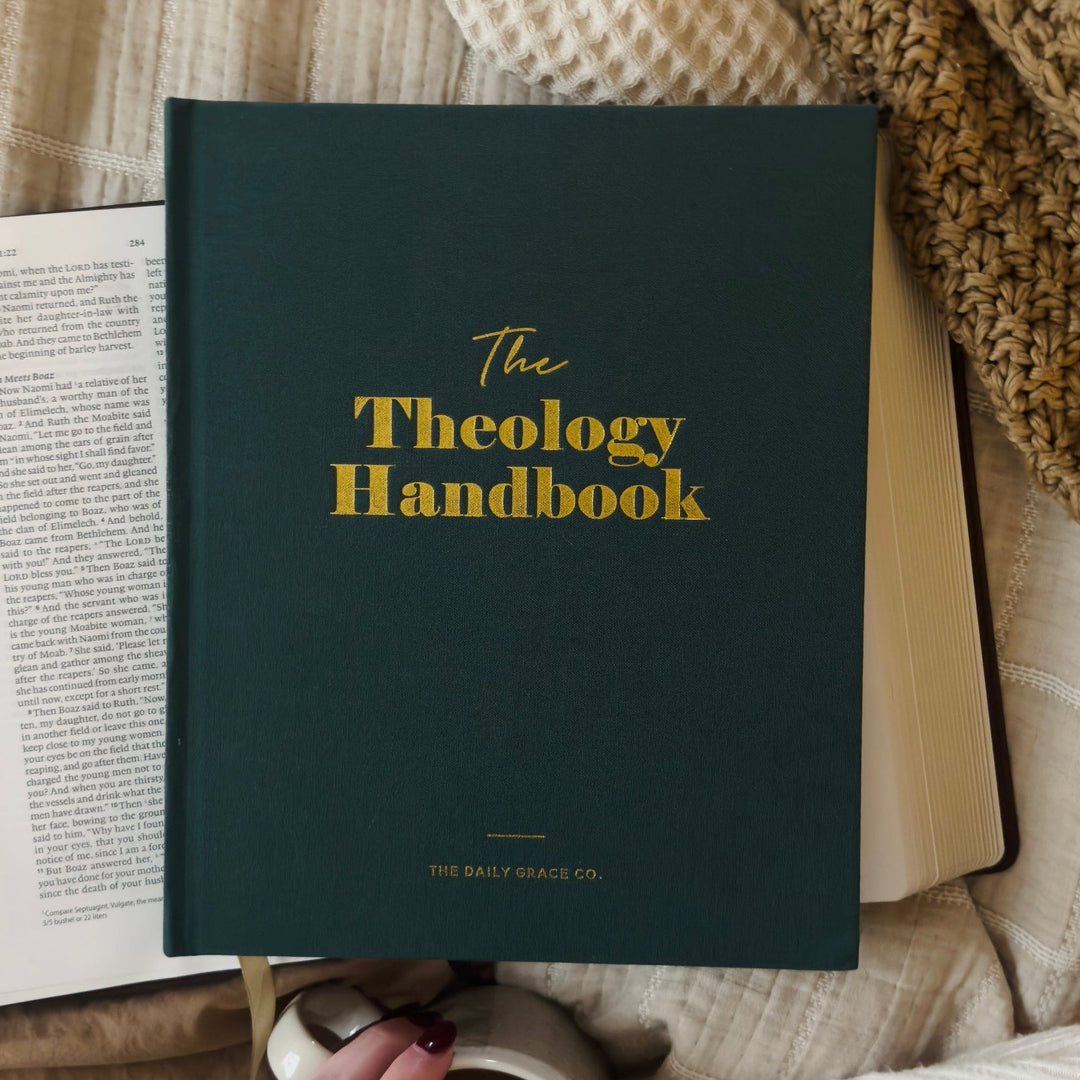
| The Attributes of God Bible Study | In the Grip of His Grace | The Theology Handbook | |||

Loading price… |

Loading price… |
Loading price… |
|||
| Add to Cart | Add to Cart | Add to Cart |