





After two consecutive spine surgeries, my body is no longer the same. Gone are the days of playing sports and training intensely; my daily exercise now consists of a brief walk and lighter weights at the gym. As I struggle each day to button my shirts and put on my shoes, grabbing the rim of a basketball hoop seems like a distant memory from a life that no longer belongs to me.
On the one hand, there is nothing particularly unusual about my condition. Degenerative spine disease is common among older adults. Making certain adjustments to reduce the risk of further spinal cord compression is a natural part of preserving the body. These adjustments allow a person to keep living comfortably, though not without setbacks.
However, because I was still a young man at the time of my injury, this was a hard pill to swallow. I loved sports. I loved being active, and I especially loved being good at it. To give up what many may call my “glory days” was devastating.
While my circumstances are specific to me, the dissatisfaction I felt certainly is not. You may be wrestling with the effects of an injury. You may be a mother who wishes she could return to the body she had before pregnancy. You may be an athlete who mourns that he can no longer jump, run, or throw as well as he once did. You do not simply feel more tired or move more slowly; you feel as though you have lost a part of yourself.
What the Bible Says When Your Body Is Breaking Down
The frustration of living in a body that ages, breaks, and decays is one humanity has shared ever since the Fall. God has determined that we who were created from dust shall eventually return to it (Genesis 3:19). No matter how healthy or disciplined our lifestyles are, everyone must face fragility and finitude. What we think are our glory days will inevitably come to an end.
Yet it is against this backdrop of frailty that Scripture speaks a word of hope. In particular, the Apostle Paul understood the fragility of the human body as well as anyone in Scripture apart from Christ Himself.
In 2 Corinthians 11, Paul recounts the extraordinary suffering he endured: “imprisonments, with countless beatings, and often near death” (verse 23, ESV). He continues, “Five times I received at the hands of the Jews the forty lashes less one. Three times I was beaten with rods. Once I was stoned. Three times I was shipwrecked; a night and a day I was adrift at sea” (verses 24–25, ESV). Paul’s reflections on the body were not abstract. Constant reminders of mortality surrounded him during his persecutions.
Despite his weakness, Paul’s language in chapter 5 is not that of a man without hope. He writes, “For we know that if the tent that is our earthly home is destroyed, we have a building from God, a house not made with hands, eternal in the heavens” (2 Corinthians 5:1, ESV).
Here Paul draws a contrast between the temporary and the permanent, the seen and the unseen. He compares the body to a tent—a natural illustration for a man who worked as a tentmaker (Acts 18:3). A tent is meant to serve as a temporary dwelling. It wears down, tears easily, and eventually comes apart.
But Paul does not stop with the image of the tent. He moves to the image of a building: “a house not made with hands, eternal in the heavens.”
Why Your Best Days Are Still Ahead
The contrast could hardly be greater. What is earthly and capable of being destroyed is set against something made by God and destined to last forever. The body we now inhabit is temporary, but God has prepared for His people a dwelling that will never decay. For Christians, this means that our best days are ahead of us, no matter how frail we become this side of eternity.
For those suffering from chronic pain, debilitating injuries, or even the loss of their youth, this may be a difficult concept to digest. We often spend much of our time reminiscing about days long gone. But no matter how much we invest in modern medicine, health, and longevity, our bodies cannot outrun time. Even now, Paul says, “though our outer self is wasting away, our inner self is being renewed day by day” (2 Corinthians 4:16, ESV).
Further, through Christ we are promised resurrection bodies more glorious than anything we have known on earth. Paul acknowledges that while we remain in this present body, “we groan, being burdened.” But he also reminds us that what is mortal will one day be “swallowed up by life” (2 Corinthians 5:4, ESV). Our hope as Christians rests not in getting back what we have lost but in a future glory that far outshines whatever vigor we once had.
If you liked this article, check out the related resources linked below!
Author Bio
Brian Li earned his Master of Divinity from Westminster Theological Seminary in 2020 and enjoys helping Christians think faithfully about faith, family, and culture through the lens of Scripture. His articles have been published at the Standing for Freedom Center, and he also writes on his personal Substack. He lives with his wife, Phoebe, and their two children, Abigail and Augustine.
Unlock a 10% off coupon!
Related Resources:
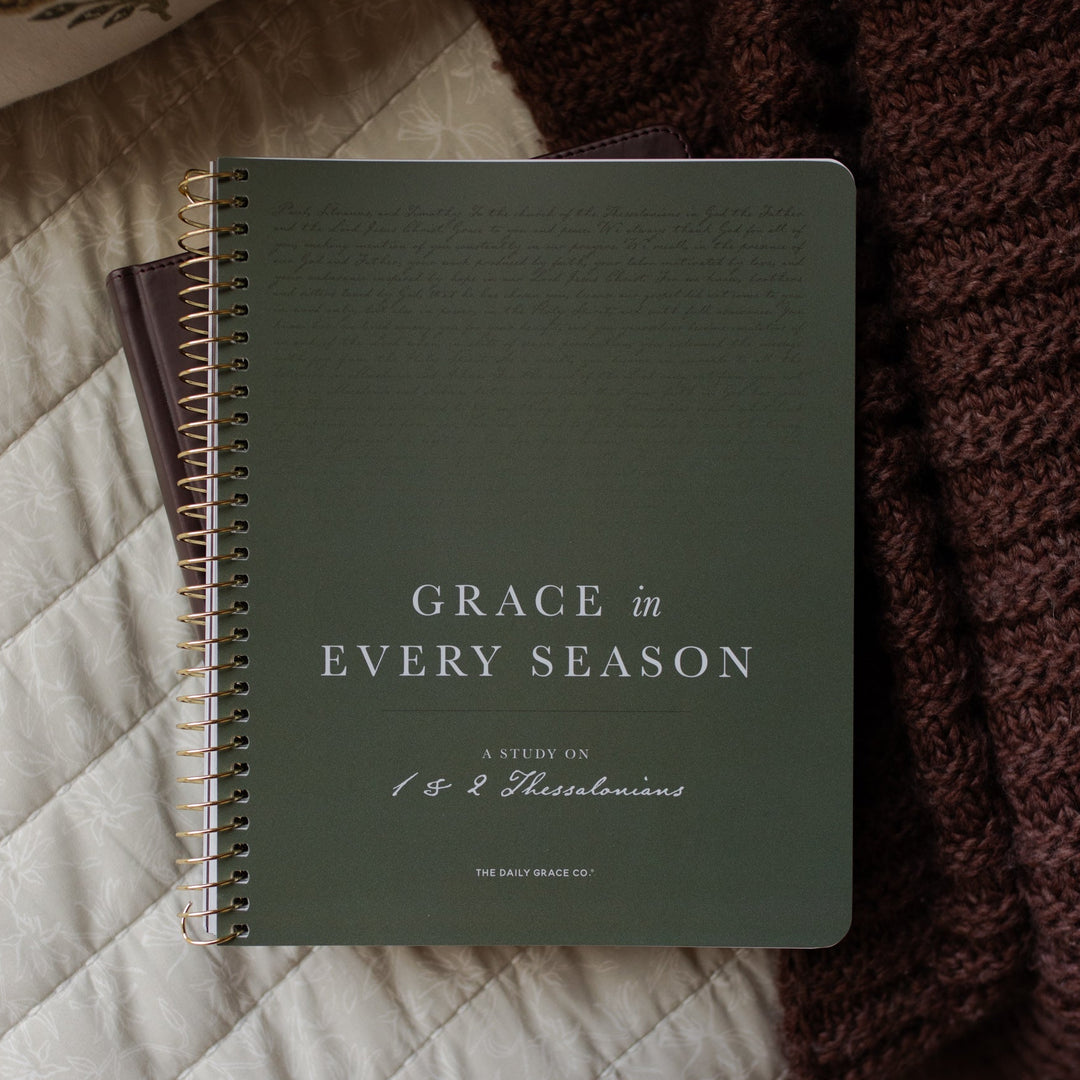
| Gospel Hope in Grief and Loss | Grace in Every Season | His Love Endures Forever | |||
 Loading price… |
 Loading price… |
 Loading price… |
|||
| Add to Cart | Add to Cart | Add to Cart |