





The Book of Ruth is often presented as a love story between Ruth and Boaz—a kind of ancient Hallmark movie. This has led many Christian single women to echo the expression, “I’m looking for my Boaz!” as a kind of marital savior. But that rendering entirely misses the point.1
Along with the hope of finding the perfect husband, many women also feel the pressure of being what some perceive to be “a Proverbs 31 wife,” the perfect wife with the perfect life. This, too, misses the point of both the book of Ruth and Proverbs 31.
In our English Bibles, Ruth follows the dismal conclusion of Judges, when the Israelites had become like Sodom, with everyone doing what seemed right in their own eyes (Judges 21:25).2 Ruth, a destitute foreign widow, emerges as a character of extraordinary courage and nobility through her faith and fortitude in the face of seemingly impossible odds during a time of great economic and moral upheaval.
In the Hebrew Bible, the Jewish Bible that is ordered differently than our English Old Testament, the book of Ruth follows Proverbs 31, which helps correct some of our assumptions about what it means to be “a woman of valor” (Proverbs 31:10a, JPS). Let’s dig into Ruth’s story for better understanding.
Historical Setting of the Book of Ruth
The book of Ruth begins: “During the time of the judges, there was a famine in the land” (Ruth 1:1). A man named Elimelek leaves Bethlehem (which, ironically, means “House of Bread”) with his wife Naomi and two sons for Moab. A trip that was meant to be temporary stretches into ten years. Elimelech dies. Both sons marry Moabite women—Orpah and Ruth—then both sons die too. Within five verses, the family is completely devastated. In the ancient world, widows would rely on their sons to provide for them; but all three widows are now without sons.
The famine itself carries theological weight. In Deuteronomy, Moses warned Israel: Obey God, and the land will flourish; abandon Him, and it will fail (Deuteronomy 11:13–17). This is that time of failure. Despite Israel’s unfaithfulness, Yahweh does not abandon His covenant. Naomi hears that God has provided bread again and rises to return home (Ruth 1:6)—the word “return” appearing repeatedly in chapter 1, signaling an upcoming turn of events, not just for this family but for the whole nation.
Meaning of Hesed in the Book of Ruth
As Naomi prepares to leave, she urges her daughters-in-law to return to their Moabite families and find new husbands. In doing so, she introduces the theological heartbeat of the book: hesed—a Hebrew word that describes Yahweh’s covenant kindness, loyal love, and faithfulness—saying, “May the LORD show kindness [hesed] to you as you have shown to the dead and to me” (Ruth 1:8). This is a core attribute of God Himself, declared twice on Mount Sinai as His loyal love (hesed) and faithfulness (Exodus 34:6–7).
Remarkably, hesed appears three times in Ruth, and twice, it describes Ruth herself. Scholar Daniel Block defines this kind of love as “a covenant commitment demonstrated in action in the interests of another person.”3 Only with that definition can we properly call Ruth a love story: It is a story of God demonstrating hesed to His people and Ruth demonstrating God’s character to others.
This is powerfully expressed in Ruth’s famous oath to Naomi: “Wherever you go, I will go . . . your people will be my people, and your God will be my God” (Ruth 1:16–17). Logically, it made sense for Ruth to obey Naomi’s request for her to return to her own people, the Moabites; Orpah, Ruth’s sister-in-law, even chooses to do so (Ruth 1:15). This vow would cost Ruth everything: her homeland, her family, and her future prospects. She is binding herself to a destitute older woman in a country where she would be treated as an outcast. Ruth had no obligation to stay. And yet she chose loyal love.
How Ruth Exemplifies a Proverbs 31 Woman of Valor
When the two women arrive in Bethlehem at the beginning of the barley harvest, Ruth rises up and goes to glean in the fields, practicing the God-given provision for the poor, alien, and widow (Leviticus 19:9–10). She “happened to be in the portion of the field belonging to Boaz” (Ruth 2:3), a moment that feels like coincidence but reveals God’s quiet guidance.
Boaz is introduced as a man of hayil, “a man of noble character” (Ruth 2:1). This word, hayil, is used in Proverbs 31:10, where it asks, “Who can find a wife of noble character [hayil]?” The Jewish Publication Society (1917) translates this phrase in Proverbs 31:10 as “a woman of valor.” Boaz uses this exact phrase for Ruth, not when she is a wife or a mother but when she is a childless Moabite widow gleaning to survive (Ruth 3:11). Ruth is placed after Proverbs 31 in the Hebrew Bible for precisely this reason: She exemplifies a woman of valor.
How Boaz Fulfills His Role as Kinsman Redeemer
Naomi eventually learns that Boaz is a go’el—a kinsman redeemer, a male relative responsible for the welfare of a deceased relative’s widow. Months pass with no action from Boaz, so in a bold move, Naomi instructs Ruth to approach him privately on the threshing floor and invoke his legal responsibility. Ruth asks Boaz to “take me under your wing”—the same language used for Yahweh’s protection in Psalm 91:4—and to marry her and fulfill his responsibility as the kinsman redeemer (Ruth 3:9).
Boaz honors Ruth’s bold proposal of marriage, praises her noble character, and wastes no time securing his right to marry her. He becomes an image of Yahweh himself, who is the Great Kinsman Redeemer. Ruth and Boaz marry. Ruth conceives. Their child, Obed, was the grandfather of King David and an ancestor of Jesus (Matthew 1:5).
Enduring Legacy of the Story of Ruth
Ruth, the destitute foreign widow is recognized by her whole community as “better . . . than seven sons” (Ruth 4:15). God was present all along, working through extraordinary acts of loyal love expressed through her uncommon courage in hard times.
If we only view the Proverbs 31 woman as a social media–perfect homemaker with a flawless life, we miss that being a woman of valor is often best reflected in the imperfect, broken, and flawed areas of our lives. In the darkest moments, God invites us to pick up what’s in our hands to do. For you, being a woman of valor might not mean moving into a foreign land as it did for Ruth. But it might look like showing up for a chronically ill or grieving friend, doing mundane tasks at home or at work that are essential yet overlooked, or choosing to care for your aging family members with patience and grace. We can also pray to ask God how He might be specifically leading us to be women of valor in our areas of influence.
As we do what we can and take the next step toward hope, Yahweh is at work behind the scenes, shaping us, too, into people of valor. Ruth’s story is an enduring encouragement that sometimes the greatest step of faith is into the unknown, trusting Yahweh’s hesed will never cease.
Notes:
1. Faro, Redeeming Eden, 109–22.
2. Block, Ruth, 83.
3. Block, Ruth, 95.
Author Bio
Ingrid Faro (PhD, Trinity Evangelical Divinity School) is Interim President and Professor of Old Testament at Northern Seminary in the Chicago area. Ingrid is an international speaker and the author of Redeeming Eden: How Women in the Bible Advance the Story of Salvation with Joyce Koo Dalrymple and Demystifying Evil: A Biblical and Personal Exploration. She is the co-author of Honest Answers, Evil in Genesis and the forthcoming volume As We Forgive: A Biblical Theology of Forgiveness and has written numerous journal articles, book chapters, and book reviews. Prior to her work in theological education, Ingrid was an entrepreneur and president of an insurance consulting group serving one thousand agents in thirty-five states. Ingrid has two children and four grandchildren.
Unlock a 10% off coupon!
Additional Resources:
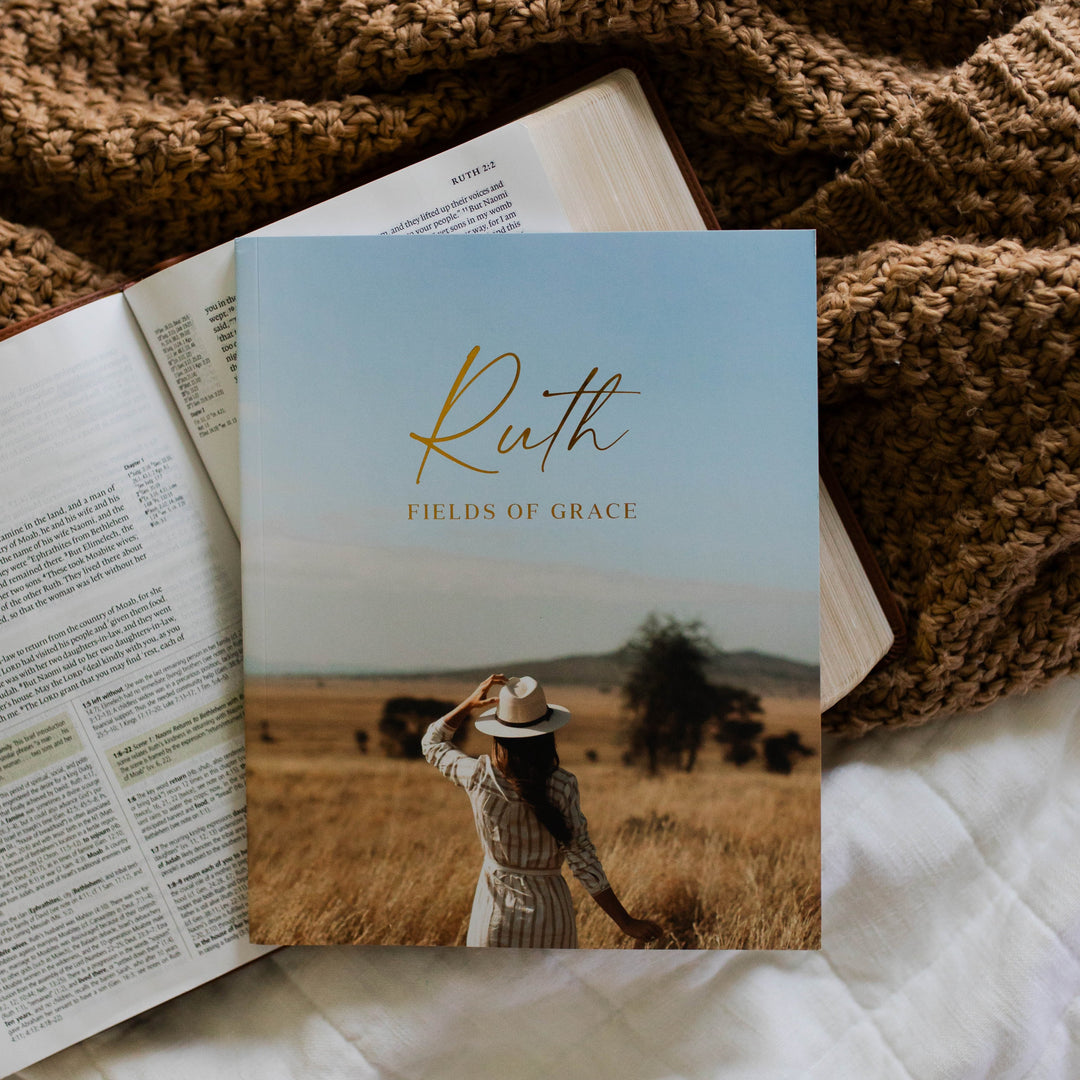
| Ruth Bible Study | Faithful | Women of the Bible | |||
 Loading price… |
 Loading price… |
 Loading price… |
|||
| Add to Cart | Add to Cart | Add to Cart |