





Dear Postpartum Mom,
It’s been a while, hasn’t it? Since you’ve last taken an unhurried shower or, better yet, changed that spit-up-painted shirt. Since you’ve enjoyed a steaming hot cup of coffee as it was intended or a thoughtful conversation without being redirected by cries, blowouts, or leakage. Since you’ve laid in bed without worrying about the next feed, or the minor rash you noticed earlier, or the never-ending list of chores. Since you’ve been seen for who you are rather than by what you do or don’t do.
This season of postpartum is complex—filled with physical limitations, bittersweet emotions, and nuanced expectations, but you’ve been willing. You’re willing to be the last to sleep, eat the cold meals, and love sacrificially because of the worthy call of motherhood. In fact, you’re not only willing; you’re doing it by the grace of God. But in the midst of everything going on, how are you?
I’m reminded of a small story that carries a lot of weight in the Bible, and that is the story of Sarai and Hagar in Genesis 16. Now, this story is not about a postpartum mom, nor does it highlight the glories of motherhood. But it tenderly speaks into the unspoken realities of being seen as a mom. The story begins with Sarai not being able to conceive children. In her barren despair, Sarai takes her Egyptian servant, Hagar, and gives her to Abram in order to fix this infertility issue. However, once Hagar conceives, Sarai and Hagar look at each other with contempt. In response to Hagar’s look, Sarai, brimming with anger and regret, deals harshly with Hagar to the point that Hagar runs away.
If you can’t tell already, the stakes are quite high, and you can almost tangibly feel the intensity of their emotions. Their gazes are stuck in a horizontal dilemma, fighting to be found worthy by each other. But in mutual offense and distress, the weaker vessel flees. While this situation between Sarai and Hagar is unique, their personal and relational wrestling with identity issues, comparison issues, and insecurities can be familiar. As we enter motherhood, it’s so tempting to feel jealous of the mom with a baby who sleeps through the night or the mom who fits back into her prepregnancy jeans without a gym membership. We turn to social media to find refuge in knowing that we’re doing something right or we’re not as crazy as the other moms out there. Our gaze is always so fixed on each other, and we measure our worth by the perception of our faulty eyes.
While Hagar runs away, the angel of the Lord finds her “by a spring of water in the wilderness, the spring on the way to Shur” (Genesis 16:7, ESV). Three details that encourage my postpartum heart are that the angel of the Lord (who many scholars believe is the preincarnate Christ) was looking for Hagar in the wilderness and on the way somewhere.
- Looking: the angel went out of his way to look for this fleeing woman, and he actually found her. She did not go missing, and she was certainly not forgotten. Friend, in your dark days of postpartum and in your spiritual fleeing, this detail reminds us that God is searching for those who are distraught and hurting. It is not by accident that you came to His mind, nor will He leave you in the dust. But He has been looking for you.
- In the Wilderness: Of all the geographical places the angel could have met Hagar, he meets her in the wilderness. When people ask me how postpartum has been, I often compare it to a wilderness. Navigating uncharted and unpredictable territories while feeling emotionally drained and physically withered is postpartum. It is in this disorienting place where God chooses to meet us—not when we have it all together but when we are falling apart, desperate for His help.
- On the Way: Lastly, the place where he meets her is on the way to Shur. This detail infers that Hagar was not at her final destination, but she was still on her way. For some time in my postpartum, I grieved the inability to spend time with the Lord my way: in a quiet room or cafe with my Bible, journal, and a beverage of my choice. I felt myself growing distant from the Lord, but I frowned upon an unorganized way of spending time with Him. Yet God is not bound by walls or formalities. He can meet us in our going, on the way. Whether we are on the way to the nursing chair, the changing station, or the grocery store, we can read, listen to, and meditate on His Word; we can pray and remember His continual presence and spend time with Him on the go.
The first thing that the angel of the Lord says to Hagar is, “Hagar, servant of Sarai” (Genesis 16:8, ESV). He calls her by name and identifies who she is, a servant. This is not to belittle or shame Hagar, but God addresses her as she is. What an assurance and grace to be personally called by God and seen truthfully. Then he asks, “Where have you come from and where are you going?” (Genesis 16:8, ESV). Though God may know that Hagar is a servant, he dignifies her by directly asking her about her whereabouts. In our overwhelming days and nights, God is keen to know where we have come from and where we are going.
This is not like an unwarranted interrogation. Rather, an opportunity to be known. He cares for the details of our lives and desires us to make these details known to Him. He not only meets us in our going but stops us to tend to our wearied souls.
After Hagar honestly confesses her fleeing, the angel of the Lord commands her to go back to Sarai and submit to her. He also promises to multiply her offspring and tells her about the son she will deliver. The Lord saw Hagar in her affliction and listened to her. Thus, in response to all of this, Hagar calls the Lord, “You are a God of seeing” (Genesis 16:13, ESV) or, translated more literally, “You are a God who sees me.” Moments earlier, Hagar fought to be seen by those around her, and her gaze was stuck at eye-level. But what she really needed was to turn her gaze upward to the God who sees all things. Our relationship with God, the vertical, dictates our relationship with others, the horizontal. When your postpartum begins to blur your vision, when you are tempted to find justification from others, when you feel the need to perform to find worth, look to God. He will not only meet you exactly where you are but also see you for who you are.
This same God who saw Hagar in the wilderness came to our wilderness of earth, which is filled with sin and death. He was born of a woman but lived a perfect and sinless life. He was led into a wilderness to resist the enemy’s temptations and lies. He endured the ultimate wilderness of the cross for us and our sins, and He rose again victoriously, defeating sin and death. Now we have the privilege and access of being fully seen, known, and loved by our heavenly Father because of Jesus Christ. Turn your eyes to Him.
Dear sister, where have you come from, and where are you going? God pursues us in both the glorious, beautiful days of motherhood and the sunken valleys of postpartum. Despite our ever-changing lives, remember that you are worth looking for, and Christ has found you. He sees you deeply. May you rest in His gaze.
In Christ,
Another Postpartum Mom
Author Bio:
Angela Suh is a graduate of Westminster Theological Seminary with a Master’s of Divinity in Counseling. She and her husband, John, are faithfully raising their two daughters, Mercy and Reuelle, while prayerfully pursuing ministry. Angela has a heart for women’s ministry and speaking into the tender realities of womanhood—especially motherhood.
Unlock a 10% off coupon!
Additional Resources:
| Flourishing in Motherhood Bible Study | Grace in Chaos | Motherhood Bible Study | Prayers for Motherhood | Prayer Cards | Gospel-Centered Motherhood | ||||

Loading price… |
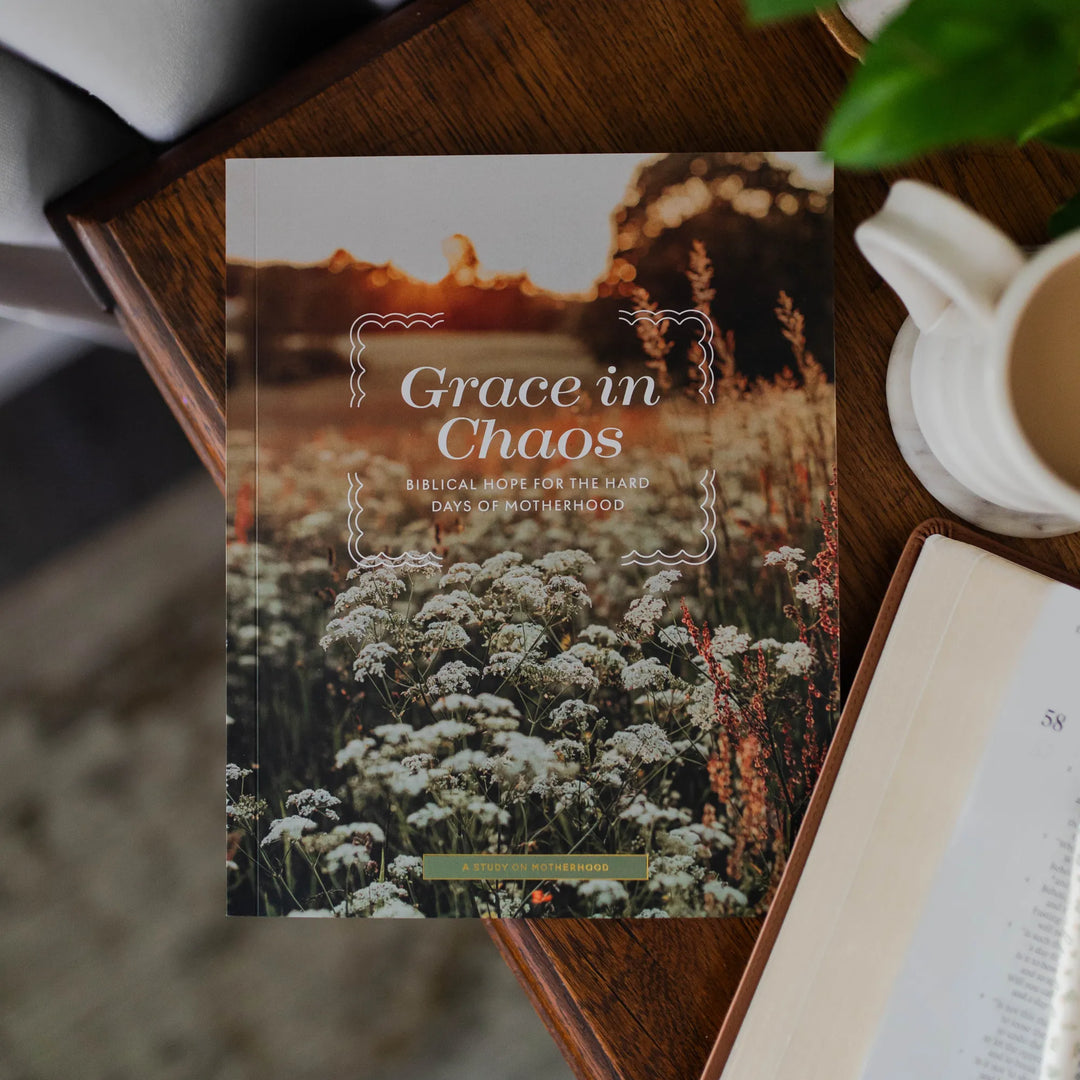
Loading price… |

Loading price… |

Loading price… |
||||
| Add to Cart | Add to Cart | Add to Cart | Add to Cart |