





I’m a chronic (but recovering!) procrastinator.
Often, I am tempted to push non-urgent tasks to the backburner—sometimes until they become urgent. I’ll book a flight the week before taking a trip or forget to respond to a text message (or twelve) until one of my good friends panic-calls me at ten o’clock at night because she’s worried I fell in the shower and died (true story. Sarah, I’m sorry!). Everyday tasks like this tend to slip under a big, cozy mental rug embroidered with the words: Anything worth doing is worth doing at the last minute! And they often don’t see the light of day unless I’m diligent about staying aware of them (I am ever thankful for my bullet journal and my reminder app), or they pop unexpectedly into my thoughts on a random Tuesday, and I’m left scrambling to do X thing in five minutes or less.
I’ve found that, often, this pattern arises when I’m already feeling overwhelmed or if the task at the end of the tunnel feels high-stakes in my mind. I’ll put off a personal writing project because I don’t feel like a good enough writer to start (maybe when I’ve read a few more books on writing?). I’ll avoid responding to my pen pal because I don’t have anything particularly interesting to share—unless she wants to hear details about the prehistoric moth I spotted in the parking garage at work. When I get the urge to learn a new song on the bass, the fact that I am not Tony Levin often leaves me repeating the same comforting rhythms over and over again, even though I’m itching to try something new. That old aphorism, “Don’t let perfect be the enemy of good,” is one I would do well to remember more often than I do—especially because of this mindset’s tendency to creep into my relationship with God.
The "But First" Mentality: What Matthew 8 Teaches About Delay
Over the years, and even more so when I feel distant from or reluctant to approach God, I have found myself returning to Matthew 8:18–22. In the first few verses of this passage, Jesus is approached by a scribe who tells Him, “Teacher, I will follow you wherever you go.” But this scribe doesn’t fully understand what kind of commitment he’s signing up for; and Jesus promptly removes the rose-colored glasses from his face through His response: “Foxes have dens, and birds of the sky have nests, but the Son of Man has no place to lay his head.”
In other words, following Christ is no walk in the park. It means being willing to forgo earthly comforts, to think of oneself last instead of first, to become the least instead of the greatest. It means a commitment to choose Jesus over everything else—even our own ideas of success.
The next two verses are the ones that always hit me the hardest: “‘Lord,’ another of his disciples said, ‘first let me go bury my father.’ But Jesus told him, ‘Follow me, and let the dead bury their own dead.’”
The first time I read this verse, I was a little confused, as it seems like an innocuous request. On its face, it might appear rather strange for Jesus to keep this man from doing a necessary family duty like overseeing the burial of his deceased father; but Jesus is teaching us a couple of important truths about our loyalty to Him—for one, that our hearts must not be divided between Him and the world. And for another, that we cannot delay in following Him, even if all our circumstances aren’t yet perfectly aligned. Even if we don’t feel “ready.”
When it comes to the potential disciple in this passage, scholars have mixed opinions; many believe that this man was not trying to give his already-deceased father a proper funeral but instead wanted to wait until his father’s death to become a Christ-follower.1 Why? Because he wished to remain in his father’s house—enjoying all its familiarities and comforts—until he couldn’t anymore. And then, once he was “free,” he’d come and follow Jesus, with a tidy inheritance to boot. The desire is there, but he approaches Jesus with a “But first . . .” mentality.
The “But first . . .” mentality reveals an inherent hesitation: a lack of trust and aversion to the possibility of discomfort or friction. This mentality says, “Oh, sure—I’ll give my life over to you, Jesus. Once all my earthly concerns are in order. Once it’s easy. When the time is right . . . for me.”
Even for us as believers who have placed our faith in Christ, even though we’ve accepted His salvation and been transformed by His love, we can still find ourselves stuck in the “But first . . .” mindset (though we may not always realize it). The practical things of our day-to-day lives become doorways through which we try to escape the sound of God’s voice calling us in a particular direction. Maybe, for example, there’s someone you know who needs to hear the gospel, but approaching them is a little intimidating. So you say to yourself: “First, let me get my own spiritual life in order before I try to minister to anyone else.” First, let me bury my doubts. My shortcomings. Then, maybe, I’ll feel ready.
Or maybe there’s a habitual sin you just can’t seem to shake. Something that’s become so comfortable that it feels like second nature to ignore it—to push it out of your mind when you come to God in prayer. Maybe, to alleviate the uncomfortable prick of conviction in the moment, you tell yourself: “This is the last time I lose my patience. This is the last time I lash out at my partner. This is the last time I indulge in this harmful habit. I’ll bring it to the Lord eventually; but I need to get a better handle on it before I can approach Him.” First let me bury my temptation. My sinful tendencies. Then, maybe, I can go to God.
Why We Delay: Overcoming the Trap of Spiritual Procrastination
There’s a beautiful passage from Augustine’s Confessions that speaks to this all-too-easy pattern of spiritual procrastination:
My old loves held me back. They tugged at the garment of my flesh and whispered, “Are you getting rid of us?” . . . And so I hesitated to detach myself, to be rid of them, to make the leap to where I was being called. Meanwhile the overwhelming force of the habit was saying to me, “Do you really think you can live without them?”2
The problem with spiritual procrastination is this: We can’t bury our shortcomings on our own. By our own willpower, we are utterly incapable of cleansing ourselves of sin, of walking in the footsteps of Jesus. We cannot save ourselves. Our reservations, our doubts, our fears, our temptations—those are bone-deep corruptions that only God can heal and redeem. It’s why Jesus answered this would-be disciple, “Follow me, and let the dead bury their own dead.” For it is only in clinging to Christ that we have any hope of burying the things that threaten to bury us.
The practical things, the dutiful things, even the good things can become coffins if we put them before our walk with Jesus. It’s human nature to procrastinate (or at least it’s my human nature). But when we put off the necessary act of humbling ourselves before God—of repentance or of stepping into a new chapter—and instead allow our daily rhythms to schedule us, we put more faith in those things (that is, in ourselves) than we do in our Savior.
Augustine goes on: “Why are you relying on yourself, only to find yourself unreliable? Cast yourself upon him, do not be afraid. He will not withdraw himself so that you fall. Make the leap without anxiety; he will catch you and heal you.”3
For the man who said, “first let me go bury my father,” who was waiting for worldly security before committing to follow Jesus, burying his father meant delaying the healing to which Augustine is referring. It meant leaving the wound of his sin open a little while longer—until he felt “ready” to ask for restoration. But the thing about open wounds is this: The longer you wait to clean them out, the worse they become. Though the cleansing is a painful process, it must be done as quickly as possible, lest you approach the wound too late—and it’s already closed upon a host of dirt and bacteria just waiting to sprout a nasty infection. That “But first . . .” mindset might just land you in the hospital. Even the smallest wounds can turn septic if left unacknowledged. And so it is with sin.
Unlock a 10% off coupon!
Stop Waiting to Be Presentable: Coming to Jesus As You Are
Ultimately, my encouragement for you today is to examine your life, upturning even the most uncomfortable stones and bringing them before God’s throne in humble confession. He will not turn you away; in fact, He delights in healing you. He longs to stitch up your wounds and bring you nearer to Himself.
If you’re waiting for your life to get in order—for your own strength to bury the things that tether you to sin—before daring to approach God, you’ll be waiting a very long time. Instead, Christ invites us to follow Him and respond to the call of His voice, regardless of whether our house is in order or if we find ourselves flinching from His touch due to the shame of hidden sins—latent infections. There is nothing you can do to make yourself “presentable” before the Father; but praise God that He doesn’t require perfection. All He wants is your heart. Your love. Your mess. No matter how sinful you are, you will not find condemnation in Christ (Romans 8:1).
Earthly comforts fade; but your relationship with God never will. Doubts and insecurities come and go; but Jesus stays constant. Whatever part of yourself you’re holding back from Him today, release it into His hands. Trust Him with your imperfections—for He will be faithful to clean out even the deepest wounds.
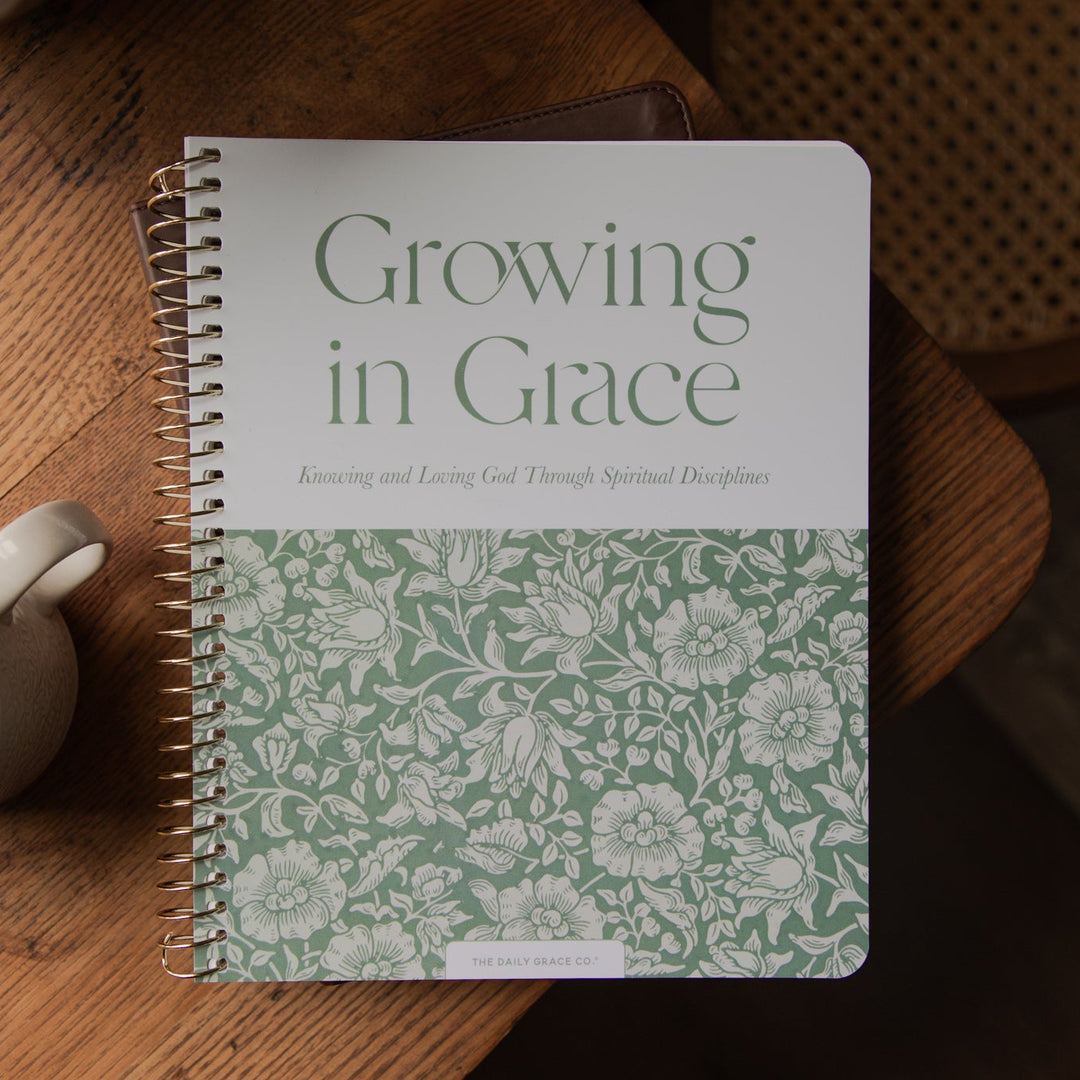
Wherever you might find yourself this season, whether you are hesitant or weary or longing to grow more deeply in your faith, know that God doesn’t ask you to arrive with everything sorted out. He simply asks you to come. If you’re looking for a way to draw nearer to your heavenly Father, our Growing in Grace study can help you do just that as it walks you through spiritual disciplines that fit into real, everyday life. All you need is a willing heart and a desire to take the next small step!
If you liked this article, check out the related resources linked below!
Notes:
David Platt, Exalting Jesus in Matthew, under “The Portrait of Jesus in Matthew 8.”
Augustine, Confessions, 8.11.26.
Augustine, Confessions, 8.11.27.
Author Bio
Audrey Dial is a Staff Editor for The Daily Grace Co.® She lives in Houston, Texas, where she serves as the neighborhood chronicler of toadstools and her cat’s emotional support human. In her spare time, she can be found writing, reading medieval poetry, or enjoying a cup of tea.
Related Resources:
| Growing in Grace | Spiritual Disciplines Bible Study | Pray Bible Study | Forty Sayings of Jesus Bible Study | In Christ Alone | Romans Bible Study | ||||
 Loading price… |
 Loading price… |
 Loading price… |
 Loading price… |
||||
| Add to Cart | Add to Cart | Add to Cart | Add to Cart |