






Most of us have encountered questions about the Bible, theology, or the Christian faith that we couldn’t quite answer on the spot. These types of questions seem to just sort of pop up. They might come from a child in the back seat, a coworker over lunch, a skeptic in a podcast debate, or our racing minds as we try to fall asleep! How old is the earth? What happens when we die? Will I see my dog again? And where did God come from, anyway?
These aren’t small questions, and they deserve better than a shrug or an internet search that leaves us more confused than when we started.
That’s why we created The Questions Handbook. It’s one of our largest resources to date, and it walks through the questions Christians actually wrestle with—about God, the Bible, salvation, suffering, science, and eternity.
This resource answers over 120 questions, with each entry following a predictable format: a short, quick answer that cuts to the chase; a longer response that walks through the relevant passages of Scripture; and an exploration of the different positions that Christians might hold.
Here’s a taste of the types of questions and answers you can find in the resource!
How Old is the Earth?
There are two general perspectives regarding the earth’s age. Some believe the earth is “young”—roughly ten thousand years old. Others believe it is “old,” perhaps billions of years old.
One’s answer to this question revolves around how they interpret Genesis 1. Within the old-earth perspective, there are several different views on the Creation account:
- The Framework Hypothesis sees Genesis 1 as poetic, with days one through three describing God’s “forming” the earth, and days four through six describing God’s “filling” the earth.
- The Gap Theory sees an initial creation in Genesis 1:1, followed by its distortion and destruction in Genesis 1:2, followed by a lengthy “gap” of time leading up to a new creation beginning in Genesis 1:3.
- The Day-Age Theory holds that each “day” of creation does not represent a literal twenty-four-hour day but an exceptionally long age, or passage of time (see Psalm 90:4, 2 Peter 3:8).
Those of the young-earth perspective, on the other hand, simply interpret the six days in Genesis 1 as referring to literal, twenty-four-hour days. They point to other similar uses of “day” in Scripture and to Exodus 20:11, where a literal, six-day Creation grounds the Sabbath command.
Regardless of which view you hold, faithful Christians have held both, and what they agree on is this: God created the world and is powerful over all.
What Happens After Death?
Scripture doesn’t satisfy all our curiosity about what happens after we die, but it tells us enough. Jesus promised the thief on the cross that he would be with Him in paradise that very day. Paul described being away from the body after death as being “at home with the Lord” (2 Corinthians 5:8) and called it “far better” than anything this life holds (Philippians 1:23). By God’s grace, He guarantees an eternity of relationship with those who put their faith in Him.
On the other hand, those who have not put their faith in Jesus will face judgment at some point after death (John 5:24, Hebrews 9:27), eventually suffering eternal separation from God. Indeed, this is a sobering reality, and we shouldn’t soften it.
Those who embrace God, the source of life, will enjoy Him forever, but those who reject the source of life face eternal separation from Him. That reality should make us both deeply grateful for the gospel and deeply burdened for the people around us who have not come to faith.

Do Animals Go to Heaven?
Scripture teaches that God’s primary focus is His relationship with humanity. However, animals are a beautiful part of God’s creation, and some Scripture passages suggest they might be included in His plans for the new creation.
Indeed, God is not indifferent toward the animal kingdom. He called His creation good (Genesis 1:21), He feeds the birds of the sky (Matthew 6:26), and Job 38–39 shows Him attentive to the smallest details of animal life. Prophetic pictures of the new creation even include animals (Isaiah 11:6–9, 65:25)!
Now, the eternal destiny of our family pets is a slightly different question. Scripture doesn’t indicate that animals possess an eternal soul the way image-bearing humans do, so we have no clear promise that the specific animals we’ve loved will be raised. However, what we do have is this: a God who has never been careless with anything He’s made. Everything in the new creation will be exactly as God intends it to be.
Where Did God Come From?
This classic philosophical question has a simple answer: God did not “come from” anywhere. Everything in creation has an origin, but God is not a created thing. God is uncreated. He always is, always has been, and always will be. He has no beginning. He is infinite and eternal, existing outside of time and space.
We can say a bit more: God is spirit, not matter (John 4:24). Before the mountains were born, He was God “from eternity to eternity” (Psalm 90:2). Jude praises the God whose glory and authority stand “before all time, now and forever” (Jude 25).
And this isn’t only true of the Father. The Spirit hovered over the waters before Creation and is called “the eternal Spirit” (Hebrews 9:14). The Son existed before all things, and “by him all things hold together” (Colossians 1:17).
God is the only One who has always existed. Thankfully, we can place our trust in our Everlasting God (Genesis 21:33).
Pick up a Copy of The Questions Handbook
These four answers are just the beginning. The Questions Handbook was designed to be a book you can reach for whenever a hard question comes up—whether from your child, your small group, a curious coworker, or even within yourself.
We encourage you to lean into these questions, continue seeking out wisdom and truth from Scripture and trusted resources like this one, and trust the Holy Spirit to guide you as you do so.
If you liked this article, check out the related resources linked below!
Unlock a 10% off coupon!
Related Resources:
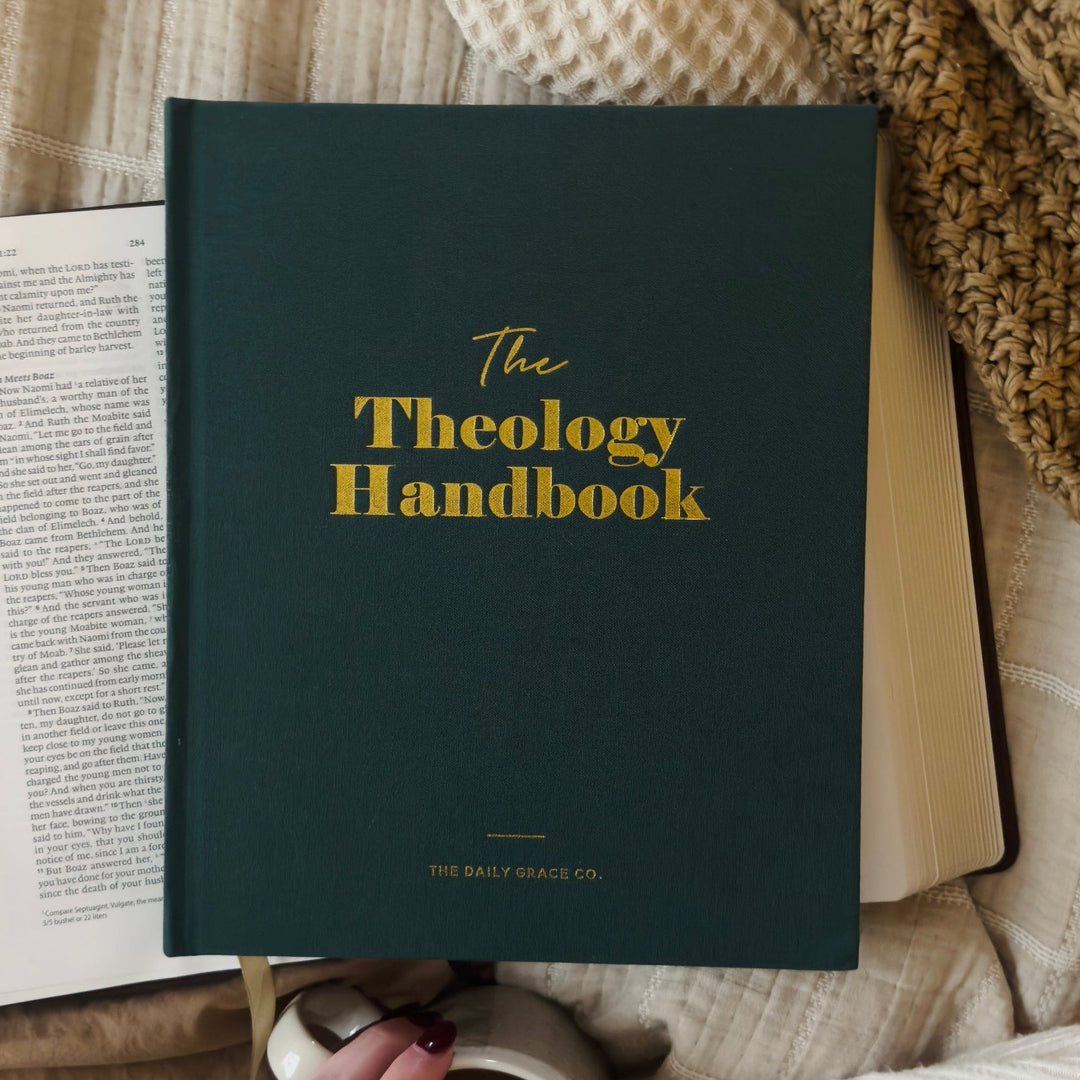
| The Theology Handbook | Why Did Jesus Have to Die? | Faith Questions - Truth | |||
Loading price… |

Loading price… |

Loading price… |
|||
| Add to Cart | Add to Cart | View Now |