






“Wow, you’re tense!”
Perhaps you’ve heard these words if someone has been kind enough to rub your shoulders when stress has created those nasty little knots in your back. Tension is generally not a positive word in our culture. High stress and chronic tension have been linked to significant health issues, including shorter life expectancy. We would do well to try to rid our bodies and minds of tension through stretching, sleep, hydration, relaxation, and exercise.
Ironically, much of our exercise happens by creating tension in our bodies. This is especially true of resistance training, which we continue to discover is essential for both short-term and long-term health. This seems funny. We reduce bad tension by creating healthy tension.
The Gift of Healthy Tension
This must be intuitive to my wife, Jen. More than a few times, when I’ve been mentally or emotionally stressed by the weight of responsibilities or heavy situations, she’s nudged me: “I think you should take a break and hit the gym or go for a run.” Inevitably, after a good workout, my mind is clearer, and I’m in a better place to face my challenges.
She speaks with wisdom, and faithful instruction is on her tongue (Proverbs 31:26, NIV).
Our skeletal and muscular systems are specifically designed to hold tension. In fact, we could not physically accomplish anything without tension. Our knees, elbows, and other joints leverage the tension created by muscles pulling in different directions to achieve the desires of our central nervous system.
The Body of Christ Grows the Same Way
The Scriptures lean into this reality when describing the body of Christ. The Apostle Paul paints a picture for the Ephesians of an essential unity amid the Church’s diversity of gifts, one that leads to growth.
Then we will no longer be infants, tossed back and forth by the waves…Instead, speaking the truth in love, we will grow to become in every respect the mature body of him who is the head, that is, Christ. From him the whole body, joined and held together by every supporting ligament, grows and builds itself up in love, as each part does its work (Ephesians 4:14–16, NIV).
The vision here is of a group of people with unique perspectives that can complement one another when held in appropriate tension. The body matures as the individual parts speak honestly and openly with one another.
The outcome of this healthy tension is that the body is no longer like an infant who needs its head and back held so it doesn’t flop around. Instead, the Church becomes healthy and well-rounded, growing into the fullness of Christ in a way that allows the body to gain strength and stability.
I’ve had my fair share of dislocated joints and torn ligaments. One thing I can definitely say is that when a joint isn’t working, the surrounding muscles are limited—or altogether useless. The body can no longer maintain the healthy tension needed to perform even basic tasks well.
Why We Avoid the Tension We Need
The Church often operates in functionally dislocated ways. There are many reasons for this, but high among them is our desire to avoid tension. Working out is hard, and relationships that challenge us are even harder. Why stay close to people who stress us out? Why remain in communities where differences create friction?
Instead, we quietly withdraw. We curate our relationships. We gather with those who see the Scriptures, the mission, and even Jesus Himself in ways that closely mirror our own. The result may feel peaceful, but it is often a peace purchased at the cost of maturity.
Difference Is Essential
Paul addresses this danger directly in another letter:
If the whole body were an eye, where would the sense of hearing be? If the whole body were an ear, where would the sense of smell be? But in fact God has placed the parts in the body, every one of them, just as he wanted them to be (1 Corinthians 12:17–18, NIV).
The point is simple: Difference is essential.
Should that surprise us? We worship a Savior who is full of both grace and truth, who tells us that true worshipers worship in both spirit and truth. The Scriptures speak of God’s sovereignty and humanity’'s responsibility, and they call us to walk in both justice and mercy. These holy tensions are not problems to solve but realities to embrace.
It follows, then, that we need those who are different from us, not only to grow, as we see in Ephesians, but to function together in accomplishing the Lord’s will. We can see this even among the early apostles. Peter, a bold, literal, and intuitive leader, is paired with John, a heart-based, relational shepherd with an artistic eye. Perhaps it is because they tend to pull in different directions that Jesus sends them out together.
These unique personalities, gifts, and perspectives offer the potential for incredible collaboration. But they require the gospel of Jesus to work. Unity amid diversity is a birthright of the Church if we are willing to receive it by faith.
Embracing Tension
It is helpful to ask ourselves an honest question when facing tension: Do I desire the shared growth that may cost personal comfort?
It is difficult to invite external tension, even when it is healthy. Regulating our external stress is an important part of mitigating internal strain. But equally essential is our ability to expand our capacity to carry tension in healthy ways.
Life in step with the Spirit produces fruit, not avoidance. Peacemaking, loving enemies, bearing with one another, these are not tension-free practices. They are mature responses to pressure, modeled by Christ Himself. Jesus did not eliminate tension; He carried it faithfully, entrusting Himself to the Father.
At the end of the day, we reveal God’s image by reflecting his character among us. And Jesus tells us that the world will know we are His disciples by our love for one another. Avoiding tension by surrounding ourselves only with those who are easy for us is not growing in love; it is simply removing the need to practice it. This is not the way of Jesus. His invitation is to come to Him within the tension, to bring our weariness and heavy burdens, and to discover rest, not by escape, but by learning to carry the load with Him.
A Covenant Strong Enough to Hold Us Together
In a world marked by political polarization, racial division, economic disparity, and generational fracture, the Lord invites His people to tell a different story.
Make every effort to keep the unity of the Spirit through the bond of peace. There is one body and one Spirit, just as you were called to one hope when you were called; one Lord, one faith, one baptism… (Ephesians 4:3–6).
The last word of this excerpt is “baptism.” It is a key to understanding how we hold tension in the body of Christ. Baptism is a sign of a covenant, like the rings that Jen and I exchanged with each other on the day we spoke our vows to one another. That day, we were declared one flesh in the eyes of God as we entered the covenant of marriage. We may have become one in God’s eyes, but unity in that new covenant is a journey and is a daily choice.
As followers of Jesus, we are also brought into a covenant that makes us part of one body. That covenant is what frames the body of Christ. It is specifically designed to hold tension. The challenge offered to us is to grow together in the beautiful community that comes with honestly, humbly, and prayerfully remaining in the tension that develops us together into the Character of Jesus.
Reflection Questions:
-
Are there parts of the body of Christ that I have little to no connection with because of our functional dislocation?
-
Who or what have I quietly pulled away from within the body of Christ that God might want to use for my growth?
-
What people or groups tend to create tension for me—relationally, theologically, culturally, or spiritually—and what might it look like to stay connected in that difference, trusting Christ to hold us together rather than withdrawing for the sake of comfort?
A Prayer for Unity
Lord, we trust that Your gospel of reconciliation is not only capable of restoring us to right relationship with You, but also powerful enough to unite us with those with whom we share significant differences. Holy Spirit, give us the grace not to avoid or pull away from difficult relationships, but to lean into tension with courage, humility, and patience. Jesus, may we, as Your body, grow strong and mature in You—together.
Amen.
Author Bio:
Tim Doering is a pastor and voice for unity and health in the body of Christ. He is the Founder and President of Netzer, a cross-denominational relational network that connects and strengthens the Church.
Unlock a 10% off coupon!
Additional Resources for Seeking Church Unity:
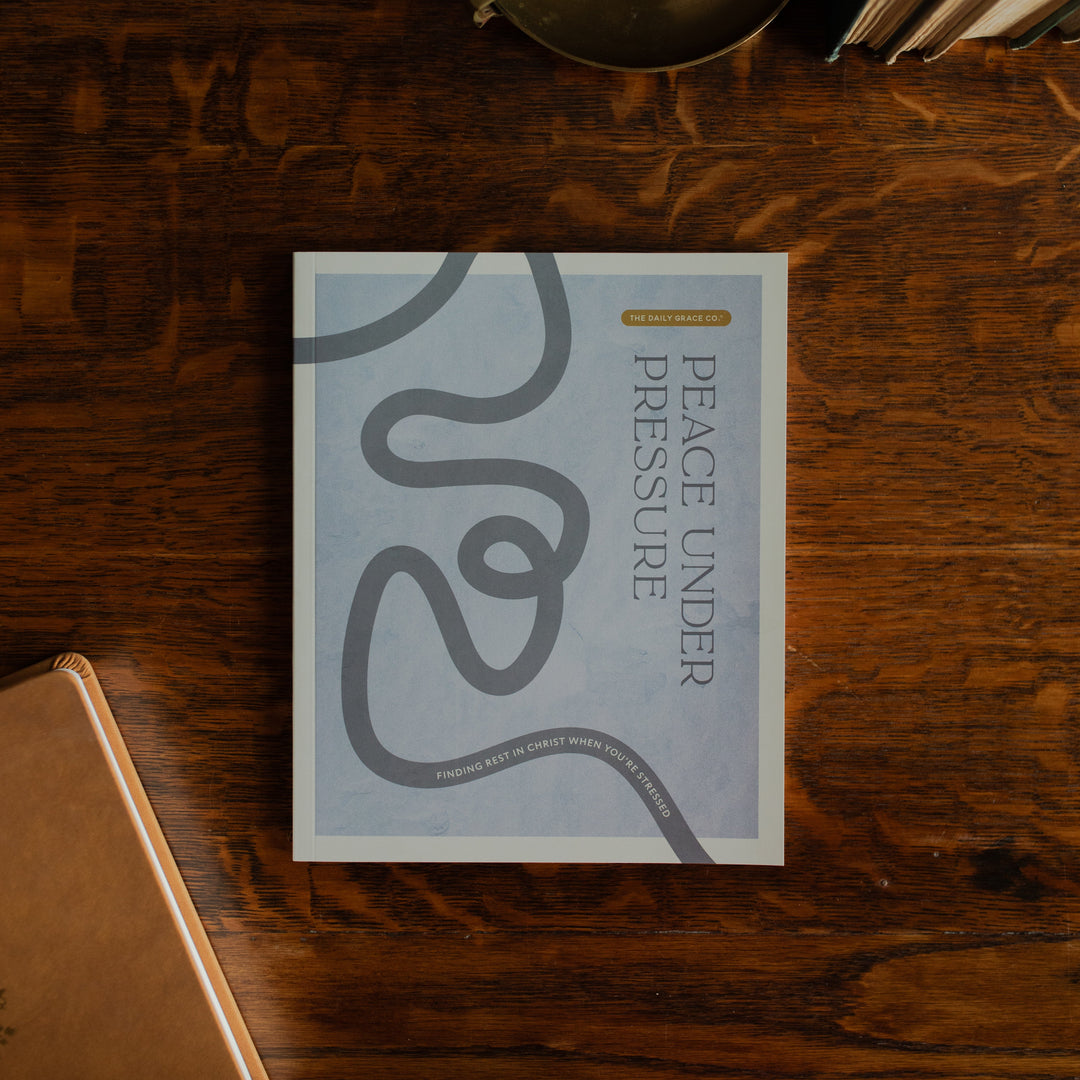
| Craving Community | A Bible Study on Friendship | Peace Under Pressure | What Did You Expect? | When Storms Rage | ||||
 Loading price… |
 Loading price… |
 Loading price… |
 Price unavailable |
||||
| Add to Cart | Add to Cart | Add to Cart | View Now |