





Michelle and I met several years ago as young moms living in two different states. Our shared experience of writing curriculum for students brought us together in the same room. I was instantly drawn to her warm personality and her ability to connect Scripture to practical applications and memorable illustrations. Little did I know, our first encounter would develop into a friendship years later when we found ourselves working in the same division of the same publishing company. She managed short-term women’s Bible studies, and I led a team that created and produced magazine and devotional products.
One day, she unexpectedly invited me for lunch.
I don’t remember what we ate, but I remember the conversation. She was struggling with her workload and the pressures of leading one of the most profitable areas of our company. She looked at me with kindness and concern and simply said, “I need a friend.”
That one conversation began a beautiful friendship, which eventually led us to pursue doctoral studies together. She later joined my team, and when I moved to accept another ministry assignment, she transitioned into the role I had.
Friends. I need them. You need them.
Yet statistics reveal loneliness is at epidemic levels. An American Psychological Association poll revealed that 54% of adults in the United States feel isolated, and half of those surveyed said they lacked companionship.1
Researchers have documented what many of us already know through experience: Relationships matter. Studies have shown that people with strong social connections tend to live longer, healthier lives than those who are isolated. Author John Ortberg humorously summarized one study this way: “It is better to eat Twinkies with friends than to eat broccoli alone.”2
Does that loneliness describe you? If so, how do you find friends? How do you develop relationships that aren’t merely with people you casually know but people who are there when times are tough and you need encouragement? Who helps you grow spiritually or lovingly confronts you when your attitude needs adjusting?
In short, genuine friendships begin much like the friendship between Michelle and me. Someone has to take the first step.
And while the research is fascinating, it shouldn’t surprise us that we need community. God designed us for relationships. Our longing for friendship points to an even deeper reality: We were created for a relationship with God. Every earthly friendship is a gift, but no friend can ultimately satisfy the deepest needs of our hearts. Only Christ can do that.
From the beginning, Scripture reveals a God who exists in perfect community within the Trinity—Father, Son, and Holy Spirit. We were created in His image, designed to know Him and to live in relationship with others.
Yet relationships are often complicated. People disappoint us. Friendships require effort. Community can be messy.
That is why one of my favorite pictures of friendship in Scripture is found in Mark 2. It’s a story many of us likely heard in Sunday School, but it contains a powerful lesson for every season of life. It’s the story of four friends and one man with a mat.
Jesus was in Capernaum, and a crowd had gathered to hear Him teach. The house was packed, and there wasn’t room for anyone else (Mark 2:2). But some friends found a creative way to get their paralyzed friend to Jesus. These men show us several characteristics of biblical friendship.
1. Biblical Friendship Requires Intentionality
One of the first things you might notice in the passage is that these friends chose to carry their paralyzed friend (Mark 2:3). This might seem obvious, but it was actually extraordinary.
During the time of Jesus, people with disabilities were often marginalized and overlooked. Yet these men intentionally remained connected to their friend. They did not leave him behind. They did not view him as an inconvenience. Instead, they carried him on a mat. And while we don’t know how far they carried him or how long it took, they didn’t seem to mind.
You don’t carry someone on a mat in a hurry, and friendships rarely happen by accident. They require time, energy, and intentionality.
Michelle and I didn’t become close friends over one lunch. It was a series of lunches, conversations, and shared experiences over time. In a world that likes things to happen instantly, friendships cannot be microwaved. They are more like a crockpot—slow and intentional.
Here’s the truth, though: We find ourselves both carrying the mat and on the mat during various points throughout our lives.
All of us have a mat. We just have to be willing to use it. Healthy friendships develop when people are willing to stay present long enough to help carry each other’s burdens. Galatians 6:2 reminds us, “Carry one another's burdens; in this way you will fulfill the law of Christ.”
At the same time, all of us find ourselves on the mat at one time or another. Anxiety. Grief. Physical illness. Family struggles. Loneliness. Past wounds. All of these things are often too heavy to be shouldered alone, and we need friends willing to put us on their mats and help us see Jesus.
Biblical friendship begins when we intentionally choose to walk alongside others, even when it requires sacrifice. It also requires us to be honest enough about our struggles for others to know how and when to put us on their mat.
2. Biblical Friendship Serves Others
These four friends show up at the house and realize they can’t get their friend through the door. Yet they refuse to give up.
I don’t know about you, but I don’t like lines or crowds. I might have thrown up my hands and gone home. Instead, they crash through the roof (Mark 2:4).
I’m not sure exactly how that conversation unfolded, but I’m certain one of the friends was an out-of-the-box thinker. The mere suggestion of making a hole in someone’s roof had to produce mixed reactions—including from the friend on the mat!
Yet they agree on the plan because good friends find creative ways to serve others—and not just in ways that are convenient. The four friends apparently weren’t concerned about comfort or decorum. They were focused on someone they loved.
Biblical community and friendships are built by people who serve one another. Strong friendships happen when you have friends willing to crash through a roof.
More than a handwritten note or a gift card purchased with a few taps on your phone, when did you truly inconvenience yourself for someone else? Friendships can be built through small acts of service, but lasting friendships are often forged when you show up in an unexpected moment and do something out of the ordinary.
3. Biblical Friendship Brings People to Jesus
The most powerful part of this story occurs when the men finally lower their friend before Jesus. Mark 2:5 says, “Seeing their faith, Jesus told the paralytic, ‘Son, your sins are forgiven.’”
Notice whose faith Jesus saw: He saw their faith. It wasn’t just the faith of the paralytic but the faith of his friends, too.
Throughout the Gospels, Jesus often responds to the faith of the person seeking healing. Here, however, He also notices the faith of those who brought their friend to Him.
The paralytic undoubtedly wanted physical healing. Yet Jesus addressed something even deeper: his spiritual need. Jesus forgave his sins and then healed his body.
Authentic biblical community does more than help with practical problems. It encourages spiritual growth.
A shopping companion is wonderful. A travel buddy is enjoyable. But a spiritual friend is invaluable.
Spiritual friends pray for us. They encourage us in God’s Word. They lovingly speak truth when we are wandering. They remind us of God’s promises when we are discouraged. Sometimes they have difficult conversations because they care more about our holiness than our happiness.
Those conversations require courage, but they are evidence of genuine love. Roof-crashing friends do not simply make life easier. They help us become more like Christ.
Are You a Roof-Crashing Friend?
Consider these questions: Who is carrying your mat? Do you have a friend helping you through a difficult season? Do you have someone with whom you can share your struggles and who points you to the Lord? God never intended for us to carry our burdens alone.
Second, whose mat are you carrying today?
Are you the kind of friend others can call when life falls apart? Are you willing to inconvenience yourself for the good of others?
Michelle and I live in different states today, yet we still stay connected. This week, I received a text message from her letting me know her father-in-law is close to meeting Jesus. I’ve watched her care for him in her home for several years and celebrate the gift of his one hundred years of life. Yet her text reminded me I can help carry her mat of grief.
Let’s be friends who are willing to crash through roofs for each other. It might not be convenient, and it might be messy. But the healing and forgiveness that come from bringing others to Jesus are worth going the extra mile—even when the mat is heavy.
Notes
1. American Psychological Association. “APA Poll Reveals a Nation Suffering from Stress of Societal Division, Loneliness.” November 6, 2025. https://www.apa.org/news/press/releases/2025/11/nation-suffering-division-loneliness.
2. Ortberg, Everybody’s Normal Till You Get to Know Them, 33.
Author Bio
Kelly D. King is the Women’s Minister at Quail Springs Baptist Church in Oklahoma City and an Assistant Professor of Christian Ministry at Southeastern Baptist Theological Seminary where she teaches the Ministry to Women courses. She is the author of Ministry to Women: The Essential Guide for Leading Women in the Local Church. You can connect with her at kellydking.org.
Unlock a 10% off coupon!
Related Resources:
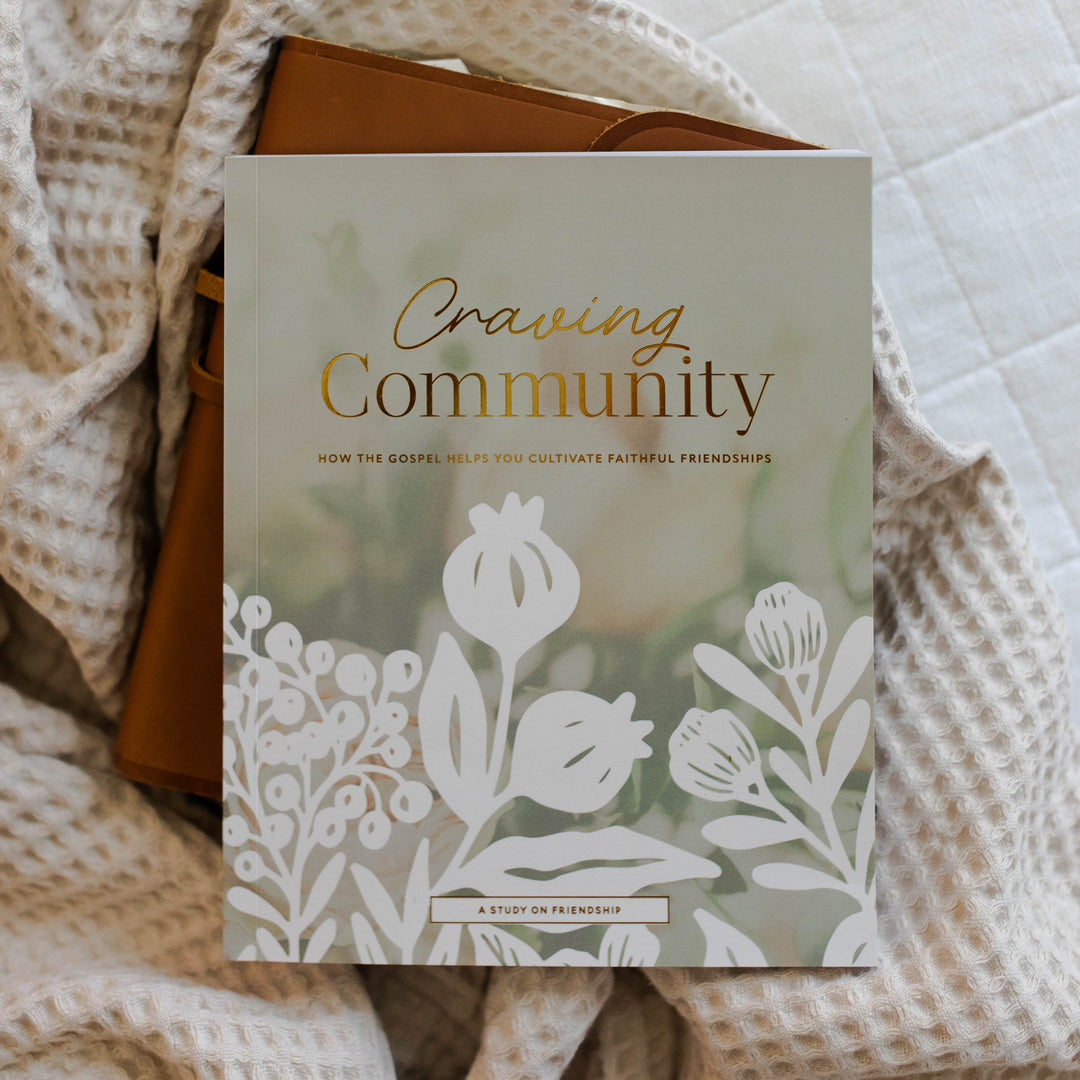
| Craving Community | A Bible Study on Friendship | What A Friend We Have in Jesus | Better Together | Discipleship Guide | |||
Loading price… |

Loading price… |

Loading price… |
|||
| Add to Cart | Add to Cart | Add to Cart |