





There is a kind of spiritual exhaustion that does not feel dramatic. It doesn’t usually announce itself. It just shows up in small ways.
You open your Bible with good intentions, but your mind is already halfway through today’s to-do list. You pray, but it feels more like herding scattered thoughts than talking to God. You tell yourself you’ll slow down later—after work, after the kids are down, after the next thing—but “later” never seems to come.
And weeks can pass just like that before you even notice—and not through some outright rejection of God. Just . . . distance. A quiet kind of drifting you didn’t plan for.
For many of us, the issue is not a lack of desire. It’s that our lives seem to pull our attention in a dozen directions at once. Over time, that kind of life doesn’t just make us busy; it leaves us spiritually scattered and even exhausted.
We don’t usually drift from God in a single decision. We drift through life rhythms we never deliberately chose. That means our greatest need isn’t simply more determination; it’s to be intentionally formed by the Word of God.
Why Drifting From God Rarely Feels Dramatic
Jesus’s words in John 15 are simple yet powerful: “Abide in me, and I in you. As the branch cannot bear fruit by itself, unless it abides in the vine, neither can you, unless you abide in me” (John 15:4, ESV).
Notice where Jesus begins. He doesn’t start with productivity, influence, or spiritual output. He begins with abiding in Him. That matters because most of us desire fruit, but we aren’t abiding. We long for stability, but we don’t commit to the daily rhythms that cultivate it.
But Jesus makes something clear: Life with Him is not built on occasional connection when we have the time. It is built on continual dependence.
In a distracted world, however, that kind of abiding does not happen automatically. It has to be formed.
What Your Daily Rhythms Are Quietly Forming in You
One of the clearest truths about our lives is this: Spiritual neutrality doesn’t exist. We are always being formed by something. Our habits are quietly discipling us, whether we realize it or not. So the question is not whether we have rhythms but what our rhythms are forming us into.
This is why Scripture consistently calls God’s people back to remembrance—not only because they forgot what He had done but also because they forgot how to stay near Him.
Psalm 1 gives us a picture of what that nearness looks like: “Blessed is the one . . . whose delight is in the law of the LORD, and who meditates on his law day and night. That person is like a tree planted by streams of water” (Psalm 1:1–3a, NIV).
Notice the language here. Not a tree occasionally watered. A tree firmly planted, soaking up water from the stream. There is a difference between visiting something life-giving and being rooted in it. Many of us feel the tension of living like visitors to God’s presence while expecting the fruit of being rooted in Him.
Why Scripture Is an Anchor, Not Just Another Habit
We often treat Scripture as one spiritual practice among many, something to “add in” if we can find the time.
But Scripture is not merely another habit on the list. Before it changes our behavior, it reshapes our attention by fixing our eyes on Christ. As we meet Him in His Word, we begin to see ourselves and our circumstances more clearly.
Paul describes this kind of formation as training: “Have nothing to do with godless myths and old wives’ tales; rather, train yourself to be godly. For physical training is of some value, but godliness has value for all things, holding promise for both the present life and the life to come” (1 Timothy 4:7–8, NIV).
Training implies repetition. It takes not just intensity but returning, again and again, to what shapes you most deeply.
Scripture is not just information about God. It is a means of communion with Him. This is where we learn His voice. This is where our thinking is renewed. This is where our assumptions are confronted, and our desires are reordered.
As you probably know as well as I do, this won’t happen quickly. Formation is rarely loud; it is usually slow.
How a Distracted World Quietly Reshapes Your Faith
We often underestimate how much distraction reshapes us. I know I have. I don’t just mean obvious distractions like our phones, digital noise, and constant input. I also mean the quieter kind: the inability to sit still, the need to always be moving on to the next thing, the subtle discomfort of silence or reflection.
Over time, this doesn’t just affect our attention span; it affects our spiritual depth. Depth requires abiding, and abiding is hard in a world that trains us to move on quickly. This is why, for most of us, spiritual formation is not about escaping our world. It is about practicing how to remain faithful in the midst of it.
How Scripture Shapes Your Prayer, Rest, and Obedience
Scripture has a way of putting everything else back in its proper place.
When we open God’s Word, we aren’t simply gathering information or checking another item off our spiritual to-do list. We are meeting the God who has spoken and continues to speak through His Word. As we behold His character, we’re reminded of what is true.
Over time, that changes us.
Prayer becomes less about finding the right words and more about responding to the God who has already spoken. Rest becomes an act of trust because Scripture reminds us that God is still at work, even when we stop striving. Obedience becomes less about earning God’s approval and more about living in grateful response to the grace we’ve already received.
This is why Scripture is not simply one spiritual practice among many. It is one of God’s primary gifts for drawing us back to Himself, over and over again.
Looking again at John 15, Jesus’s words help us see why. Branches don’t bear fruit by trying harder; they bear fruit by remaining connected to the vine. In the same way, Scripture continually returns us to Christ (John 15:7). It reminds us where true life is found.
The fruit of the Christian life has never been the product of willpower alone. It has always been the overflow of abiding more deeply.
You Don’t Need a Perfect Rhythm; You Need a Real One
It is easy to assume that spiritual growth requires a complete life overhaul. New routines. New structure. A perfect plan that finally fixes our inconsistency. But most people do not need a perfect plan.
They need a faithful beginning, such as a few minutes in Scripture each day—not because it earns anything but because it recenters us on what is most real. A return, even when it feels ordinary, or dry, or like nothing is happening.
Formation often feels like nothing is happening . . . until one day you look up from the busyness of life and realize you are thinking differently. You’re responding differently. You’re trusting differently.
What began as an exhausted and scattered faith is now becoming rooted, like a tree planted by streams of water. In a world constantly competing for our attention, Scripture gently returns us to the One who deserves it most.
Day after day, God uses His Word to root us more deeply in Christ until abiding becomes less like another thing to do and more like the place we’ve learned to live.
If you liked this article, check out the related resources linked below!
Author Bio
Colby Huth serves as the Men’s and Discipleship Pastor at Austin Christian Fellowship and is passionate about helping people grow in a faith that is deeply rooted in Scripture and centered on Christ. He holds a Master of Arts in Christian Education from Southwestern Baptist Theological Seminary and has spent years teaching and discipling others in both church and camp ministry. Colby lives in the Austin, Texas, area with his wife and their two daughters.
Unlock a 10% off coupon!
Related Resources:
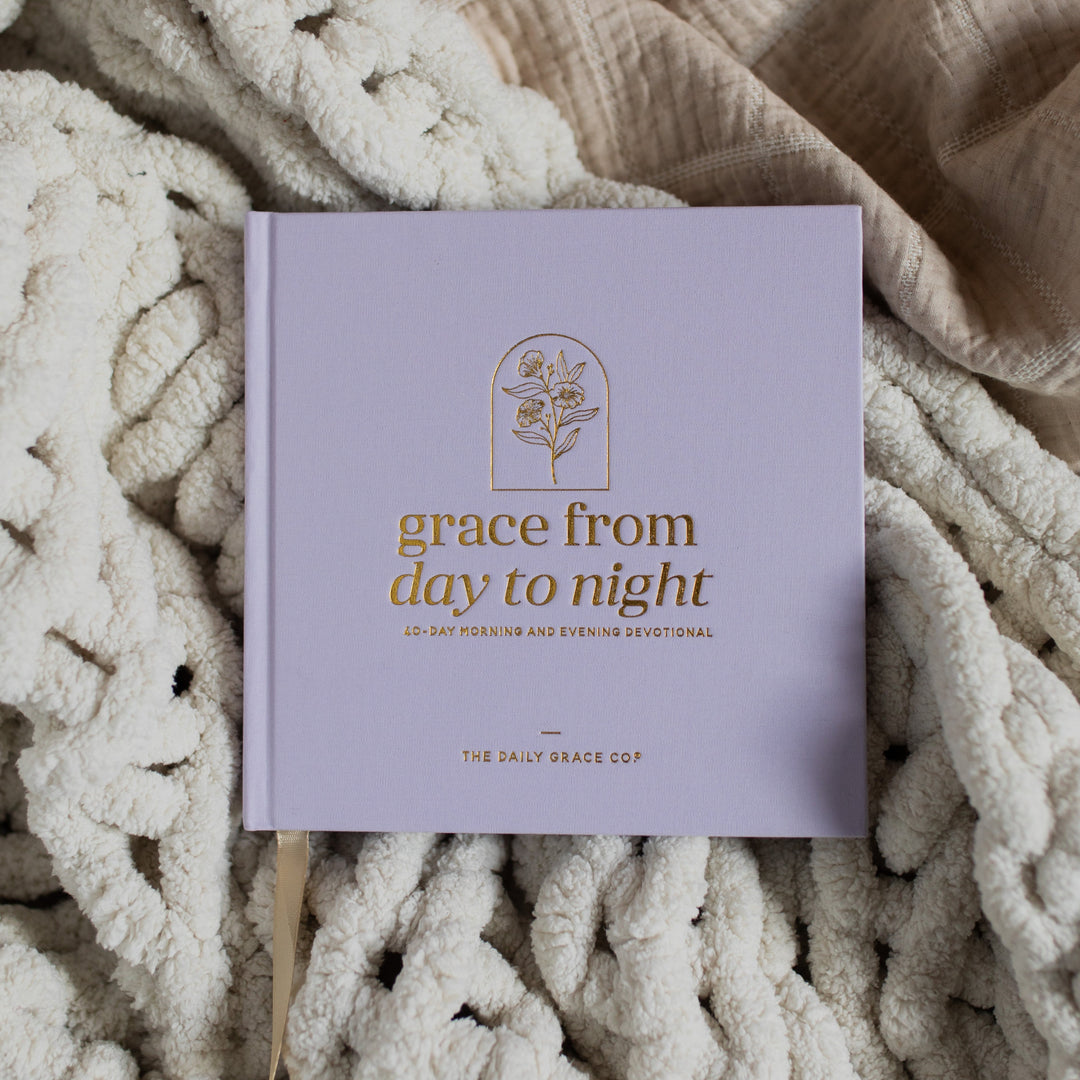
| Abide Bible Study | Seasons in the Word | Bible Reading Plans | Grace From Day to Night | |||
 Loading price… |
 Loading price… |
 Loading price… |
|||
| Add to Cart | Add to Cart | Add to Cart |