





Every fall, I find myself in the same position—my husband deep in his busy season of work, three kids to raise (one of whom I homeschool), an Advent calendar waiting in a drawer, and the creeping awareness that December is closer than I expected. I scramble, I rush, and somewhere in the middle of all that busyness, I feel mentally and spiritually behind before the season even begins.
Maybe you know that feeling, too. The calendar fills faster than your soul does. You want the holidays to mean something deeper for your children, but October slips by in a blur, and the spiritual preparation you intended quietly gets pushed to November, then December, and then maybe next year.
But I had a revelation this past year as I was working in my garden: Mothers are farmers. And farmers don’t tend their soil only one month out of the year. We till the soil, plant the seeds, water, watch for growth, water some more—and eventually, God gives the growth in His time (1 Corinthians 3:7). Sometimes it may look like there is no growth at all, but the roots are growing deep, and God is doing a work we cannot see.
The discipleship that makes Christmas meaningful doesn’t begin in December. It begins here in this season, in ordinary moments, in the faithful and often unseen work we are already doing. We are not behind. We can start today.
The Harvest Is Not Background Scenery
Scripture is full of harvest imagery, and it is never just describing scenery. In Psalm 126 and Galatians 6, God uses the language of sowing and reaping to describe something true about how His work moves in the world and in our homes. The harvest doesn’t happen without a long, unseen season of planting—and neither does discipleship.
Galatians 6:9 says, “Let us not get tired of doing good, for we will reap at the proper time if we don’t give up.”
This verse reminds me that my efforts to disciple my children are not in vain. God sees the seeds I’m slowly planting day by day—every passage we read together, every time the gospel is lived out with them. He uses these moments for His glory, whether I can see it or not.
The phrase “get tired” comes from the Greek word eklyō, which doesn’t refer to a vague tiredness. It means “to give out” or “to become weary,” the kind of wearing down that comes from sustained strain. Paul is not speaking to those who are indifferent. He is speaking to the person who has given everything they have and is quietly wondering if any of it is taking root. And to them, the promise is clear: Do not stop.
But there are nights when that truth is harder to hold onto than others.
Our Bible-reading time at night consists of a five-year-old daughter who thinks she’s an adult, a three-year-old son who is rowdy, and a tired fourteen-month-old who is overly clingy. Like most families with small children, our bedtime routine is usually chaotic. When we read, my daughter gets easily distracted, and I feel like sometimes it just goes in one ear and out the other. Sometimes we stop and start multiple times to get through a lesson over forty-five minutes or even an hour.
Sometimes we can easily breeze through it in twenty minutes, and other times it’s like pulling teeth. I have learned to hold our Bible time with a loose hand because small children give you only a few minutes of focused attention.
Sometimes it still feels like my efforts are wasted. It feels like the harvest is all up to me, but it’s not. I’m just called to plant the seeds and water.
So I keep planting the seed of the gospel in my children every day, and there are some things that have not stuck for them yet. Take the doctrine of the Trinity (a pretty hard doctrine for even adults to understand). It’s understandable that my three- and five-year-olds can’t wrap their minds around our God being three persons in one. But what keeps me going is knowing that the convicting and drawing work is not mine. It’s God’s.
Why Christmas Discipleship Can’t Wait Until December
The seasons themselves are a curriculum we can all study. When my daughter asks why the leaves fall off the trees, I tell her that this is what happens every autumn. It doesn’t mean the plants are dying. God is just making room for more growth next spring. When she asks why it’s getting dark so early, I tell her that every fall the sun sets earlier, and we turn the clocks back. This is a lesson of waiting in and of itself. When we pull out fall decor, I want to start saying out loud what the instinct to prepare echoes: He went ahead to prepare a place. And when Thanksgiving comes together, I stop taking all the credit for it. That’s harvest, not project management. Every ordinary question, every rhythm of the season, is an open door.
There’s a reason we wait until December. Maybe it’s because December and the holiday season feel more sacred. The birth of Christ. Our risen Savior. God with us. Of course that feels sacred. But what if that feeling of sacredness is real, and the source is simply wrong? What if October is just as sacred, and we just haven’t been trained to see it that way?
Maybe we also wait because December comes with tools—devotionals, Advent calendars, resources that give us a place to start and words to say. Without them, discipleship can feel improvised. And when it feels improvised, the self-doubt creeps in: If I don’t have a plan, I’m probably getting this wrong.” “What if they ask me a question I don’t have the answer to?
It’s okay to want that structure. It’s okay to reach for a family devotional. What matters is that we disciple our children throughout the year, without waiting for the holidays to give us permission.
The simplest, most ordinary things don’t require a curriculum. Praying together. Letting them hear you pray. Pointing out something beautiful about God’s creation. Repenting in front of them—and to them. Showing them grace. Forgiving them. Reminding them of God’s faithfulness by sharing when He has answered your prayers.
Living the gospel out in real time is one of the most powerful ways to share it with our kids. That can look like kneeling down after you’ve lost your patience and saying: “It was wrong for mommy to yell when I was mad. I’m sorry. Do you forgive me?” In that moment, your children are learning that we don’t always have to pretend we have it all together. That we can humbly ask for forgiveness when we mess up. That the gospel isn’t just something we read but something we live.
The discipleship that makes Christmas meaningful doesn’t start with an Advent calendar. It starts here with you and your children—in October, in the chaos of a school night, in the questions they ask about the falling leaves.
The God Who Produces the Harvest
God has produced a harvest in my home: an atmosphere of worship.
My children love to get up in the morning and sing praises to the Lord. We have made that one of our daily routines. Each day during the week, before bedtime, we sit down, read our Bibles, and talk about God’s Word together. Every night, we pray over our children. And we don’t just pray at night. Whenever my children have a concern or a boo-boo, they ask me if we can pray over it because they know that we cannot do anything without the power and help of the Lord. We have learned to rely upon Him.
I do not produce that. The Lord does. I am just faithful to plant the seeds.
That is the promise of Galatians 6:9: “we will reap at the proper time if we don’t give up.” The promise isn’t that you’ll see every seed grow but that God will bring the growth in His time. Our part is to till the soil, plant the seeds, water, and watch.
So to the tired, behind-feeling mother reading this: We can start now. We can be consistent all year long, relying on the Lord to help us through it, as faithful stewards of what He has entrusted to us.
We are not producing the harvest. We are farming it. And the God who brings spring from a frozen field— who brings fruit from what looks like nothing—is working in our homes right now in ways we cannot yet see.
Don’t grow weary. Don’t stop planting. The harvest belongs to Him.
If you liked this article, check out the related resources linked below!
Notes:
1. Brannan, The Lexham Analytical Lexicon to the Greek New Testament.
Author Bio
Marissa Figueroa is a wife and stay-at-home mom of three young children. She writes her own blog, Disciple-Making Motherhood, encouraging women to follow Jesus in the everyday work of raising and discipling their children. Marissa also serves in children’s ministry and on the praise and worship team at her local church in Guntersville, AL. She enjoys photography, painting, and reading in her free time.
Unlock a 10% off coupon!
Related Resources:
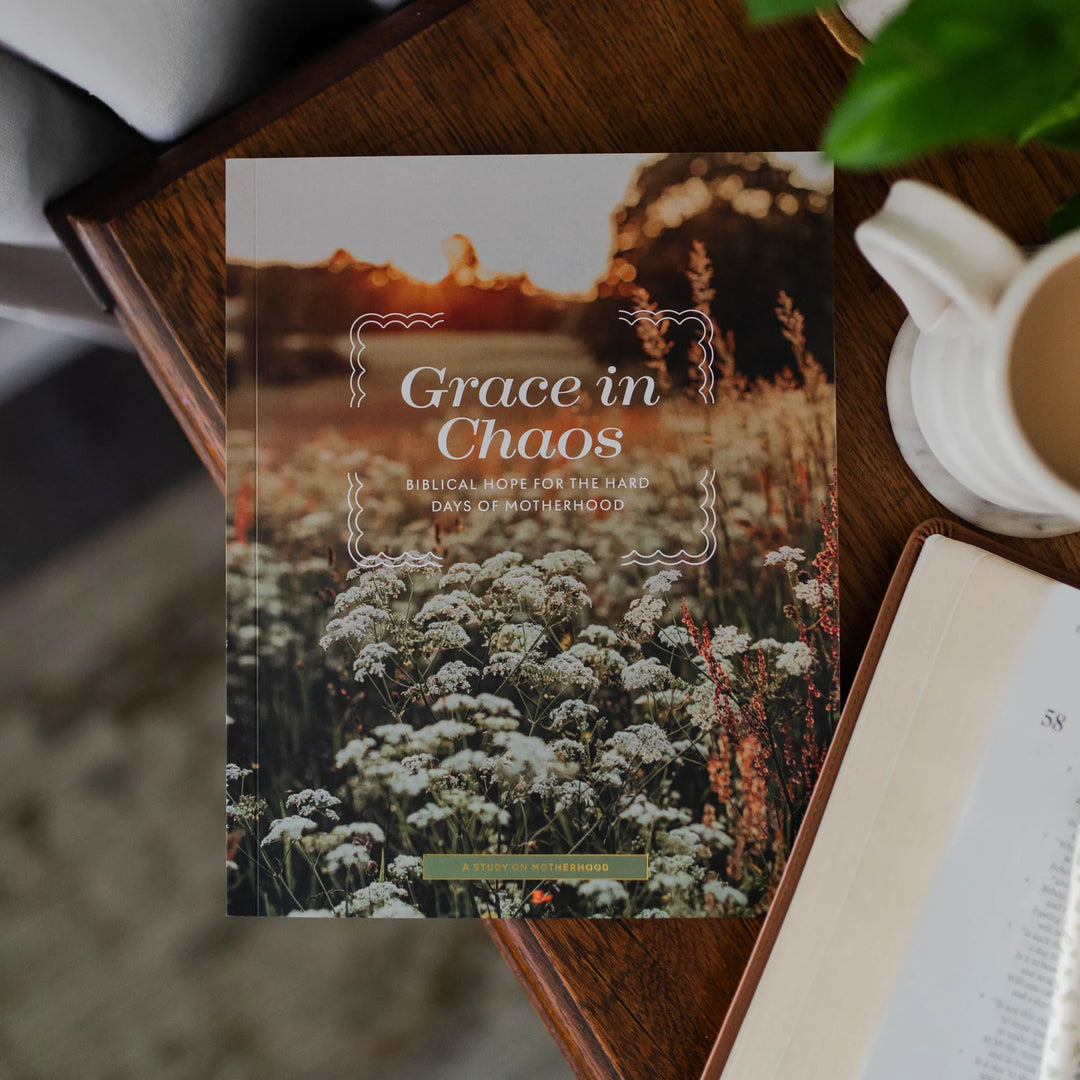
| Christ-Centered Family | Grace in Chaos | Motherhood Bible Study | Practical Discipleship for the Busy Mom | |||
 Loading price… |
 Loading price… |
 |
|||
| Add to Cart | Add to Cart | View Blog |