






Beginnings tend to make people more reflective. That phenomenon might occur because change upsets our balance a bit (or a lot). Even a “beginning” as seemingly arbitrary as flipping the calendar from December 31 to January 1 often makes people step back to look backward and forward, surveying their lives as they unfold in time.
When engaged in this exercise, the “New Year’s resolution” type of people register a sense of hopeful optimism about what lies ahead. They name aspirations for creating positive change in their habits, personalities, and relationships. Many others experience apprehension about what could happen in the coming months to make their plans unravel, to stifle their forward progress, or to throw them into a tailspin of existential questioning.
Whether you would place yourself at one end of this spectrum or somewhere in the middle, it’s worth asking what lies underneath our optimism or apprehension—or both—regarding what’s to come. What story of “the good life” are we implying as we fill in the blanks of reasons to be enthusiastic or anxious about what 2026 may bring? What do we suppose we ought to add or avoid to remain in the story we think we want to live? From the vantage point of a beginning, what do we consider to be a good ending?
The book of Job may feel like an unconventional—and rather grim—place to turn for a new year’s meditation. But perhaps Job is an ideal place to turn. The fact of the matter is that whatever we may feel about or desire for the new year, we have glaringly limited control over the course that the year actually takes. So how can we calibrate our expectations for the life of faith so that it’s possible for us to face whatever comes, good or bad, with healthy lament and resilient joy, all grounded on solid foundations? What guarantees do we have for the life of faith? What can we expect God to do for us, and who can we expect Him to be for us? How can we ensure that we’re leaning the weight of our expectations on what’s truly secure and significant?
Here are three ways in which the book of Job reorients our expectations for the life of faith, for our good:
-
The life of faith is not about insurance but allegiance.
Job is the most righteous guy around, and at first, he looks like the most successful guy, too (Job 1:1–5). Yet his blissful existence becomes nightmarish in the bewildering space of two chapters, as God authorizes a series of disasters that decimate his wealth, family, and health in rapid succession (Job 1–2). Job’s motivation is under scrutiny, as the purpose of this test is to see if Job’s apparent piety will evaporate when he no longer seems to be reaping divine blessings (Job 1:9–12; 2:3–6). In this way, the figure of Job serves as an extreme “thought experiment”: What happens if the floor really does drop out from underneath God’s most loyal servant? Is it worth trusting and obeying God in a world where you may have good things taken away from you and bad things added to you—without a guarantee that you’ll understand or control them? The book of Job probes these questions in order to reach conclusions that are transferable to the lives of others loyal to God, whatever their relative piety and suffering. What if (I pray not!) my or your worst nightmare happened this year? Often, those who consider themselves faithful to God carry an unstated assumption, or at least a hidden hope, that having allegiance to God will shield them from anything too terrible. But rather than looking away from grievous difficulty, the book of Job gazes straight at the most gratingly “unfair” situation imaginable: When the most righteous person undergoes the most comprehensive suffering, just short of losing his life. Ultimately, this book seeks to commend a life stabilized not by guarantees against suffering but by a gritty allegiance to the God who sits sovereignly over both “good” and “bad” (cf. Job 1:21; 2:10–11).
2. The life of faith consists not in quick fixes or tidy explanations but cries directed to heaven.
Three friends come to comfort Job (Job 2:11–13), and soon, Job and his friends find themselves caught up in a bitter verbal duel. Pounding the door of heaven with a distressed fist, Job wrestles with how God appears to have inexplicably turned against him. He demands a divine answer, even if that eventually means dragging God to court (cf. Job 31:35–37). Made uneasy by the raw words that Job spews at heaven, Job’s friends try to stem his brazen speech by assuring him that the world operates according to reliable principles: Good behavior earns good outcomes, and bad earns bad.
Accordingly, they suggest, Job’s circumstances indicate that he must repent and turn back to God, at which point he can count on restoration. While their suggestion may seem theologically safe and appealing, Job and the reader know that Job hasn’t done anything to “deserve” his suffering. Furthermore, when God’s voice finally breaks into the impasse of the unhelpful human exchanges, He has little interest in providing Job with answers to questions on which he and his friends have been so fixated. Instead, God launches into a colorful tour of the cosmos featuring its most far-flung dimensions that humans could never manage to comprehend or contain (Job 38–41). Exposing how Job’s speech veers outside of his limited creaturely lane (cf. Job 38:2; 40:8), God summons Job to reckon afresh with the God who is responsive but not coercible. God may not answer us on our terms, but He does answer with Himself (cf. Job 42:5) and ask us back, alongside Job, if we’re willing to trust His wisdom.
Then, in another plot twist, God approves of Job’s speaking and rebukes the friends: Unlike Job, the friends never spoke to God (42:7–8). They had plenty to say for God to Job, but they never, like Job, spoke to God, acting as intercessors for Job. Repeatedly calling Job “my servant” and favoring Job’s intercession for his friends, God affirms that Job’s posture to address God and pursue an encounter with Him has been right all along, even if aspects of his speech also merited correction. Consistent with the biblical tradition of lament, the book of Job encourages God’s people to forego the apparent ease of settling for neat explanations promising immediate relief. Instead, we are meant to direct our raspy voices to heaven, pinning all our hope on hearing again the voice of the God who answers.
3. The life of faith does not guarantee prosperity in this world but unfathomable flourishing in the world to come.
Then comes the happy ending: while Job is praying for his friends, in an unforeseen act of divine generosity, Job’s fortunes are restored such that everything about the end of Job’s story is even better than his prosperous beginning (Job 42:10–17). One may read Job’s happy ending and find it miserably unrealistic or maybe even mocking. What about all those faithful people who never recover from the illness, who struggle to put food on the table, who watch their dreams of having a family crumble before unwanted singleness or infertility? Is this book really supposed to convince us that God’s followers do end up flourishing when we seem to have so much evidence to the contrary? Well, yes and no. The entire premise of Job makes clear that sometimes, people loyal to God experience “bad” that they don’t deserve and cannot rationalize or remove. There’s no guarantee of present prosperity for God’s people, as much as we’re constantly tempted to wish for security in this life.
However, God’s will is to bless his people, and one day all will be well. If we read the book of Job the way James did, we’ll see that the happy ending of Job is compared to the Second Coming of Jesus. James urges his audience to “be patient until the Lord’s coming” (James 5:7) and then goes on to speak of Job, who persevered and saw the Lord’s “end”—an end marked by God’s compassion and mercy (James 5:11). God has answered His people resoundingly in His Son, the One who stepped into an unfair and desperate world as the ultimate righteous Sufferer and perfect interceding Friend. When at last our eyes see that Son returning (cf. Job 42:5, 1 Peter 1:6–9), the end will be so much better than the beginning (cf. Revelation 21–22).
May these truths from Job hold us steady in 2026, whatever comes, and cultivate a more persevering faith in God’s people as we learn to abide in the soul-deep satisfaction offered by the God who answers.
Happy New Year, and may our Lord come soon!
Author Bio:
After doing graduate work at Gordon-Conwell Theological Seminary, Ellie completed her Ph.D. at the University of Cambridge, focusing her research on the book of Job. She delights to explore how biblical truths catalyze the Church for deep discipleship and missional living. Ellie and her husband, Isaac, currently live in Charlotte, North Carolina.
Unlock a 10% off coupon!
Additional Resources for Resting in Christ in 2026:
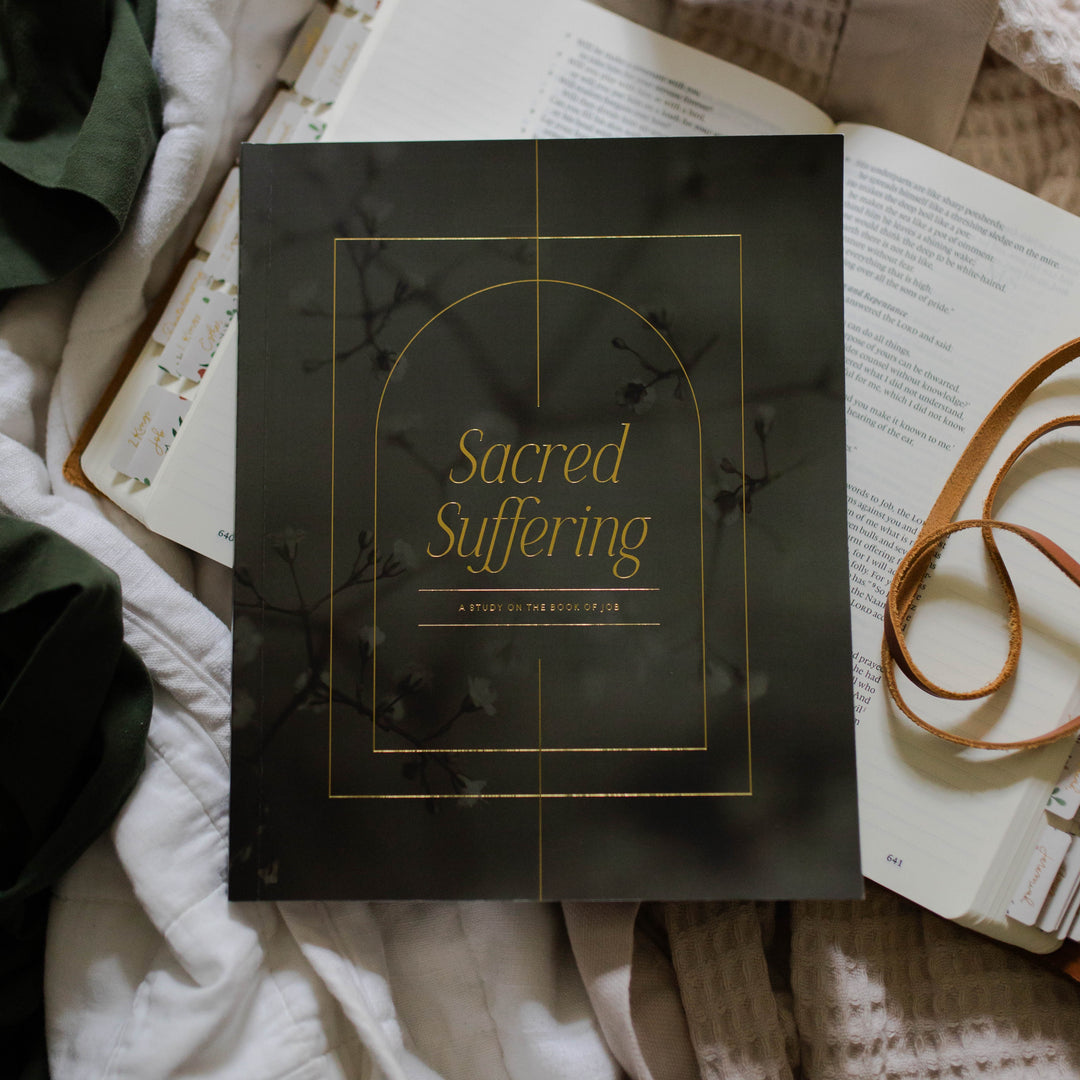
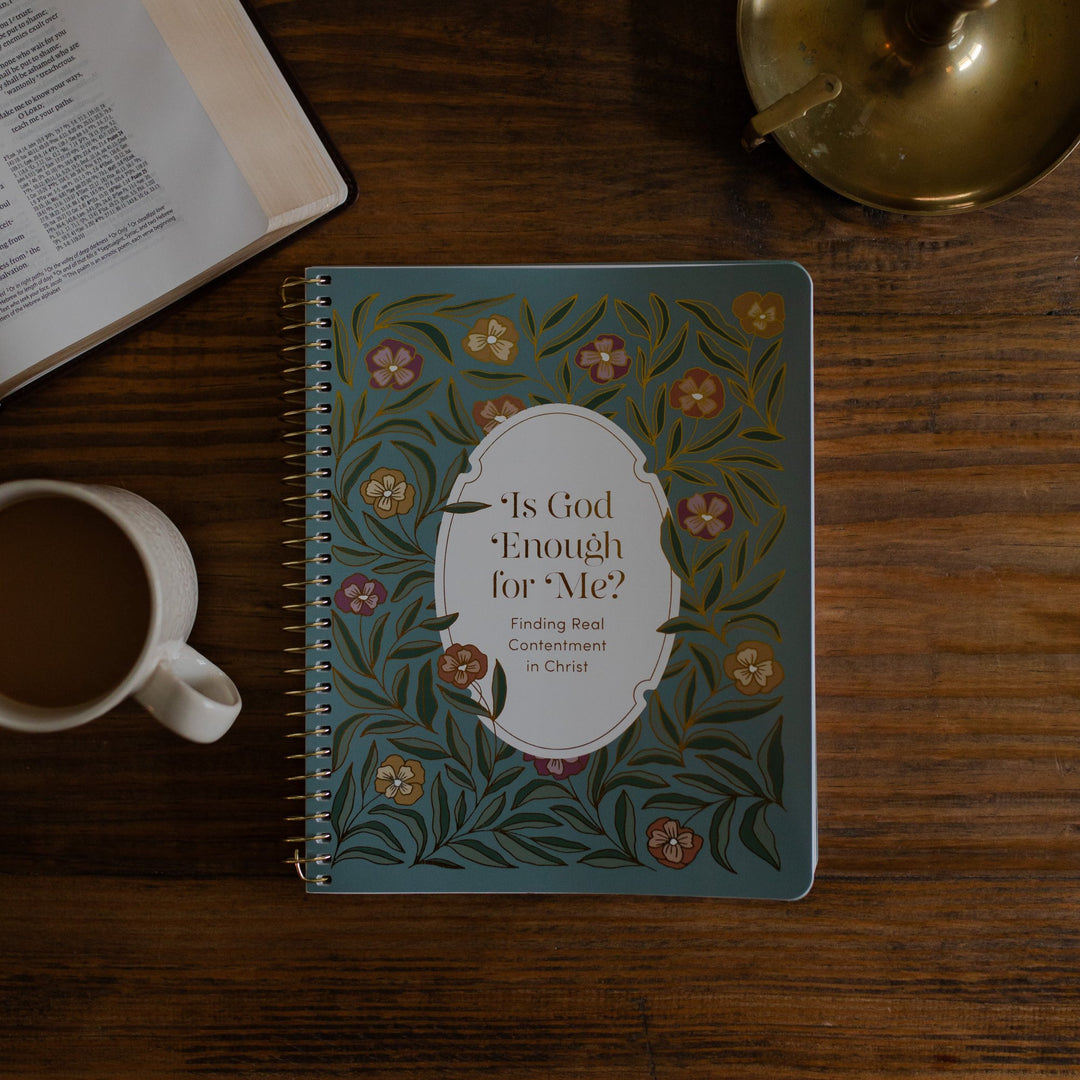
| Fresh Start | A Year in the Bible | 4 Volume Bundle | Sacred Suffering | A Study on the Book of Job | Is God Enough for Me? | Contentment Bible Study | ||||

Loading price… |

Loading price… |
Loading price… |
Loading price… |
||||
| Add to Cart | Add to Cart | Add to Cart | Add to Cart |