






I grew up in a small town, attending a relatively large evangelical church. I was involved in everything the church offered—summer camps, mission trips, student leadership, and small groups. If something was happening for students, I was there.
Looking back, I can see how much of my identity was wrapped up in being “all in.” Even outside of church, most of my relationships and conversations revolved around my faith. I felt confident in my spiritual life, even when that confidence drifted into self-righteousness.
And yet I often felt like I was falling short in one area: my “quiet time.”
Nearly every church setting I was part of emphasized personal spiritual disciplines, especially daily time alone with God. A “quiet time” meant reading Scripture, praying, and being still before the Lord. It was often presented as the primary way we grow in our relationship with Him.
Now, I want to be clear: Time alone with God is good. I still try to begin my mornings with Scripture, prayer, and reflection before the day starts. More importantly, we see Jesus Himself regularly withdrawing to quiet places to pray (Mark 1:35, Luke 5:16). Time set apart with God matters.
But over time I realized something important: These moments are meaningful, but they are not the only place God forms us.
Jesus tells us in John 10:10 that He came so we may have life—and have it abundantly. That abundant life is not confined to a quiet moment in the morning. It extends into the fullness of our days. God meets us in the middle of our everyday lives—in the ordinary, messy, relational spaces where we spend most of our time.
As I’ve reflected on Scripture and my own experience, I’ve noticed that much of our spiritual formation happens in three key areas: our responsibilities, our responses, and our relationships.
How Your Everyday Work Is Forming You
We are formed in the work we do each day.
Theologians from Martin Luther to N. T. Wright and Tim Keller have explored the connection between faith and work. A common thread runs through them: God cares about this world and the people in it, and He intends to restore it fully so that all may have the life He desires for us.
God is at work restoring and reconciling all things (Romans 8:19, 2 Corinthians 5:18–20), and He invites us to participate in that work. Our participation in that work isn’t reserved for overtly “spiritual” roles. It happens in how we carry out everyday responsibilities—with integrity, care, justice, and love.
Scripture reminds us that our work matters, whether it happens in our homes, workplaces, churches, or communities. Colossians 3:23 calls us to work “as for the Lord” (ESV). This doesn’t just honor God—it changes us. Faithfulness in small, ordinary tasks builds something deeper within us. The habits we practice daily begin to shape who we are becoming.
When we approach our work in ways that reflect God’s character, we participate in His restorative work. In small but meaningful ways, we reflect His goodness to the world around us.
At the same time, the work is forming us. What once felt difficult or unnatural becomes part of our character.
I have seen this in my dad, an independent contractor. He consistently charges less than he could, takes pride in doing good work, and treats people with honesty and respect. Through him, I’ve seen that good work is not just about results—it’s about the kind of person you become while doing it.
Working alongside him taught me to approach tasks with both attention and intention. Over time, that work formed in me a greater appreciation for excellence, a deeper care for people, and a desire to act thoughtfully rather than react quickly.
As we show up faithfully in our responsibilities, we are not only contributing to God’s work in the world, but we are also being shaped into people who reflect Him more clearly.
How You Respond to Hard Moments Is Forming You
We are also formed in how we respond to what happens around us.
Every day brings moments of frustration, joy, fear, and uncertainty. The question is not whether we will face them but how we will respond.
Romans 12:2 calls us to be transformed by the renewing of our minds. This transformation includes the way we process our emotions, interpret our circumstances, and engage with others.
For several years, I worked with youth who had experienced deep trauma. We received extensive training in how to respond in difficult moments. But we quickly learned that knowledge alone wasn’t enough. If staff didn’t believe they were capable of responding well, the training often fell short.
This is where I first learned about “self-talk”—the internal conversations we have with ourselves. These quiet thoughts shape how we see ourselves, others, and the situations we face.
All of us engage in this kind of internal dialogue. Sometimes, it builds us up and moves us toward connection and hope. Other times, it leads us into fear, doubt, or distance.
Prayer offers us a way to reshape these internal conversations. Scripture invites us to “pray without ceasing” (1 Thessalonians 5:17, ESV). This doesn’t mean we are always speaking out loud but that we remain in an ongoing awareness of God’s presence.
These quiet, continual conversations with God help anchor us in truth. They remind us who we are and how God sees both us and the people around us.
This kind of attentiveness transforms us. It frees us to respond with greater patience, compassion, and wisdom. And in doing so, we participate more fully in God’s restorative work in the world.
But this kind of transformation takes attention. It requires us to slow down, notice what is happening inside us, and invite God into those moments. He is faithful to guide us, even in our split-second reactions.
How Your Relationships Are Forming You
Our responsibilities and responses do not exist in isolation. They are deeply shaped by our relationships.
When we look at the life of Jesus, we see that He spent most of His time with people. From His closest friends—Peter, James, and John—to the broader group of disciples, His ministry was deeply relational.
They shared meals, asked questions, wrestled with difficult ideas, and argued with one another. They experienced failure, doubt, and restoration. And through it all, Jesus was forming them.
Transformation did not come only through formal teaching. It came in everyday interactions—around tables, along the road, in ordinary conversation.
There is something powerful about belonging. When we are known and loved, we begin to grow—often in ways we don’t immediately recognize. Our beliefs, habits, and perspectives are shaped by the people we walk with. This is exactly what the disciples experienced with Jesus.
I saw this recently in a conversation with close friends. What began as a simple discussion about work turned into a deeper reflection on why we care about what we do. As we shared openly, we saw how our past experiences had shaped our present callings—and how quietly our relationships with others had formed us.
One friend said conversations we had years earlier had shaped his commitment to living intentionally. Formation often happens slowly, through presence, trust, and shared life.
Learning to Notice God in the Ordinary
For a few years, I lived in a country with a culture that moved at a slower, more relational pace than the United States. When I returned, the shift was jarring. Everything seemed to push toward more—more productivity, more achievement, more planning for the future.
I began to realize how difficult it had become to simply be present.
But God meets us in the present.
As I’ve learned to slow down—even in small ways—I’ve begun to notice His presence more clearly. Sometimes, that looks like taking a deep breath and re-centering my thoughts. Other times, it’s choosing to pay attention to a conversation, a moment of frustration, or an opportunity to love someone well.
Presence makes room for intention. It lets us live our lives instead of rushing past them, opening space for joy, for lament, for reflection, for a whole range of emotions—and for the kind of attention that facilitates belonging.
In Deuteronomy 6, God’s people were instructed to remember Him in the rhythms of daily life—in their homes, on the road, and in ordinary moments. Their lives were meant to be shaped by an ongoing awareness of God’s presence.
In the same way, we are invited to carry the awareness of God with us wherever we go, to be in conversation with Him, and to be formed by Him. Through our responsibilities, responses, and relationships, God offers us abundant life and a chance to join in His restorative work, if we will only embrace it. We are being formed—not just in quiet moments but in all moments.
So often, when life feels ordinary or overwhelming, we find ourselves asking, Where is God? But perhaps a better question is this: How is God forming me here?
If you liked this article, check out the related resources linked below!
Author Bio
Max Harris is a leader, writer, and mentor who is passionate about helping people flourish through an inclusive and invitational vision of Christianity. With a Master’s in Theological Studies and a PhD in Organizational Leadership, Max has served in cross-cultural, community-focused roles from Latin America to the U.S., investing deeply in relationships while guiding teams and organizations toward greater impact. He has a special heart for those on the margins—especially young people—and seeks to combine thoughtful theology, practical leadership, and compassionate presence to reflect Christ’s love in every context.
Unlock a 10% off coupon!
Related Resources:
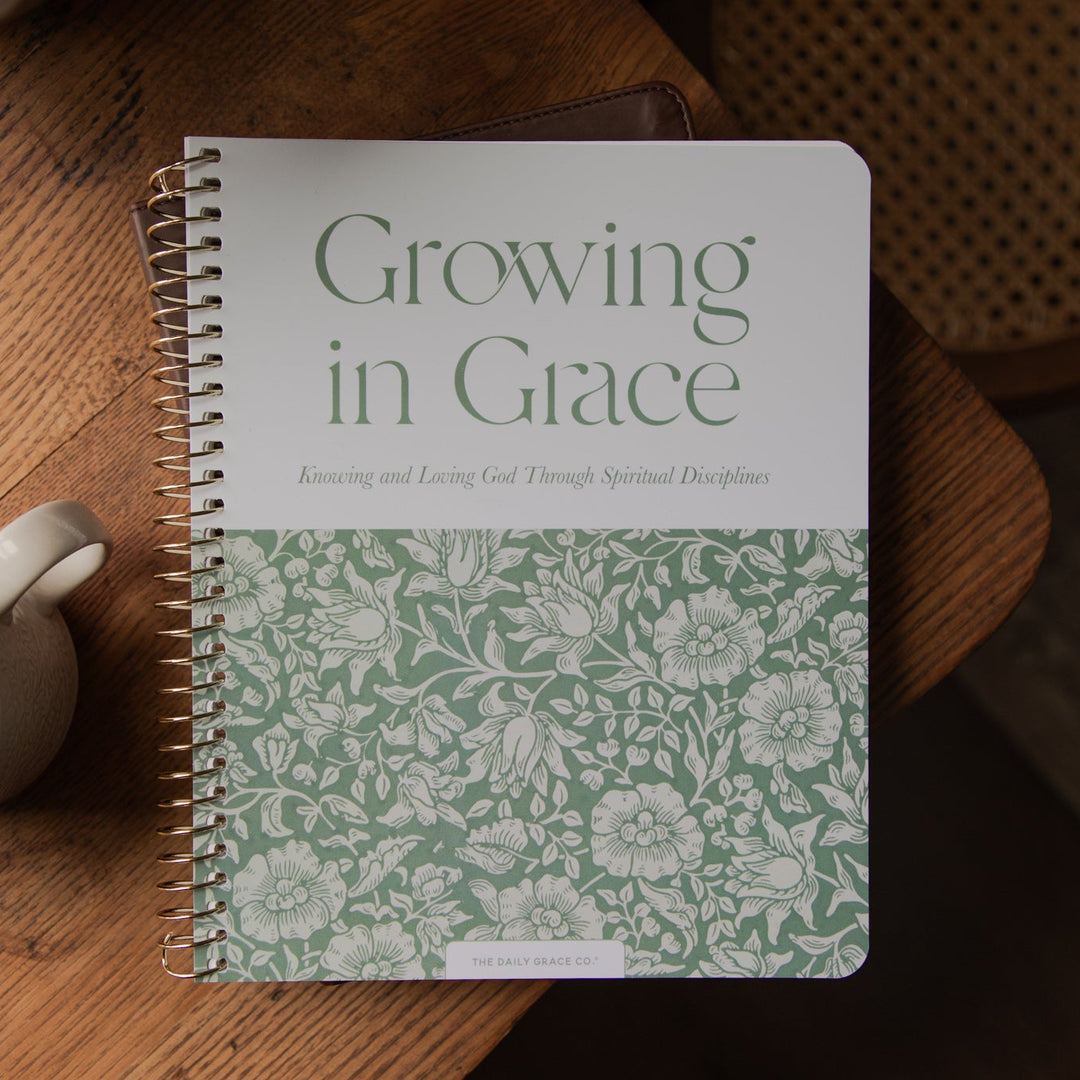
| Growing in Grace | Spiritual Disciplines Bible Study | Abide Bible Study | Don’t Underestimate Your Ordinary Obedience | |||
 Loading price… |
 Loading price… |
 |
|||
| Add to Cart | Add to Cart | View Blog |