





I am inconsistent. I have more than 550 unread text messages. I’m certain half of them are shipping notifications, automated replies, or spam, but even if more than half of them aren’t reply-worthy, that still leaves a significant amount of people who sent me a message and never heard back. Horrifying, right? I am notoriously bad at emails as well. In my employee review last year, while most of my notes from peers were encouraging and glowing, “she could reply to emails a little faster” was nearly at the top of the list. I nodded. I know.
This is consistent with the thank you cards from years ago that I never sent, the Valentine’s card for my in-laws that my children made and then sat on the counter for months, the journal a friend and I mail back and forth across thousands of miles to one another that I haven’t replied to since Christmas.
“Inconsistent” might be too gentle. “Unreliable” might be more (painfully) accurate. I do know this—I am not as faithful as I wish I was. I am not as steady as I long to be. Maybe this is familiar to you? It might not be letters, text messages, or emails, but if we were all to take an honest look at our lives, we might find our consistency falters. We cancel appointments without reason, we lie and say things are fine when they’re not, that person isn’t actually in our thoughts and prayers because we’ve already moved on to the next thing before we take a moment to pray. We talk behind our friends’ backs, we gossip on the restaurant bench instead of going to our knees, we grumble and complain and fail to give thanks for all things. We are not consistently faithful.
Rich Mullins captures this struggle well in the title of his 1996 song, “We Are Not as Strong as We Think We Are."1
God’s Patience in the Old Testament
In reading and studying the Old Testament, I’m struck again and again by the very real humanness of the stories. These aren’t mythological sagas written to inspire humanity with the exemplary behavior of its characters. From Genesis on, humans are very human, and by very human, I mean very sinful. Some of the Bible’s stories are sickening and also a bit like looking into a mirror of family lineage. Murderers, adulterers, perversions and sinful allegiances, abusers, power hungry despots, and idol-hoarding leaders. It’s a familiar cadence sung over and over again. Sin isn’t creative, is it? It’s the same repetitious theme replaying from generation to generation. One thing strikes me as I read through the Old Testament, and it’s not how violent it is, how sinful the people are, or even the plot twists—it’s God’s consistent, unrelenting, never-changing, longsuffering patience toward His people.
If I’m honest, when I am feeling the lowest in faith, the weakest in my own heart strength, I find myself looking for scraps of my own kindling to throw on the fire. I am tempted to search within myself for comfort or peace. Yet the one thing that holds our peace, keeps the flame burning, and carries the people of God from one shore to another? It’s not us.
There is a steady, faithful, persistent pursuit that even the people of the Old Testament could not outrun.
In Exodus 34:6–7, one of the most direct communications of God’s character in the whole Bible, God declares to Moses (and to us) that He is a “compassionate and gracious God, slow to anger and abounding in faithful love and truth” (34:6b).
And lest you think that this changed after Moses died, we can follow that consistent thread of God’s character all the way through the Old Testament: through the rise and fall of Israel and Judah, until the temple was rebuilt post-exile. It’s mindboggling.
I’ve just spent the better part of last year studying and reading 1 and 2 Kings, and from the beginning of Kings, the reader can feel the tension rising as generation after generation worships false gods and fails to remove their idols even after they’re called to repentance. Again and again, the Lord withholds His wrath. Again and again, His first step toward them is gracious, merciful, slow to anger, and abounding in steadfast love.
This isn’t to say they don’t experience consequences of their sinful allegiances. Famine strikes them, and the people of God do suffer from leadership that fails to walk in the ways of the Lord, again and again and again.
But God restores them, again and again. He doesn’t wipe them out. He preserves His own. He sees His own. He relents. He shows up for them in their prophets, in grand displays of His power, and in small, quiet miracles. The Lord never, ever leaves them.
In the book of Nehemiah, after the exiles returned and gathered in Jerusalem, the Levite priests led them in reading the Law and worship. They saw what hundreds of years of sinful kings and an idolatrous nation resulted in—and yet the Lord never abandoned them.
They proclaimed:
But you are a forgiving God, gracious and compassionate, slow to anger and abounding in faithful love, and you did not abandon them (9:17b).
You did not abandon them in the wilderness because of your great compassion (9:19a).
You sent your good Spirit to instruct them. You did not withhold your manna from their mouths, and you gave them water for their thirst. You provided for them in the wilderness forty years, and they lacked nothing (9:20–21a).
They captured fortified cities and fertile land and took possession of well-supplied houses, cisterns cut out of rock, vineyards, olive groves, and fruit trees in abundance. They ate, were filled, became prosperous, and delighted in your great goodness (9:25).
When they cried out to you again, you heard from heaven and rescued them many times in your compassion (9:28b).
You were patient with them for many years, and your Spirit warned them through your prophets (9:30a).
However, in your abundant compassion, you did not destroy them or abandon them, for you are a gracious and compassionate God (9:31).
God Is Still Patient Today
I’ve looked at my own life. As inconsistent as I am with friends, it pains me to admit that I’ve been just as inconsistent and unfaithful toward the Lord. Now, I haven’t built any golden calves or bowed the knee to any gilded idols, but I have been cold in my affections toward Him and distant in my heart. I have held grudges and refused to forgive for longer than I should have. I have lied to get my own way and covered up my sin in hopes that no one would find me out. I have murdered in my heart, committed adultery with my eyes, started fires with my tongue, and bowed the knee in my heart to a thousand different idols to fit my needs, my desires, and my whims. I’ve traded my trust in Him for trust in a dollar bill and put more faith in my bank account than in the hands of Christ. I have wandered, rejected, and fallen deep into apathy when I knew the Lord was calling me back to Himself. I may not be a wicked king of Israel, but I am a wreck of a sinner.
And yet, again and again, the Lord has shown patience toward me, calling me back to repentance, back to mercy, back to Himself. I know that He doesn’t turn a blind eye toward sin; and I know that as 2 Peter 3:9 tells me “The Lord is not slow to fulfill his promise as some count slowness, but is patient toward you, not wishing that any should perish, but that all should reach repentance” (ESV).If He is this patient toward us, perhaps we could learn to extend this kind of grace to those around us. I think of those who have felt the burning edge of my short fuse: my husband, my children, my friends, other drivers on the road, the Amazon delivery service—I don’t deal generously with patience as often as I’d like to. This is an aspect of the fruit of the Spirit that keeps me prayerfully watching the soil of my heart. Why am I expecting everyone else to cater to my timeline, my needs, and my demands when I cannot even honor God with the first fruits of my own time? Surely I can reflect His long-suffering patience toward those around me whose offense is far less condemnable. Lord, have mercy.
And yet, His patience is unchanged. His longsuffering love remains, firm as the cross that held Christ. We are tossed about. We are fickle and unfaithful. The Lord’s patience shockingly outlasts our complacency. When we drag our feet like children, our Father is slow to anger, bubbling over in steadfast love for us, even as we try to slap His hand away. His patience moves as a current in the river of grace around us, teaching us to relinquish our own control. A daily reminder that we are not Him. A daily reminder that maybe we could extend that same grace to others. A daily invitation to slow down, take a breath, withhold our snapping fingers and watch-checking rage and instead follow the Lord to something better. We cannot disappoint, detach, or outrun God’s love that waits for us and changes us, and hopefully someday soon, I can start acting like it.
Unlock a 10% off coupon!
Notes
1. Richard Mullins and David Beaker Strasser, “We Are Not as Strong as We Think We Are,” on Songs, Reunion Records, 1996.
Author Bio
Andrea G. Burke is the author of A Bit of Earth (Lexham Press) and The Quiet Resistance (Baker Books) and is on staff at Grace Road Church in Rochester, New York. She is married to Jedediah, and they are raising their two kids, two dogs, two cats, a few strays, a lot of ducks, and chickens in an old farmhouse near Rochester. You can find more about her on her website (AndreaGBurke.com) or on Substack, where she writes somewhat regularly (andreaburke.substack.com).
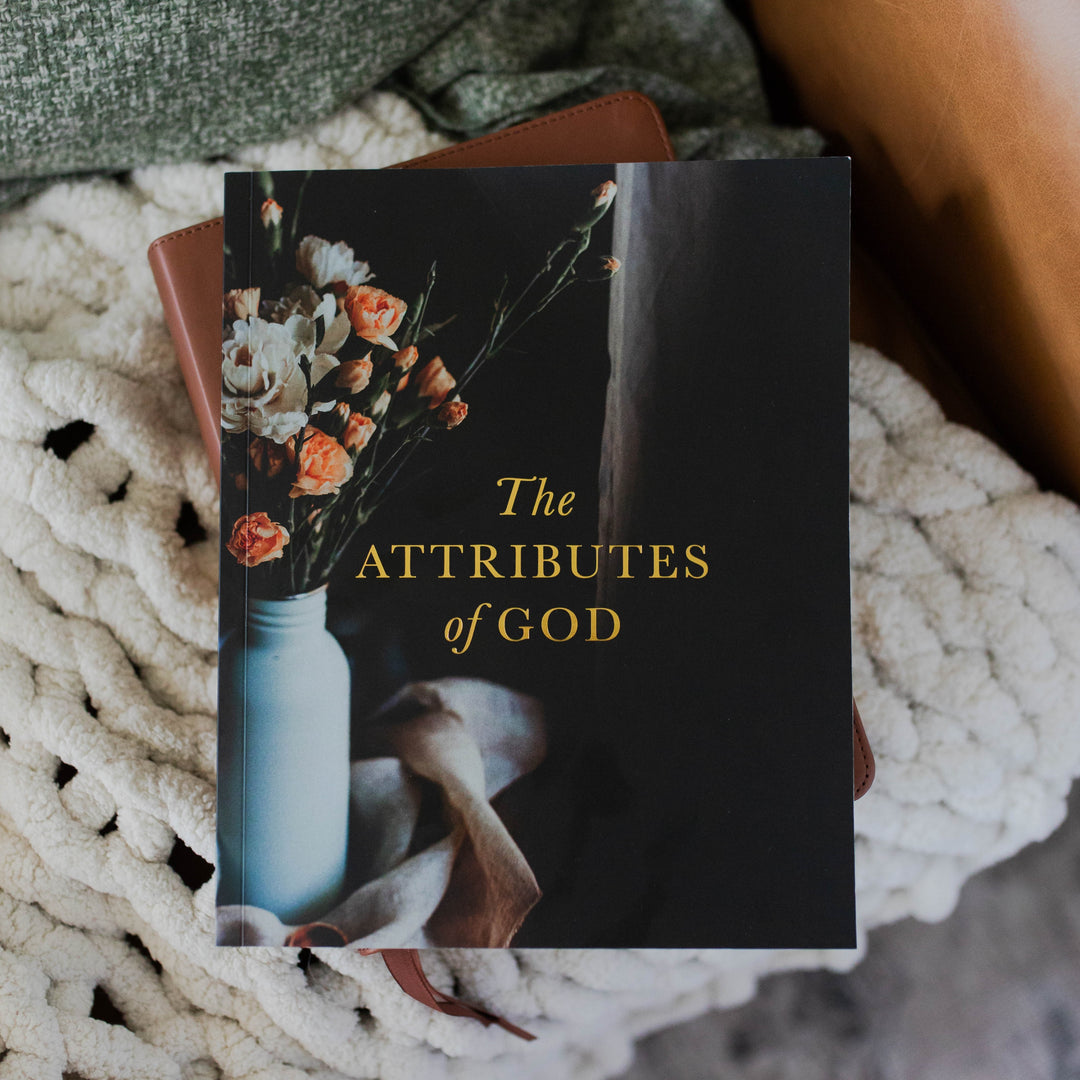
| The Attributes of God Bible Study | I Am | Bible Study on Jesus's I Am Statements | The Names of God | |||
Loading price… |

Loading price… |

Loading price… |
|||
| Add to Cart | Add to Cart | Add to Cart |