





Noise. It surrounds us. TVs running; smart phones scrolling reels; the rumble of cars on asphalt. It’s not just auditory, either. Visual noise crowds our sight lines—billboards with letters so bold they scream: “Buy THIS and your troubles are over—loneliness gone, purpose FOUND!” I had an out-of-body experience not long ago driving on a busy street. I saw not zipping cars but metal cages, protecting human occupants from earth, sky, and one another. I wondered where so many people could be going in such a hurry. What beauty were we missing in all the noise? What purpose was being drowned out in the rush?
Since humanity’s fall in Eden, we’ve been inherently disconnected from our central purpose as humans. The noise only exacerbates a problem that runs back to our first parents, a problem that keeps us from one another and creation—even ourselves and our God. The French philosopher Blaise Pascal once said that all our problems stem from an inability to sit alone in a room.1 If what he says is true, then perhaps in silence we can find our way home. Indeed, I believe that prayer is the way back to Eden. Yet to understand what is so unique and powerful about prayer, we must consider what is so unique about humanity.
Made in God’s Image: Understanding Our Human Purpose
In Genesis 1:27–28 we see that God made us in His image: “So God created man in his own image; he created him in the image of God; he created them male and female. God blessed them, and God said to them, ‘Be fruitful, multiply, fill the earth, and subdue it. Rule the fish of the sea, the birds of the sky, and every creature that crawls on the earth.’” What does this mean? Many commentators have tried to define our nature by “man’s reason, personality, free-will, self-consciousness, or his intelligence,”2 but none of these faculties are mentioned in this text. Instead, the text directs us to the purpose of humanity: to “rule” and “subdue.”
By God commanding us to rule, He is inviting us to share in His authority as the ultimate King over creation. In a context where only royalty were thought to image God’s rulership, God revealed to Israel that all His people are kings and queens.3 The word “subdue” is a strange addition. It’s a forceful word, literally meaning to bring something into bondage by force.4
Genesis 2 provides some helpful context. There, we see that in the infancy of creation “no shrub of the field had yet grown on the land, and no plant of the field had yet sprouted, for the LORD God had not made it rain on the land, and there was no man to work the ground” (Genesis 2:5). We are given two reasons for this desert wasteland: God has not made it rain and humans are not present “to work the ground.” It’s only after the creation of Adam (Genesis 2:7) that the paradise of Eden comes into existence: “The LORD God planted a garden in Eden, in the east, and there he placed the man he had formed. The LORD God caused to grow out of the ground every tree pleasing in appearance and good for food” (Genesis 2:8–9a). This pleasant picture of a lush garden, situated in the east, toward the rising sun, are all signs that this is a special place God made to meet with us as image-of-God creatures, confirmed by later use of Eden imagery in Israel's temple and tabernacle.5
What surrounds this lush garden, however, is still a desert wasteland, the twin of the chaotic waters out of which God made all things (Genesis 1:2). What’s the cure to such a state? God sending rain and humans working the ground (Genesis 2:5). God leaves work to be done so that we can join Him in His creative act. Eden, then, is the place God made for us to dwell with Him but also the place from which our purpose can move forward as we join God in spreading the light and life of Eden over all creation, forcefully pushing back the darkness and cultivating the earth into a garden paradise. God has made us unique for this task as creatures of heaven and earth, formed from the dirt and breathed into life by the breath of God (Genesis 2:7). What better creatures to join God in His mission to unite heaven and earth than creatures made of heaven and earth?6 Our intimacy with God is both privilege and responsibility as we join Him in making all creation resemble the gifts of Eden.7
How God Restores Our Purpose: Lessons from Abraham
Sadly, we rejected the Person and purpose we were made for. Instead of following God in spreading the light and life of Eden, we chose to go our own way and so spread darkness and death. Yet God did not give up on His plan to unite heaven and earth through us, creatures of heaven and earth. We see this in the life of Abraham. God chose one family out of all the families of the world to reestablish the intimacy of Eden. In Genesis 12:6–9, Abraham builds an altar to the Lord by flourishing trees, near Bethel, which means “house of God.”8 The mention of trees and greenery are textual clues that point us back to the life of Eden. And these Eden moments continue to show up throughout Abraham’s life.
In Genesis 13, when his nephew Lot chooses a land that merely looks like Eden but leads away from God’s presence (Genesis 13:10), Abraham chooses to walk with God by pitching his tent by the great trees of Mamre, building an altar and cultivating an Eden-like intimacy (Genesis 13:18).
In Genesis 14, when kings are destroying one another, fighting for supremacy over the land that ultimately belongs to God, Abraham is making peace in a place that resembles Eden (Genesis 14:13). Abraham is even laid to rest in a place reminiscent of the lush garden of Eden (Genesis 23:17–18), a promise that death itself will not separate Abraham from the presence of God. Abraham may have been a wanderer, traveling the lands God had promised him (Genesis 12:1–3), but everywhere he went became a place where the life of Eden was fostered, protected, and extended.
How Jesus Restores Our Intimacy with God
Through the lineage of Abraham, God built the nation of Israel, whom He continued to use to bring heaven and earth together, but this purpose was not fully realized until God came into creation Himself through His Son, Jesus. In Jesus, God put on flesh and walked among us (John 1:14). Instead of taking from a tree, thereby rebelling against God, Jesus gave His life on a tree, both paying the price for our sin and fulfilling the life of obedience we are always meant for.
With Jesus, a new intimacy with God has been made possible. Jesus prayed for us before His death, “May they all be one, as you, Father, are in me and I am in you. May they also be in us, so that the world may believe you sent me” (John 17:21). In removing our sin, Jesus made it possible to be one with Him again, the divide of the first human’s rejection of God and His mission finally reconciled. Now, what Abraham experienced intermittently throughout his life, we can experience daily as we seek God in prayer.
Creating Eden Spaces: Practicing Quiet Prayer in a Noisy World
We are surrounded by noise and distraction, but an ancient prayer—inspired by Jesus’s Parable of the Repentant Tax Collector (Luke 18:9–14)—has become for me a practice in fostering Eden spaces where I meet with God. It’s simple: Jesus Christ, Son of God, have mercy on me, a sinner. Repeated as I meditate on Scripture, I can quiet my mind and body and so hear from God through His Word.
Over the years, this practice has helped me to become familiar with the voice of God—not an audible voice but a sense of His presence, tone, and character. It has taken time and practice, things too easily neglected in our fast-paced world, but meeting with God is what we were made for! In prayer we can find the intersection of heaven and earth. Prayer—practiced in a myriad of ways—is God’s gift to us, a gift made new by the work of Christ and the Spirit. Through prayer, we come in contact with the Person and purpose we were made for. Through prayer, God’s mission is extended in us and in the world.
Like Abraham before, we may still be pilgrims waiting for Jesus to return and turn this wilderness into beauty, but we have the privilege of carrying a piece of Eden—God’s very presence—through these desert wastelands. When overwhelmed by the noise; when you sense you’re missing the beauty; when harried and wondering what the purpose of all of it is, remember that you do have a purpose, you are not alone, and in prayer you can find your way back home.
If you liked this article, check out the related re#sources linked below!
Notes:
1. Dyer, From the Garden to the City, 87.
2. Wenham, Genesis 1–15, 30.
3. Wenham, Genesis 1–15, 30–31.
4. Brown, Driver, and Briggs, Enhanced Brown-Driver-Briggs Hebrew and English Lexicon, 427.
5. Wenham, Genesis 1–15, 61–62.
6. Wright, Simply Jesus, 193.
7. Wenham, Genesis 1–15, 31.
8. BibleProject, “Abraham,” Accessed June 25, 2026, https://bibleproject.com/classroom/abraham.
Author Bio
Jacob Hess grew up in Oregon but currently resides in Pennsylvania, where he works as a local minister. He received his Master of Divinity from Western Seminary and enjoys reading, talking theology with his wife, and writing science fiction on the side.
Unlock a 10% off coupon!
Related Re#sources:
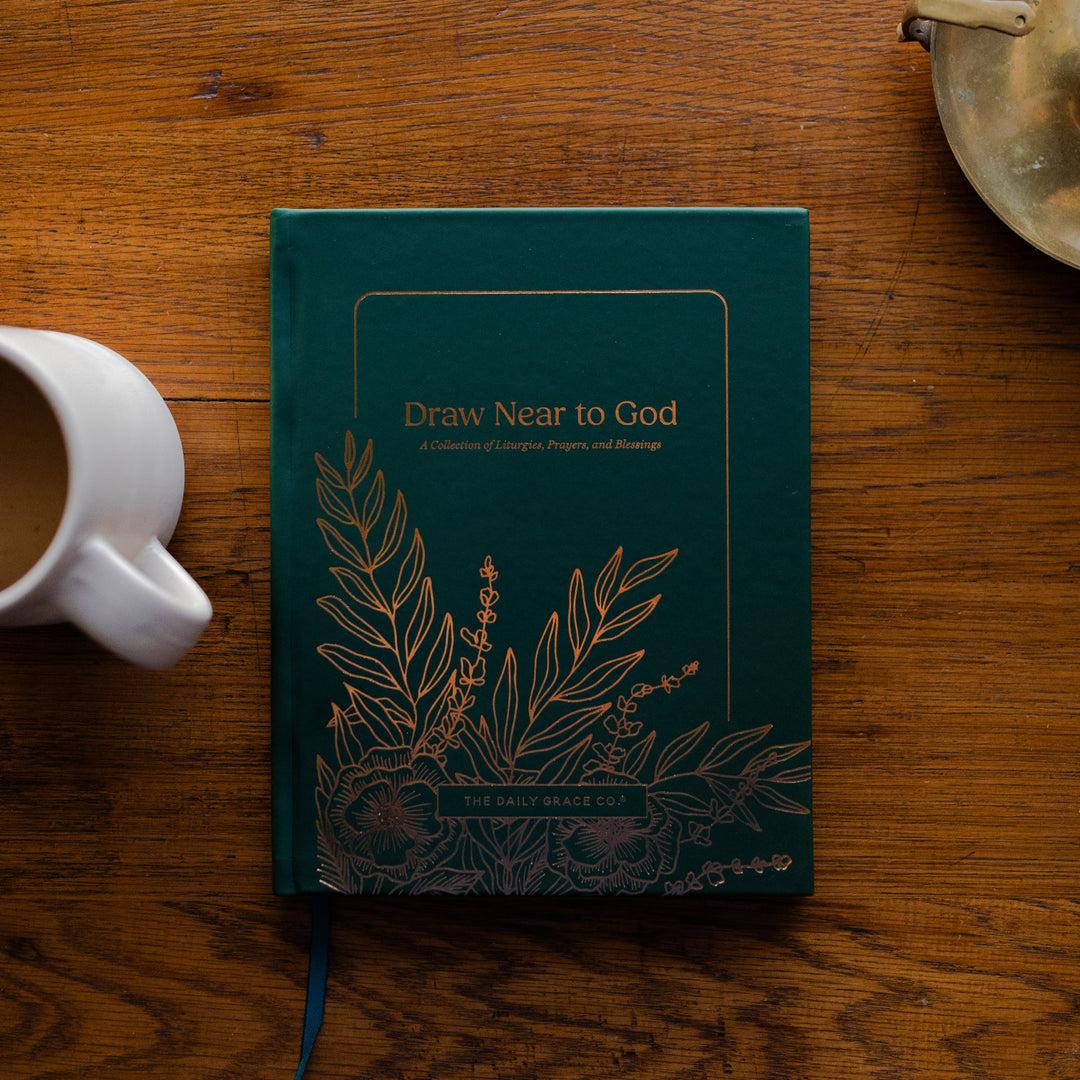
| The Prayer Handbook: A Comprehensive Guide to the Practice of Prayer | Draw Near to God | Prayers for Your Day | All Things New - Praying Scripture Journal | ||||

Loading price… |
Loading price… |

Loading price… |

Loading price… |
||||
| Add to Cart | Add to Cart | Add to Cart | Add to Cart |