

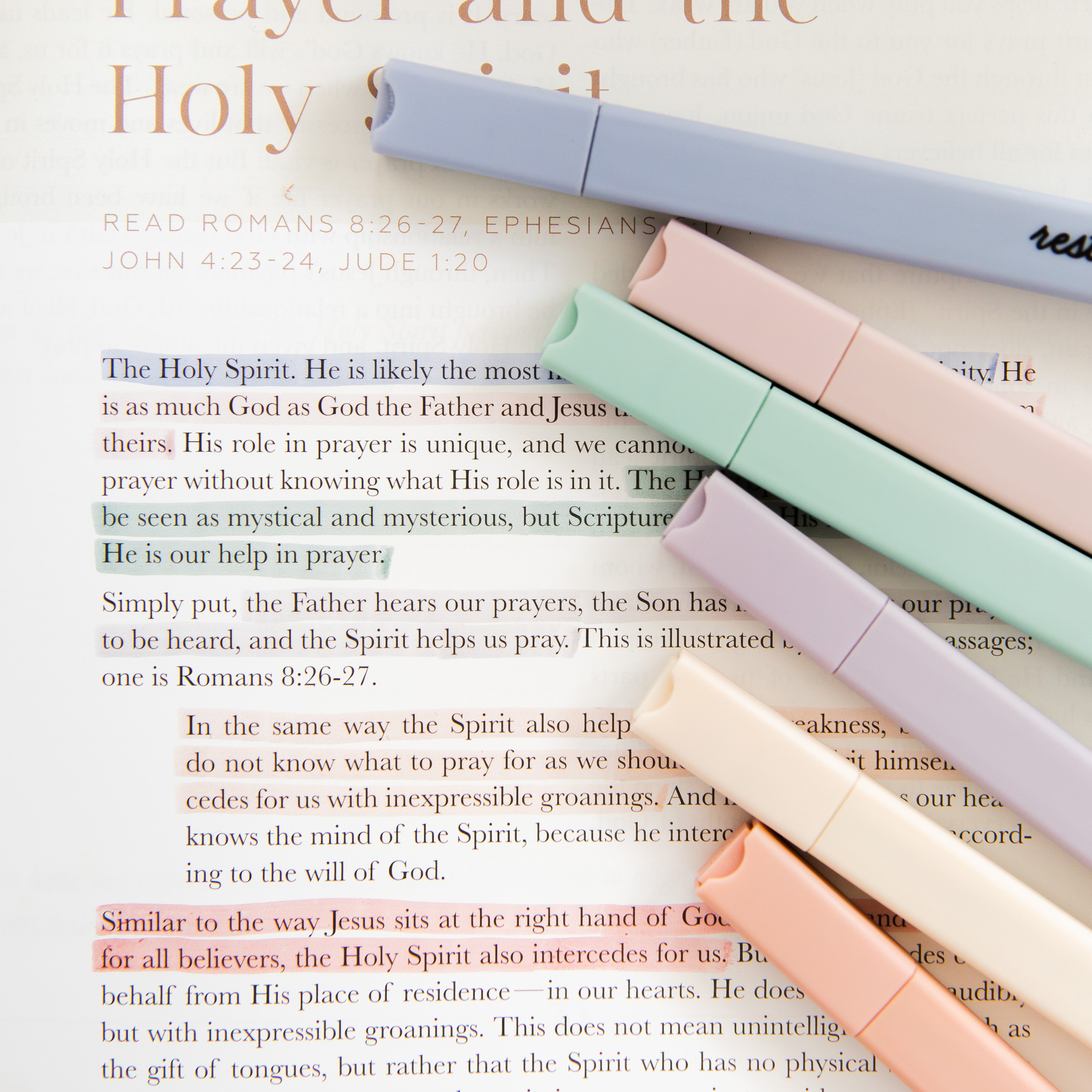






Over the decade that I’ve been involved in women’s Bible study at my local church, I’ve noticed an interesting pattern: More older women than younger women faithfully participate in the studies. Many more. Although free childcare is provided, 69% of the ladies who registered for our verse-by-verse study through the book of Acts this past year were fifty or older. This statistic is interesting because it’s not an accurate reflection of our church demographics. A total of 63% of the women in our church are between the ages of 18 and 49. So why the discrepancy?
“Younger women have less time,” some might say. In many cases it’s true. Most women in their twenties, thirties, and forties are in the thick of work—raising children and/or managing a career. Many are balancing naptime schedules, meal-prep, after-school sports, appointments, projects, and deadlines. Older women are often empty-nesters or have independent children. Some are retired, and many are slowing down at work. So of course they have more time to devote to studying the Word.
Yet I wonder if another factor contributes to the generational disparity. My suspicion is that the wisdom of age has left them more convinced of how desperately they need the nourishment of Scripture by which God sustains and grows His children. Perhaps life experience has taught older women that they cannot make it in the Christian life without a rich diet of Scripture, prayer, and fellowship with sisters in Christ. Of course, there is no biblical command to attend a women’s Bible study, but the Scriptures do command us to have more than a casual interest in the sustenance by which God sustains and grows His children.
The Apostle Peter exhorted believers with these words: “Like newborn infants, long for the pure spiritual milk, that by it you may grow up into salvation” (1 Peter 2:2, ESV). This begs some questions: What is spiritual milk? Do we long for it? And what does it look like to grow up into salvation? The beginning of Peter’s first letter helps us answer these questions.
Living Things Change
Have you ever considered just how much babies change in their first year of life? I was amazed at the transformation that occurred in each of my four sons between the day he was born and his first birthday. In twelve short months each went from barely being able to open his eyes to toddling around and feeding himself. What a clear reminder that living organisms are not static and unchanging. Things that are alive transform.
In the first chapter of his letter, Peter uses the metaphor of new birth to describe the beginning of spiritual life and salvation for God’s people. He reminds believers that they have “new birth” through the resurrection of Jesus (1 Peter 1:3) and through the living Word of God (1 Peter 1:23). Through the powerful word of the gospel, God makes the spiritually dead alive in Christ! And Peter’s implicit assumption is that those who are spiritually alive will not remain the same; they will change. Thus, he exhorts believers: “do not be conformed to the desires of your former ignorance. But as the one who called you is holy, you also are to be holy in all your conduct” (1 Peter 1:14–15). Those who are spiritually alive will experience moral transformation from sinfulness to holiness. But how?
Living Things Crave
I’ve taught my boys many things, but I’ve never had to teach them to crave food. By God’s design, they came into this world with a seemingly insatiable desire for nourishment, and they let me know it! In the first year of each of their lives, I spent hours nursing them in all manner of places (think: minivan, public restroom stall, airport), because when babies want milk, babies want milk! They cannot do without it.
This is the imagery Peter uses when he calls believers to “long for the pure spiritual milk” by which they will be transformed into holiness. Christians are to crave spiritual nourishment in the same way an infant craves milk: passionately, not casually. But what exactly are we supposed to crave?
Many commentators believe “pure spiritual milk” refers specifically to the written Word of God because the Greek term for “spiritual” in 1 Peter 2:2 derives from the same root as the Greek term for “word” in 1 Peter 1:23 (logos). The CSB indicates this connection in its rendering of 1 Peter 2:2: “Like newborn infants, desire the pure milk of the word . . .” (emphasis added).
Others think spiritual milk refers more broadly to the grace by which God sustains and grows His children—grace that’s communicated to us through means of the Word, prayer, corporate worship, baptism, the Lord’s Supper, and Christian fellowship.
Here’s what we know for sure: The same divine grace that granted us spiritual life in Christ will sustain and grow us up in Christ (Philippians 1:6, Ephesians 4:13). We are nourished by that grace as we crave and consume more of Christ through the means He’s prescribed. And one of those primary means is the preaching and teaching of the Scriptures within the community of the local church. We cannot do without it. However, nourishment itself isn’t the end goal; growth is.
Living Things Grow Up
Busyness, more than anything else, tempts me to neglect proper nutrition. When my metaphorical plate is full, I’m less likely to sit down and eat a full plate of food. I’ll survive by downing a child’s leftover breakfast as I run out the door or by grabbing fast food from a drive-through instead of preparing a healthy meal to eat with my family. But when I fail to eat well, my body pays the price in headaches, fatigue, and lack of muscle growth (even if I’m working out).
Similarly, when busyness—even busyness with good things—leads us to neglect a regular and rich diet of spiritual food, the body of Christ pays the price in stunted growth. Because believers are spiritually united to Christ and each other in the living organism of the Church, growth (or lack thereof) is not just individual but corporate. Peter highlights this reality when he calls his readers to put away malice, deceit, hypocrisy, envy, and slander (1 Peter 2:1)—all sins that occur in relationships—right before exhorting them to crave the milk by which they will “grow up into salvation” (1 Peter 2:2, ESV).
Isolation is not the ideal environment for Christian growth any more than darkness is the ideal environment for a plant to grow. It doesn't happen solely through your tranquil moments of quiet time with the Lord, as wonderful as those moments are. Christian growth happens primarily as the spiritual milk of God’s grace is consumed corporately and digested in the holy living of “sincere brotherly love” (1 Peter 1:22).
Don’t Neglect to Eat!
So ask yourself: Do I yearn for regular time in God’s Word with other believers in a way that impacts my priorities and weekly schedule? Do I pray earnestly for God to grow us in holiness and Christian love as we hear, study, discuss, believe, and obey the Word of Christ together? Do I truly believe I cannot do without this?
Sisters, let me encourage you not to neglect a rich diet of Scripture in community even (and especially) when your life is busy. The Lord’s Day gathering is primary, but if we are to “Let the word of Christ dwell richly among [us], in all wisdom teaching and admonishing one another” (Colossians 3:16), we must consume and digest God’s Word with brothers and sisters during times other than the Sunday gathering. Avail yourself of the opportunities your local church provides for this. If your church doesn’t offer a structured time to actively study and discuss God’s Word with other women, consider how you might create such an opportunity, even if it begins with just two or three ladies opening the Bible together in your living room each week.
All healthy diets take time, intentionality, and effort, but the more we discipline ourselves to consume proper nourishment, the more we will crave it intensely like an infant craves milk. And the Father who graciously gave us new life through the Word of His Son will not fail to grow us up into the fullness of that salvation life. Thanks be to God.
Author Bio
Sarah Rice: Sarah Rice is a pastor’s wife, mom of four boys, and Women’s Ministry Director at Capshaw Baptist Church in North Alabama. She holds a Master of Arts in Biblical Counseling from The Southern Baptist Theological Seminary and is the author of Gospel-Shaped Womanhood, a book on identity in Christ for women, and Becoming a Gospel-Shaped Woman, the companion Bible study through Ephesians. Sarah loves teaching the Bible and helping women know Christ through his Word. You can find her on Instagram (@gospelshapedwomanhood) or at her website (sarahsrice.com).
Unlock a 10% off coupon!
Additional Resources:
| Better Together | Discipleship Guide | A Year in the Bible | 4 Volume Bundle | The Bible Study Handbook | |||

Loading price… |

Loading price… |

Loading price… |
|||
| Add to Cart | Add to Cart | Add to Cart |