






Recently, I was perusing social media and came across a photo of a friend’s desk littered with New Testament dictionaries, commentaries, and study Bibles, with the caption, “My morning quiet time, how was yours?” Feeling a tad guilty, I moved swiftly to the next post. My mornings look nothing like that. There’s no quiet, nor is there time. Instead, most mornings begin with a child screaming in the next room while I repeatedly trip over myself searching for my glasses like Velma Dinkley. As soon as I wake, there is breakfast to make, diapers to change, schedules to coordinate, and messes to clean. This routine leaves little, if any, time for my Bible-in-a-year plan (at my current pace, I’ll finish Revelation in 2032).
My story is all too common. Whether we are parents, single, married, working, or staying at home, the ritual of a regular quiet time with God often seems impossible to maintain even on the best of days. For some, a morning spent in Scripture feels intimidating, as if they need advanced theological training just to be a part of a reading plan. For others, unless they rise at three in the morning, there simply is no time to spare.
But what if it didn’t have to be this way?
In this post, I aim to address some of the major obstacles I often hear from folks that prevent them from establishing and maintaining a regular time to commune with God. Perhaps if we have a better framework for our quiet time, we can rethink the role it ought to play in our lives.
Obstacle #1: When the Bible Feels Confusing
One of the highlights of my vocation as a pastor is teaching God’s Word. (I can’t believe people pay me to do it!) But it’s one thing to teach others the Bible and an entirely different thing to teach them to read it. People often complain that they feel confused and not spiritually transformed after reading Scripture. And I don’t blame them. Scripture can be complex. Even Peter called some of Paul’s writing “hard to understand” (2 Peter 3:15–16)! And while I empathize with that sentiment, I also feel it misses the foundational reason we should seek to spend time in the Word.
Many of us assume that if we learn more, we will then know more, and that with knowledge comes a greater desire to worship God. To put it differently, we assume that information will lead us to transformation. As a result, many of us feel unable to understand the text and opt not to read it at all. But this assumption is a false one. I’ve been around scholars of the Bible who have forgotten more about Scripture than I’ll ever learn, and yet their knowledge of the text sometimes hindered their submission to it.
And while many seek to understand the Bible, they often bring their confusion first to commentaries and the footnotes of a study Bible for guidance rather than sitting with the text themselves. We tremble at the thought of taking verses out of context (a good fear), but we assume we can only access the true meaning of Scripture through man-made resources rather than our personal relationship with the Spirit. We mistakenly believe that a psalm or a New Testament epistle can only be understood by reading a commentary rather than by talking to God, the true author. But if we choose to reframe our quiet time as a space to be transformed rather than merely informed, we can invite the Holy Spirit into our confusion and see what God might have for us.
Using this framework, confusion isn’t something to avoid but a space to meet God in. If you come across a passage that loses you, great. Ask God to help you. And maybe He will or maybe He won’t. But the point here is to retool our brains away from the belief that we must access more information to truly understand God’s Word. Instead, we seek God’s wisdom, and He opens our eyes to understand His Word (Psalm 119:18). Of course, secondary resources (commentaries, books, blogs, etc.) are helpful, but they ought not replace our dependence on the Holy Spirit’s power.
Obstacle #2: When Your Mornings Are Too Full for a Quiet Time
I’ve read many a blog that claims if you can’t fit your quiet time in during the mornings, just try squeezing it in at the checkout line at Target. I’ve yet to see this trend take off. Rather than trying to retrofit time with God into the tiniest of margins of our lives, which never seem to last, we should remember the weekly spaces we already have.
Many of us believe that our time with God is spent in isolation. But the New Testament tells a different story. For instance, Paul tells Timothy to read the word of God publicly (1 Timothy 4:13). And the clearest New Testament example of someone reading Scripture in isolation is the Ethiopian eunuch, and even he needed Philip’s help to understand what he was reading (Acts 8:30–31). For most of salvation history, God’s people did not own a copy of the Scriptures, and almost nobody would have had a personal Bible like we do today. Instead, in the early church, time spent in Scripture coincided with time spent with others.
In my own discipleship, I try to remind myself that when I gather with the saints, this is one form of time with God. Typically, I choose not to have a quiet time in isolation on Sundays or Wednesdays. On Sundays, I’ll hear God’s Word preached and proclaimed over me, and on Wednesdays, I’ll join my community group, where we will speak God’s words over each other.
But this is more than just attending a weekly church service or a midweek gathering. I have to remind myself that we are meeting with God from worship to Communion. As a result, songs are not just meant to be recited, nor are sermons only to be listened to. Instead, we are actively communicating with God as we sing about His goodness, and we are receiving the sermon as it points us to God revealed in Scripture. We are with God, and He is with His people. This is my quiet time, in a very loud and public space.
If you feel like your schedule is too full to find regular time to be with God, ask yourself, Where are the moments already set aside in my week? Is it church, a mom’s group, or a book club? Expect more than just fellowship from these times, and seek to be with God.
Obstacle #3: When Your Mind Wanders While You Read the Bible
It seems as if every year I read about a new study on society’s diminishing attention spans. While I would like to think that I am an anomaly in this downward trend, I, too, find myself on Facebook when I swore I would sit down and respond to emails. The same is true when reading our Bibles. How can we read a text from thousands of years ago when our favorite podcast just dropped an episode? If this struggle feels familiar to you, I’d like to encourage you to practice listening to Scripture—but not just for the sake of convenience. In the ancient worlds of the Bible, only a small fraction of people could read—perhaps 10 percent or fewer, by many scholars’ estimates. Language was another barrier. In Jesus’s day, many Jews living outside Israel heard the Old Testament (written mostly in Hebrew) in a Greek translation, while in the synagogues of Judea and Galilee, the Hebrew text was often read aloud and then explained in Aramaic, the everyday language of the people. In this landscape, most of God’s people received Scripture not by reading it for themselves but by hearing it read aloud—and sometimes even performed—when they gathered. They couldn’t trace a footnote or look up a random Greek word. They just listened and listened well.
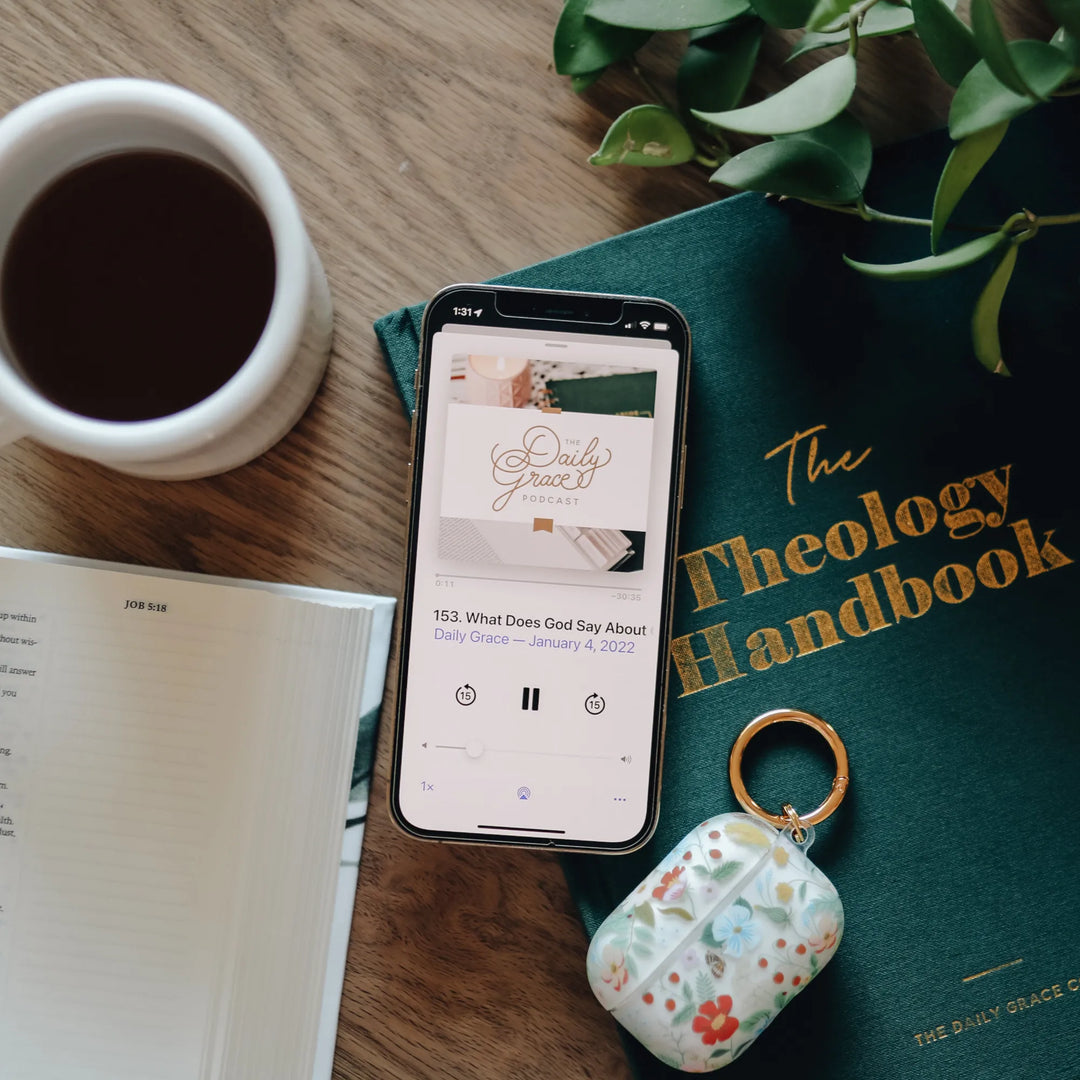
I make it a practice to listen to the Bible regularly. Yes, it is a simple way for me to access Scripture, but at a deeper level, it reminds me that this is how God’s Word originally came to His people and allows me to participate in the way the early church received it. I really enjoy listening to Ray Ortlund read the Bible, but there are so many great apps for listening to Scripture. So on your next jog or morning commute, instead of listening to the latest sermon by the most dazzling of preachers or a podcast about the news, listen to the Sermon on the Mount (Matthew 5–7) and hear the greatest news ever told. It just might change your life.
A Quiet Time That Never Ends
In this post, I have only addressed three obstacles out of the many that could prevent us from being in the Scriptures. And while obstacles can be abundant, we should take heart that one day our time spent with God will be eternal. For now, there will be busy days when we don’t make it to our reading plan or hard times that prevent us from meditating on God’s Word. But there will be a day, as the hymn “It Is Well with My Soul” says, when “my faith shall be sight.” A day when time with God will not be something to do, but an eternal state of life. We will join the living creatures around the throne in their unending song: “Holy, holy, holy, Lord God, the Almighty, who was, who is, and who is to come” (Revelation 4:8). With this image in mind, let us make it our goal every day to prepare ourselves for the day when our quiet time will not end.
If you liked this article, check out the related resources linked below!
Unlock a 10% off coupon!
Related Resources:
| Knowing God Ultimate Bundle | Abide Bible Study | God Is Forming You in More Than Just Your Quiet Time | |||
 Loading price… |
 Loading price… |
 |
|||
| View Now | Add to Cart | View Blog |