





I watched it walk through the barn. Muscle and power wrapped in a chestnut coat. A wild mare from the mountains of Montana came to be trained and tamed. Could all that strength be harnessed into something that doesn’t panic or balk? Could she learn to be controlled, safe, and even gentle? Could this wild mare from the mountainous west be tamed into meekness?
Meekness is often thought of as “power under restraint,” and I can’t help but think of that beautiful mare; of the diligence required to devote time, patience, and training to make the leap from wild strength into meekness.
The Meaning of Meekness
As someone who never quite understood meekness, I would come across its mention in Scripture and typically glaze over it without dwelling too deeply. I gathered context clues from surrounding words and only partially embraced it as a Christian virtue to cultivate, not fully grasping its depth. And, if I’m being transparent, the cultivation of this virtue often felt as though its currency was a quiet and repeated self-abandonment—and that wasn’t a cost I was willing to pay.
Maybe you, too, have passed by this virtue, or, like me, even bristled at it because of a misunderstanding of its true meaning. Maybe you thought that meekness meant you could never speak up about your needs and wants or that you had to “go along to get along.” But it doesn’t have to be that way, and I’d argue Jesus wouldn’t want that from us. While it can be difficult to cut through the noise and get to the heart of this virtue, let us look no further than the embodiment of meekness, Jesus Himself, because He calls us to be meek. In Jesus’s own words: “blessed are the meek, for they shall inherit the earth” (Matthew 5:5, ESV).
Jesus Was Meek
Jesus is neither weak nor passive but is every bit in control of His power and strength. There are many biblical examples of Jesus displaying this virtue, but a personal favorite is His triumphal entry into Jerusalem on a donkey (Matthew 21:1–11). This humble mode of entry wasn’t a coincidence; it was a choice. He told His disciples to go ahead and find a donkey (Matthew 21:2). This was not only the fulfillment of prophecy (Zechariah 9:9) but a display of choosing meekness. Though He possessed every authoritative right to ride into Jerusalem in power, a warrior ready for domination, He chose the seemingly lower, slower, gentler option. His humility in this moment was not false; it was intentional restraint of rightful power.
Perhaps you’ve witnessed biblical language framed as warrior strength. Images of warriors and soldiers are often used in churches to portray or describe disciples of Jesus. Coloring sheets of Roman soldiers are passed out in Sunday School, suits of armor and weapons used to illustrate the armor of God (Ephesians 6:10–18). It might seem like we are meant to be haughty, aggressive, and powerful for God. But Jesus speaks of His Father’s kingdom as being upside down, where the last will be first, and the first will be last (Matthew 20:16). The things we tend to value in our earthly kingdoms are given little value in God’s kingdom—those who are strong will become weak, and those who are weak will become strong.
We get a glimpse of this reversal of values in Revelation, where heaven is described as having streets of gold (Revelation 21:21). Can you imagine walking on gold? It is such a precious metal here on earth that we savor it, store it, and measure our wealth against it; but in heaven, it will be of such little value in comparison to God’s glory that we will tread upon it. This is the way of Jesus. This is the way of meekness.
Unlock a 10% off coupon!
What Is Meekness for Us?
Meekness is a steady posture of love, kindness, and mercy, even in the face of opposition or the ability to do otherwise. Regardless of what others may have said about our Lord and Savior riding into Holy Week on a donkey, that was what He chose. Even as He held ultimate power and authority—which He would later display as He conquered sin and death—Jesus chose the gentle way. And while Jesus is this way because He is the exact radiance of God Himself (Hebrews 1:3), can we, like the mare, be tamed and trained to possess such a virtue? I believe we can.
When a mare is tamed, the goal is never to strip her of her strength. The goal is to teach her how to use it to produce healthy fruit—to do what God gave her the ability to do. Left untamed, her reckless power poses a danger to herself and others. But through training, her strength becomes a great asset. I believe the same is true for us.
In calling us to meekness, God isn’t calling us to weakness or self-abandonment. He’s calling us to surrender our strength to His love. To choose gentleness when you could dominate, to hold your tongue when the words could wound, or to stand firm without needing to prove your worth. Meekness is never about becoming weaker; it’s about finding strength in Christ instead of in ourselves, allowing ourselves to be formed in His image as we walk with Him—one step of love at a time.
Author Bio
Monica Ritchie holds an MA in Christian Thought from Bethel Seminary in St. Paul, MN. She teaches theology and thrives on sunshine and rhythms of spiritual intention. You can find more about Monica at @itsmonicaritchie on Instagram.
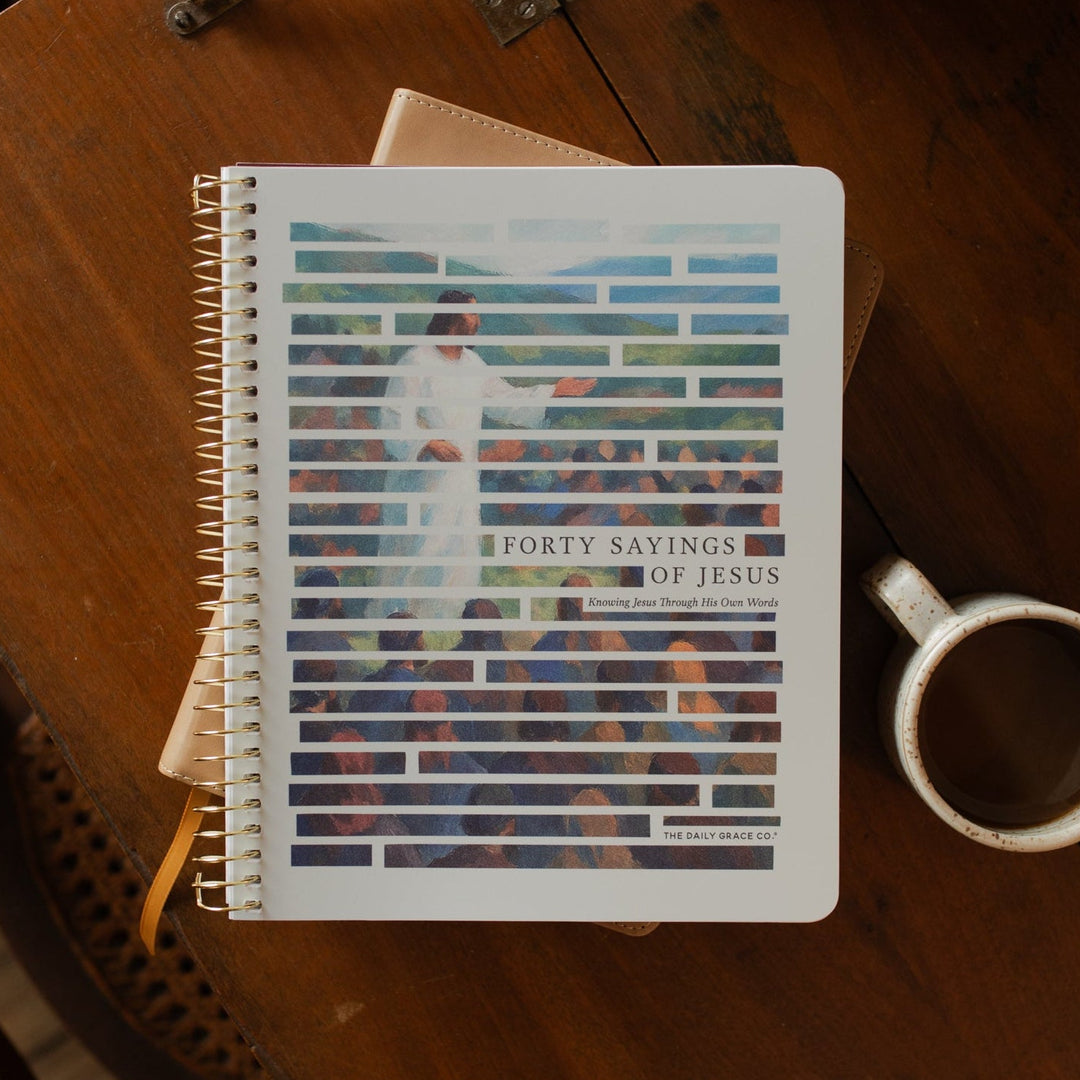
| Forty Sayings of Jesus Bible Study | The Sermon on the Mount Bible Study | Daily Grace | How Jesus Answers Our Heartache with Himself | Pray Bible Study | ||||
Loading price… |

Loading price… |

Loading price… |

Loading price… |
||||
| Add to Cart | Add to Cart | Add to Cart | Add to Cart |