






I know what you’re probably thinking . . .This is an odd title.
And you’re right—it is.
Because how can receiving a “no” from anyone, especially when you want something so badly, be considered good, much less a privilege? Sure, there are some positive examples of hearing the word “no,” such as creating boundaries or receiving honest feedback. And I’m sure we can all look back on things we’ve prayed for in life that we are thankful God said no to. But that’s not quite what I’m writing about today.
I’m writing about receiving the “no”—or living in the “no”—when every fiber in your being wants to be living in the reality of prayer granted in your favor. Things like, Can you please reverse the diagnosis? or Can I finally meet the one? or Can we please have a baby after years of infertility?
I think we can all agree that in those situations, it is much harder to accept a “no.” Why? Because a “no” stings when we’ve set ourselves up with expectations and those expectations go unmet. It hurts even more when what we’re asking for seems so good—and even godly. But there is something powerful about unmet expectations if we take the time to reflect on them. We may begin to see that God is writing something more colorful than we ever would have chosen ourselves.
It’s important to note that most situations won’t feel this way, but it is actually—dare I say—a privilege to have the Almighty say “no” or “not yet” to the things we are earnestly seeking Him for. Beauty and pain often coexist in the wondrous stories the Author of Life writes, and it is a privilege to lean into His perfection in the midst of unmet expectations.
Why Could “No” Be a Privilege?
One reason is because it is a humbling reminder of our humanity. Who are we to not need a constant reminder of that, in ways the Father sees most fitting? God’s “no” reminds us of His divinity and our lack thereof. As Christians, it’s important for us to recognize that our God has every right to tell us no.
Theologian Alexander Maclaren said it this way: “Because God is what He is, and gives what He gives, it is the highest wisdom to take Him for our true good, and never to let Him go.”1
Our comforts and desires can oftentimes be dangerous to us because pleasurable things tend to lull us into the false belief that we are autonomous from God, or that we possess a better understanding of our own needs than the One who made us. To let God be God and ourselves be less than is completely counterintuitive to the culture we operate in—a culture that works tirelessly to deceive the world into thinking it knows what’s best. Ultimately, this comes down to learning to trust God’s will even when it is contrary to what we personally would choose.
Where We See This in Scripture
This truth is not abstract—it is written into the story of Scripture itself. Matthew 26 takes us to sacred ground: the Garden of Gethsemane. This chapter in the Gospel of Matthew is like the part in a movie where you’re nearing the end and everything with weight and significance begins to unfold. It documents the plotting of the religious leaders against Jesus, His anointing at Bethany, His betrayal by Judas, the Last Supper, the Garden of Gethsemane, His arrest, His trial before the religious leaders, and—yes—the denial by one of His closest disciples. (Marvel wishes they could create an action-packed story like this!)
While there are many verses to consider, we are going to hone in on one particularly important and eye-opening moment—when the Father does not answer Jesus’s plea for the cup of judgment to be taken from Him. Let’s look at Matthew 26:36–46 (NIV).
To set the scene, Jesus and His inner circle—Peter, James, and John—have just left the Passover meal and withdrawn to a place called Gethsemane. This location is significant for many reasons, one of which is that its name translates from Hebrew to “oil press” or “oil mill.” Olives had to be crushed to produce rich oil, and similarly, Jesus would surrender Himself to crushing in the Father’s winepress of wrath in order to defeat sin.
Verses 37 and 38 reveal key information about Jesus’ emotional state at this pivotal moment in His earthly life. He is described with heavy words like “sorrowful” and “troubled.” Verse 38 says: “Then he said to them, ‘My soul is overwhelmed with sorrow to the point of death. Stay here and keep watch with me.’”
These intense emotions are important because they reveal that what was coming next would not be pain-free or easy—even for our mighty Lord.
Verse 39 says: “Going a little farther, he fell with his face to the ground and prayed, ‘My Father, if it is possible, may this cup be taken from me. Yet not as I will, but as you will.’”
Have you ever fallen facedown before heaven with an ask, hoping God would change the situation? Jesus did. The text tells us that Jesus asked the Father for another way for salvation to come and for His work to be completed. This alone should encourage us to continue coming to the throne of grace with confidence and courage (Hebrews 4:16).
Verses 42 and 44 show us that this was not a one-and-done prayer. This was something the Son pleaded with the Father for three separate times that night. Jesus was in such deep agony that, according to Luke 22:44, He was sweating drops of blood—a weight none of us could ever fully comprehend. The Father did not answer the first part of Jesus’s prayer—which is often the part we get hung up on. But He did answer the second part: “Yet not as I will, but as you will.”
Another reason God’s “no” is a privilege is because His will is being done—and like Jesus our Lord, His will carries us through even the fiercest battles into victory. Jesus showed us that denied requests are often an invitation to give God more glory, and that is the highest privilege any of us could be entrusted with.
In verses 45 and 46, Jesus confronts His disciples for allowing comfort to lull them away from spiritual attentiveness in a moment that demanded it most. Jesus, however, recognized the Father’s will and, for the joy set before Him, began His journey toward the cross. He moved forward willingly into His passion, conquering sin and death for all who would choose to believe in Him.
We are privileged to live under the benefits of Jesus’s response to God’s “no.”
For the One Still Waiting
I don’t know what it is you’re praying for, or how our loving and adoring God may choose to answer it. What I do know is that there is no good thing He withholds from those who belong to Him. If it feels that way, speak that truth to your heart (Psalm 84:11).
As believers in Christ and lovers of God, we are promised an abundant life and that God will work all things together for good (John 10:10; Romans 8:28). That promise does not mean a life free from pain, denial, or waiting. Rather, it means a life deeply held—one in which nothing is wasted and no sorrow is unseen.
The early church understood this well. They faced repeated denials, hardships, and beatings. God said “no” to many of the earthly comforts they might have naturally desired—things like financial security or physical safety. Yet Acts 5:41 gives us a glimpse into their perspective: “The apostles left the Sanhedrin, rejoicing because they had been counted worthy of suffering disgrace for the Name.”
Suffering at the expense of our comfort, for the glory of His name, is a privilege. And it is one the Holy Spirit must continually shape our hearts to understand and embrace. May He fine-tune our minds to remember that our dear Lord Jesus endured it first—so that we might follow in His steps with faith and perseverance.
So where might God be inviting you to trust His will more deeply today?
Notes:
1. Matthew Henry, The Gospel of Matthew - Complete Bible Commentary Verse by Verse, 2016.
Author Bio:
Patricia Vachula is a Ph.D. student in Biblical Exposition at Liberty University, where she is passionate about studying and unpacking Scripture within its literary and historical context. She delights in helping others engage the Bible faithfully and clearly. She is originally from Long Island, New York, and now resides in Lynchburg, Virginia.
Unlock a 10% off coupon!
Additional Resources for Trusting God’s Will:
| What Did You Expect? | The Prayer Handbook: A Comprehensive Guide to the Practice of Prayer | Peace Under Pressure | Clinging to the Cross - Lent Bible Study | ||||
 Loading price… |
 Loading price… |
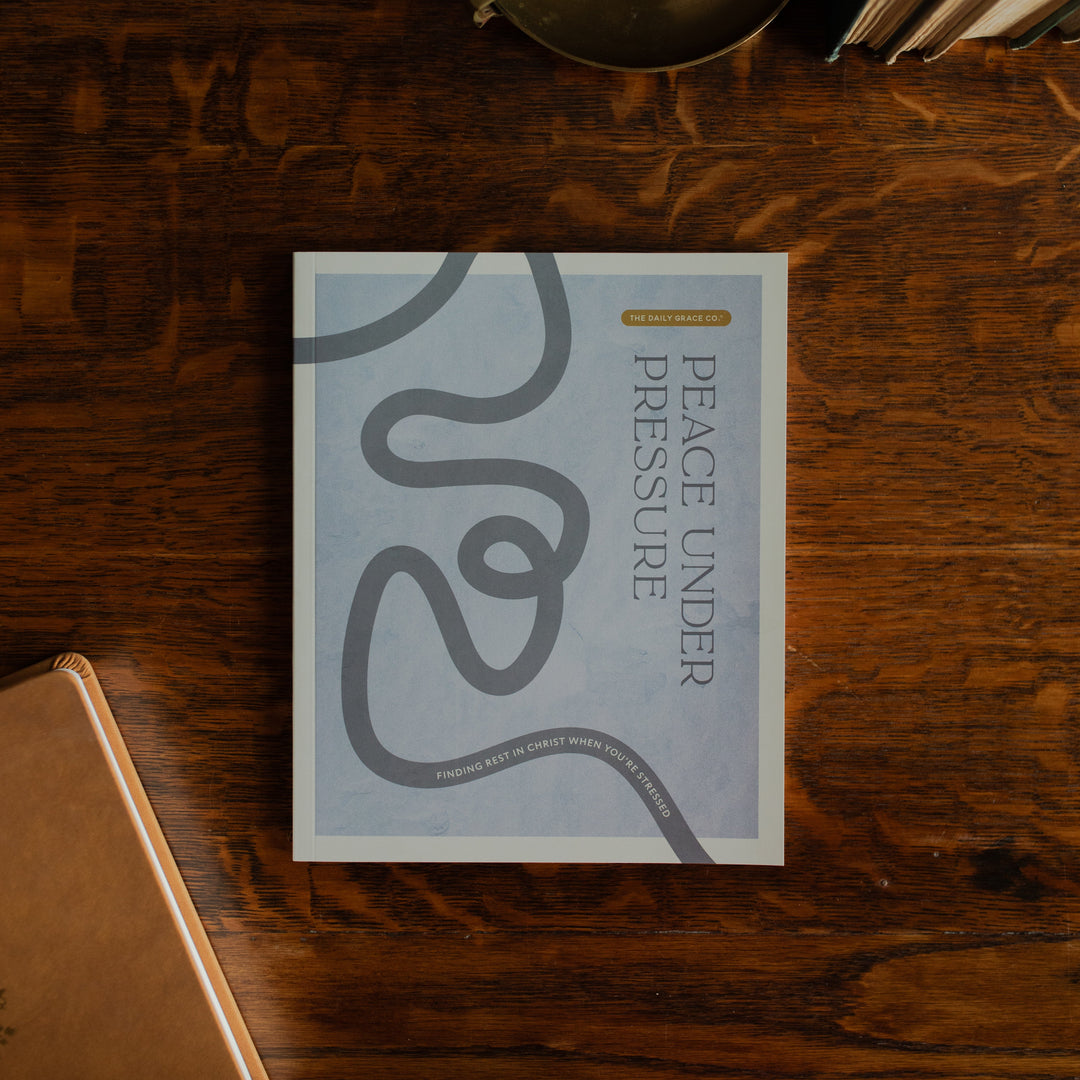 Loading price… |
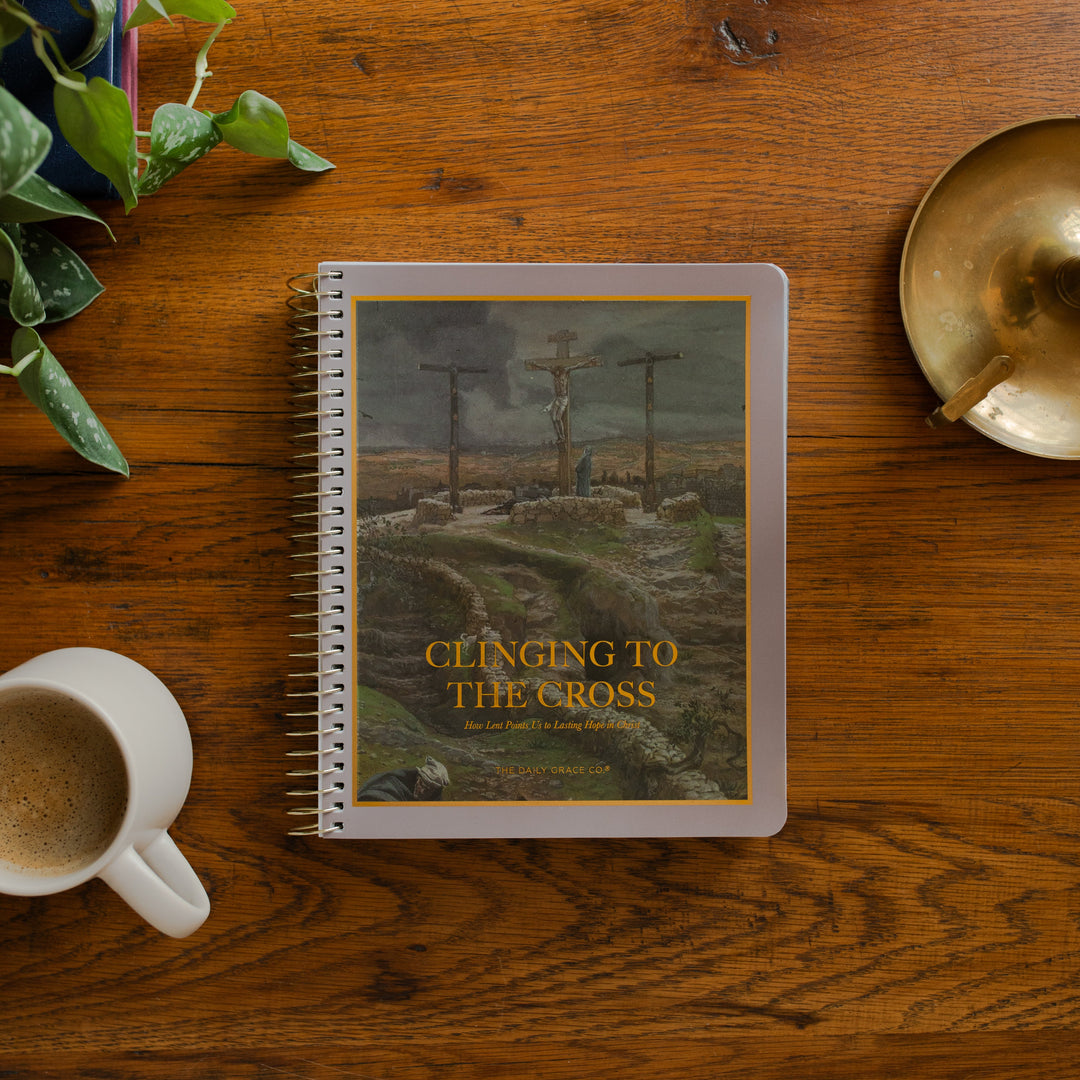 Loading price… |
||||
| Add to Cart | Add to Cart | Add to Cart | Add to Cart |