






Everywhere we turn, the message is loud and clear: Do more, be more. Life feels like a race, and we are in last place. We stay up late. We wake up early. We try to eat right. We go to work. We balance marriage, motherhood, and friendships. We serve at church. We read our Bibles. We are doing everything the culture and the Church say should make us feel like we are winning at life.
So why does it feel like no matter what we do, it’s never good enough? We chastise ourselves to “Do better! Try harder!” But with every misstep and shortcoming, it is further proof that we are falling behind.
The Need to Prove
For many of us, the need to prove ourselves through striving is likely contained to the classroom or our careers. But for others, it slowly trickles over into our friendships, worms into our relationships, and influences even our faith. We may be confident that we can’t earn our salvation, but we still spend countless hours trying to prove to God that we are worth saving. And when we fall short, failing to keep even the most basic commands, we interpret it as further proof that we are disappointments to God. The cycle of trying to earn our way back to His favor starts again—a cycle that swings between legalistic self-loathing and the abuse of spiritual freedom.We live in a culture that promotes achievement and the pursuit of perfection. We’ve become enslaved to the notion that we can be it all and that we can have it all if we just try a bit harder. This perfectionist prison we’ve placed ourselves in leads only to feelings of overwhelm, exhaustion, and defeat. And the worst part is that we’ve allowed the culture’s view of success to infiltrate our faith. We’ve carried over the belief that God will love us only if we check all the right boxes, keep all His commands, and never falter in our faith.
Perfectionism is More Than a Personality Trait
It wasn’t until a two-year battle over the security of my salvation that I discovered I was also a perfectionist. I naively thought perfectionists were people who had to have their shoes all in a line or had an unhealthy obsession with the cleanliness of their house, neither of which applies to me. But when my counselor defined perfectionism—sharing the link between perfectionism and performance and the emotional, mental, and spiritual effects of perfectionism—it finally clicked.
My counselor explained that “perfectionists set unrealistic expectations for themselves and work tirelessly to achieve their goals because they believe their value comes from their performance.” Perfectionism is more than a personality trait; its roots run deeper than merely a desire to have everything a certain way.
Perfectionism is a trap; we come to believe that our self-worth depends on what we can achieve. And when we fall short—which we will—it leads us to feelings of failure, shame, anxiety, doubt, and fear. Perfectionism tells us that we must earn love, approval, and acceptance; that we can somehow push God away through our bad behavior.
The Perfectionism Trap
How can God love me when I continue to struggle with sin?
I know I can’t earn my way to God, but am I doing enough to secure His approval?
I forgot to read my Bible today. Does God think that I am not grateful for the gift of salvation?
These and other questions kept cycling through my mind until I became imprisoned by them. I built my own prison—enslaved to perfection and performance—blind to the harm they were doing to my personal and spiritual life. I was burdened, riddled with anxiety, trying to make sure I was doing all the “right things.”
I had a mental checklist of a “good Christian girl,” and I worked tirelessly to mark everything off. Except every time I fell short—and I did every day—my inability to keep God’s commands only further confirmed, I will never be enough. Even worse, I began to believe the lie that because I couldn’t be flawless, perhaps God regretted saving me.
So how do we break free from the perfectionist trap?
We embrace God’s grace and remember the gospel daily.
Breaking Free of Perfectionism
“Grace.” It’s a term we use often, but do we really understand what it means? Grace is unmerited favor. It is a gift. We receive it without cost to us, and we cannot lose it. Our right standing before the Lord is secure, not because of what we’ve done but because of what Christ did on the cross. And just as we are powerless to secure our own salvation, we are not its sustainer either. Paul shares this idea in his letter to the church of Ephesus when he writes, “For by grace you have been saved through faith. And this is not your own doing; it is the gift of God, not a result of works, so that no one may boast. For we are his workmanship, created in Christ Jesus for good works, which God prepared beforehand, that we should walk in them” (Ephesians 2:8–10, ESV). Salvation’s source is grace, but we accept it by faith.1 Being right with God is impossible without Christ’s work, and just as we are saved by grace through faith, we also do the good works (prepared for us by God) by grace through faith.
Why is this such an important concept to grasp? Because even if we don’t feel like we need to earn our salvation, we might still feel that we must work to remain in God’s favor or receive His love. But God’s love and care for us was already proven for us on the cross. His salvation and His love for us are one and the same—they are both granted by God and sustained by God.
Paul’s statement that salvation cannot come by good works puts our behavior in its rightful place. Good works are important to the life of the believer, but they are not the means of salvation. They are instead evidence of—and a participation in—the spiritual transformation God is working in us.
This is good news! Putting our good works in their rightful place grants us reprieve from perfectionism because it helps us focus on what really matters. Instead of worrying about our standing before God, we can focus on truly knowing God and growing in Christlikeness (Romans 8:29). God saved you, and the continued working out of your salvation is also a result of God’s grace, not your human ability to save or sustain yourself (Philippians 2:12–13). God's grace is not a one-and-done occurrence; it is for every hour of every day because God loves us and keeps us no matter what—Amen!
Faithfulness over Flawlessness
We can find true rest and peace in God’s grace as we remember the message of the gospel: It’s not about what we’ve done but what Christ has done on our behalf. Jesus is the perfecter of our faith (Hebrews 12:2); His work seals our salvation. God doesn’t require us to earn His love, affection, or even His presence. God calls us to put our faith not in our own striving for perfection but in the One who is perfect. The gospel frees us from the spiritual burdens we carry.
The question is not whether or not we are good enough. The question is whether Christ is good enough—and He is! One of the biggest lies of perfectionism is that our worthiness to be approved was ever about our performance in the first place. God’s love is not based on performance; just as we should not feel ashamed when we fail, we should not become puffed up when we succeed. Even as God delights in righteousness, we don’t get an extra dose of His approval when we do good works, nor do we get a look of indignation when we sin. When we begin to grasp the message of the gospel fully—not just for salvation but for every day—we release the need to prove ourselves and are freed to choose faithfulness over flawlessness.
Notes
1. Got Questions Ministries. “What Does Ephesians 2:8 Mean?” BibleRef. Accessed June 11, 2026. www.bibleref.com/Ephesians/2/Ephesians-2-8.html.
Author Bio
Laura Bailey is a wife and mom to three girls. She holds a certificate in biblical studies from SEBTS, is the director of Women’s Ministries at her church, and an author of multiple books and Bible studies. She loves strong coffee, reading, walking with friends, and cheering on her girls at the ball field.
Unlock a 10% off coupon!
Additional Resources:
| By Faith | Galatians Study | Colossians Bible Study | Preaching the Gospel to Yourself | |||
 Loading price… |
 Loading price… |
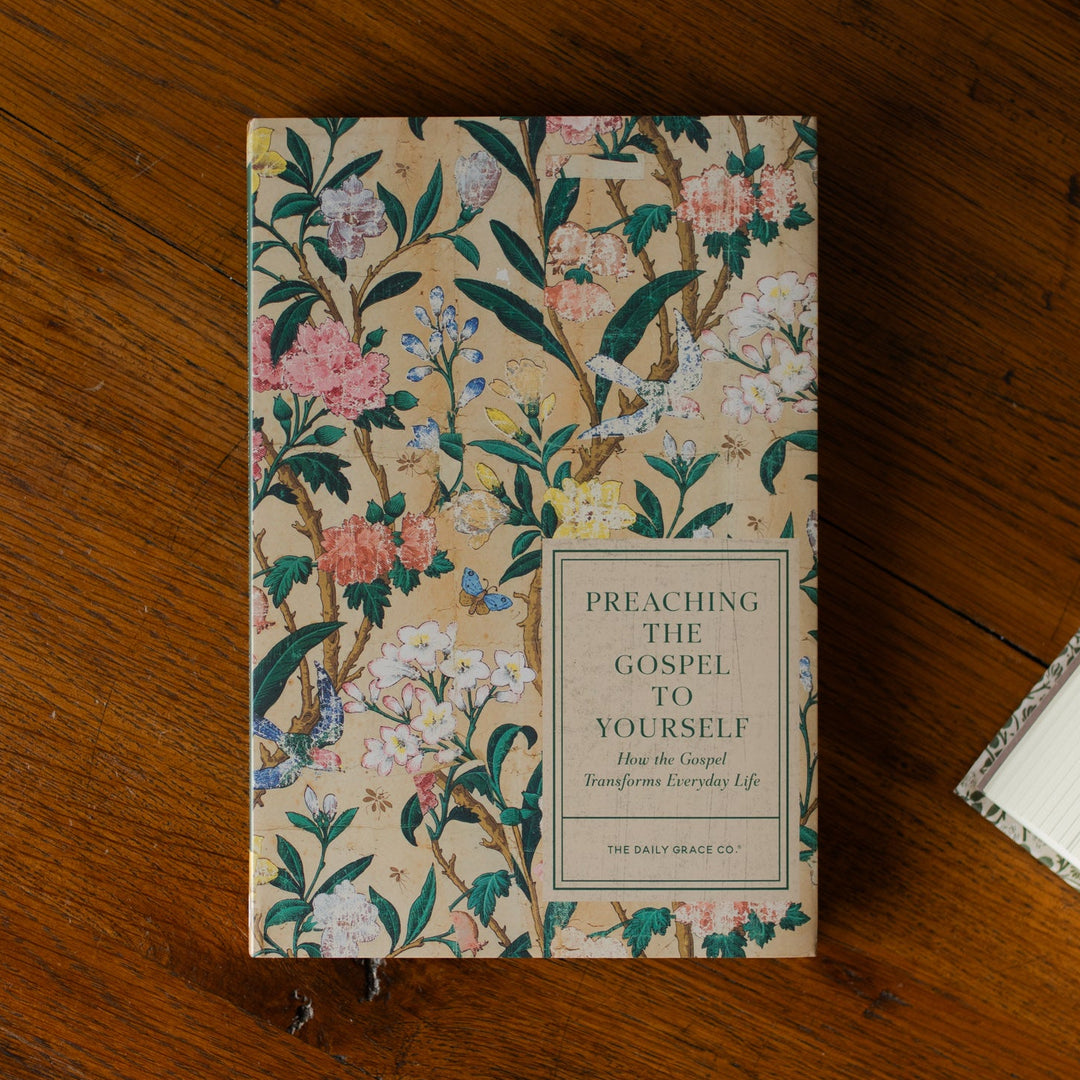 Loading price… |
|||
| Add to Cart | Add to Cart | Add to Cart |