




Have you ever had something happen to you, and you become absolutely convinced that you know what God is doing—only to later realize you were completely wrong? Have you ever wondered, Was that just a coincidence? Or was God showing me something?
I know for me, there have been many instances in my life where seemingly unpredictable and peculiar moments would happen—when things that appeared to be pointing to a logical conclusion ended up leaving me confused when the outcome was different than I anticipated. These moments always seemed to happen while I was praying about specific things in my life. Looking back, many of those moments were not pointing me toward what actually happened. Some did, but a lot of them didn’t.
I remember experiencing this frequently in college with one particular crush. I saw him everywhere. The conversations we had seemed so intentional and purposeful. I even ran into his parents with him and randomly ended up meeting them! To a college girl wanting to be in a relationship, I thought God was clearly communicating that I was moving in the direction of a relationship with this person. As you might guess, that was not the case. He had been talking to someone else that entire time, and they eventually began dating. I was left without understanding and began to wonder if chance had a place in God’s world, because to me, those things didn’t make sense with the outcome.
Dating isn’t the only circumstance where we experience moments like this. Maybe you were praying for a loved one fighting cancer, and you thought healing was coming because the treatments were working—but then things took a sudden turn. Or you thought God was calling you to a new job, but as you walked through the process, you got cut. Fill in the blank: I thought ______ would happen. Logical things made me think that, but it didn’t happen like I thought it would.
When I’ve experienced these situations, the Holy Spirit has reminded me of 1 Corinthians 14:33, “For God is not a God of confusion but of peace” (ESV).
It’s easy to convince ourselves that God is being confusing or misleading when we’re at a loss for understanding. But we need to recognize that, as believers in Christ, this will never be how our Father interacts with us. God does not tease us or dangle good things in front of us, only to let us down.
What Is a Coincidence?
We all know what a coincidence is, but let’s define it as we jump into this idea of “the theology of coincidence.” Merriam-Webster defines a coincidence as “The occurrence of events that happen at the same time by accident but seem to have some connection.”
Essentially, it’s weirdly-timed events that often seem to follow a pattern—leading us to believe a certain conclusion.
Can a Coincidence Exist in God’s World?
The short answer is no. Coincidences can’t exist in a world under the provision of a Creator God. Psalm 24:1 says, “The earth is the Lord’s, and everything in it . . .” (NIV). Job 12:10 adds, “In his hand is the life of every creature and the breath of all mankind” (NIV). Romans 11:36 emphasizes, “For from him and through him and for him are all things . . .” (NIV). Dutch theologian Abraham Kuyper famously said, “There is not a square inch in the whole domain of our human existence over which Christ . . . does not cry: ‘Mine!’”1
Get the point? There is no place for chance or coincidence here on earth because all of these verses underline the truth of providence—the governance of God over all creation.
Most of us believe this truth. But I am inviting us to consider the confusing instances when the moments we experience don’t mean what we thought they did. Because we operate from limited perception, not everything we perceive means what we expect. Some people argue that we sometimes place too much significance on small moments, or “over-spiritualize” things. That can certainly happen. But I would suggest that maybe we’re placing the wrong significance on those moments.
Not Every Coincidence Is a Sign
Not every coincidence is a sign for what we think it is—even when we believe we’re being prayerful about it.
Consider Jesus’s teaching in Luke 13:1–5. Luke 12 tells us that Jesus was sitting among His disciples, and a crowd gathered to hear His warnings and encouragements. With that context in mind, the passage says:
Now there were some present at that time who told Jesus about the Galileans whose blood Pilate had mixed with their sacrifices. Jesus answered, “Do you think that these Galileans were worse sinners than all the other Galileans because they suffered this way? I tell you, no! But unless you repent, you too will all perish. Or those eighteen who died when the tower in Siloam fell on them—do you think they were more guilty than all the others living in Jerusalem? I tell you, no! But unless you repent, you too will all perish” (NIV).
This often-overlooked passage shows Jesus using tragic events to stir people toward repentance. He wanted His listeners to know that every person needs to repent, because our earthly lives can end in a sudden disaster. Through Christ, we have the unmatched privilege to repent and be right before God so that an unforeseen tragedy is not the end of our story.
But Jesus was teaching more than this. He was also teaching that these events were not caused by the victims’ sin—they simply happened. To a Jewish audience shaped by the Old Covenant (Deuteronomy 11:26–28; 28:1–2, 15; 30:15–20), this was jarring. From the Jewish perspective, blessings and curses were tied to obedience; Jesus was expanding their understanding.
Jesus wasn’t suggesting that these events were random. He was instead teaching that the meaning of an event doesn’t always align with what we assume—those Galileans did not suffer because they were more sinful than others. The event did have meaning—God had a larger purpose—but it didn’t align with the meaning they assumed.
Unlock a 10% off coupon!
An Invitation to Trust
At the end of the day, our goal as believers isn’t to be God in our understanding of our lives; it’s to trust Him with His. I don’t know about you, but I can easily get caught up trying to make my own conclusions about God’s decisions, when in reality that is not our portion.
This always brings me back to Isaiah 55:8–9, which says, “For my thoughts are not your thoughts . . . so are my ways higher than your ways . . .” (ESV). So while things do seem to “just happen” sometimes, that doesn’t mean they fall outside God’s plan for your life or His larger redemptive story.
The challenge I want to leave you with is this: What if those moments in your life did mean something—just not what you thought they meant?
Maybe only God knows what that meaning is. Maybe He is the only One who ever will. But even when the outcome is different than expected, it doesn’t mean He is any less faithful or loving toward you. Choose to see the confusing things in your life as an invitation to trust your Creator more and believe He has good things at His right hand for you.
Notes
- Abraham Kuyper, “Sphere Sovereignty,” in Abraham Kuyper: A Centennial Reader, ed. James D. Bratt (Eerdmans, 1998), 488.
Author Bio:
Patricia Vachula is a Ph.D. student in Biblical Exposition at Liberty University. She is passionate about studying and unpacking Scripture within its literary and historical context and delights in helping others engage the Bible faithfully and clearly. She is originally from Long Island, New York, and now resides in Lynchburg, Virginia.
Additional Resources:
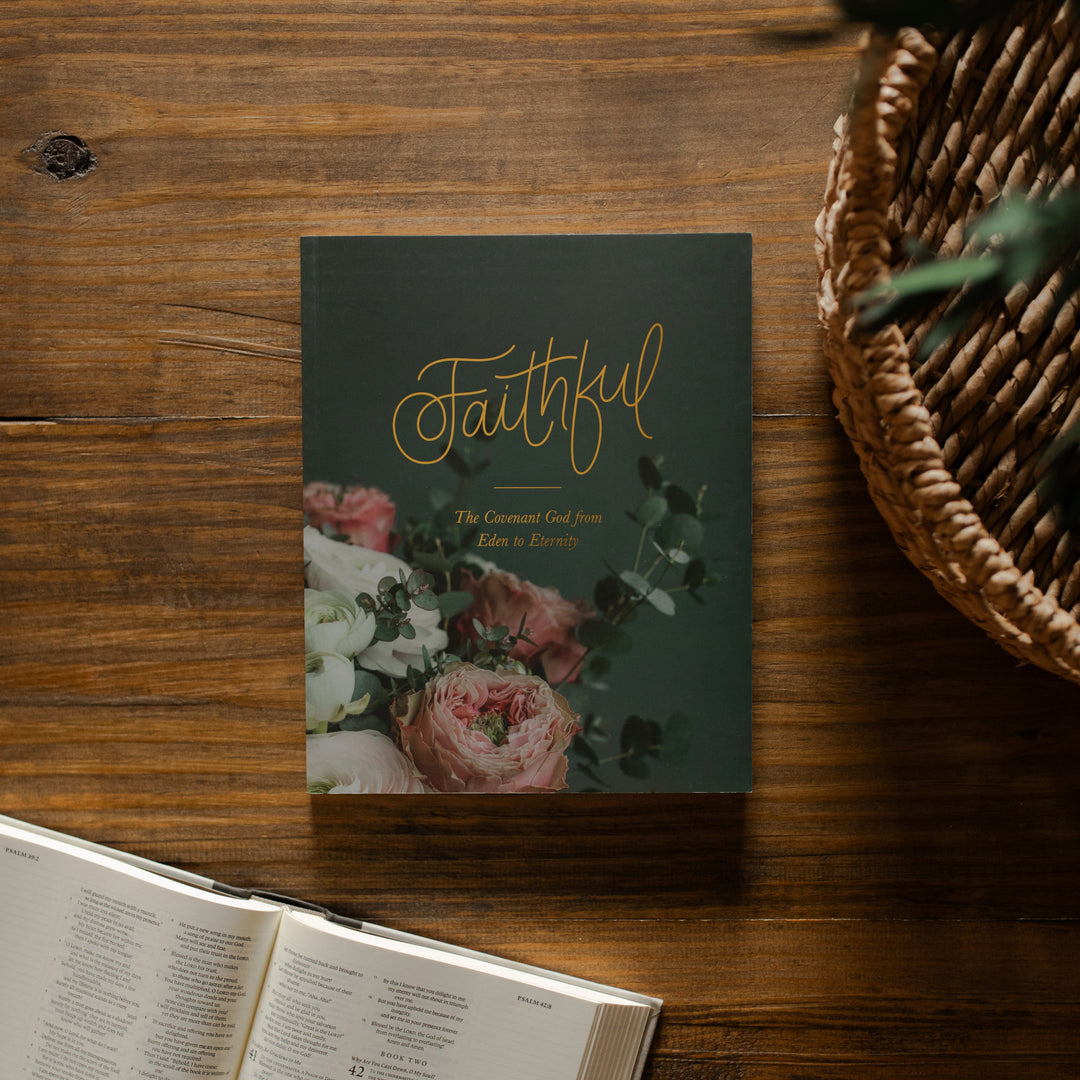
| Even If | A Bible Study of Habakkuk | Esther Bible Study | Faithful | |||
 Loading price… |
 Loading price… |
 Loading price… |
|||
| Add to Cart | Add to Cart | Add to Cart |